
Last updated September 20, 2026
Full 25-point door and opener safety check with every visit - springs, cables, rollers, tracks, and your LiftMaster or Chamberlain opener included
You get a price before we start. It does not change when the truck arrives.
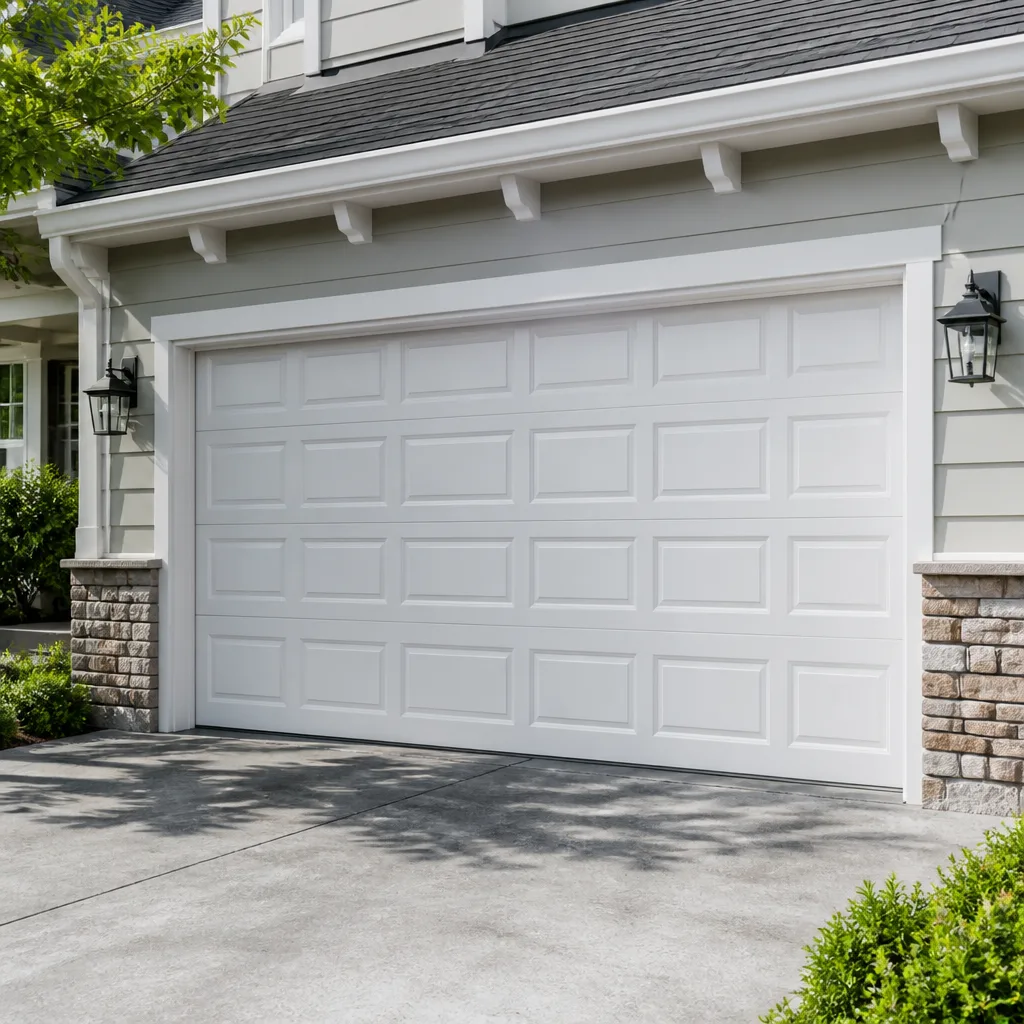
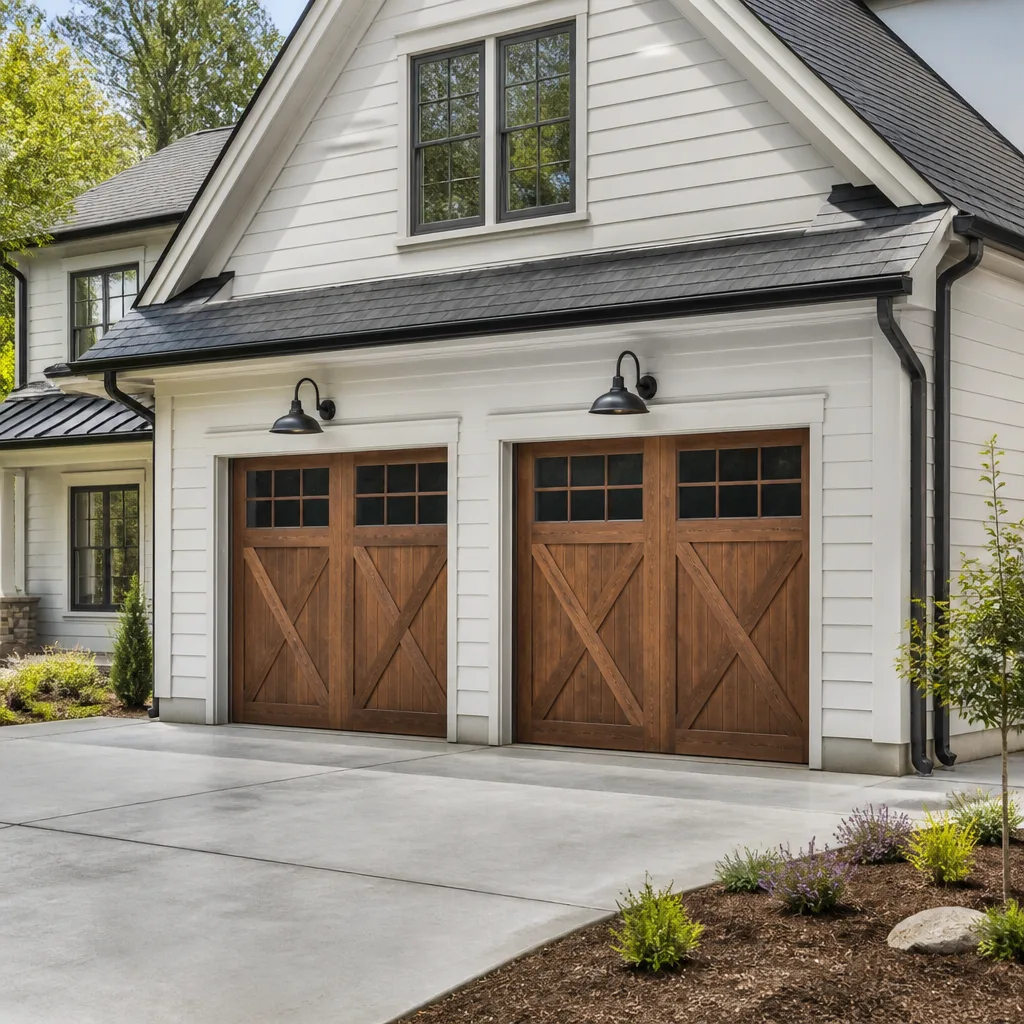
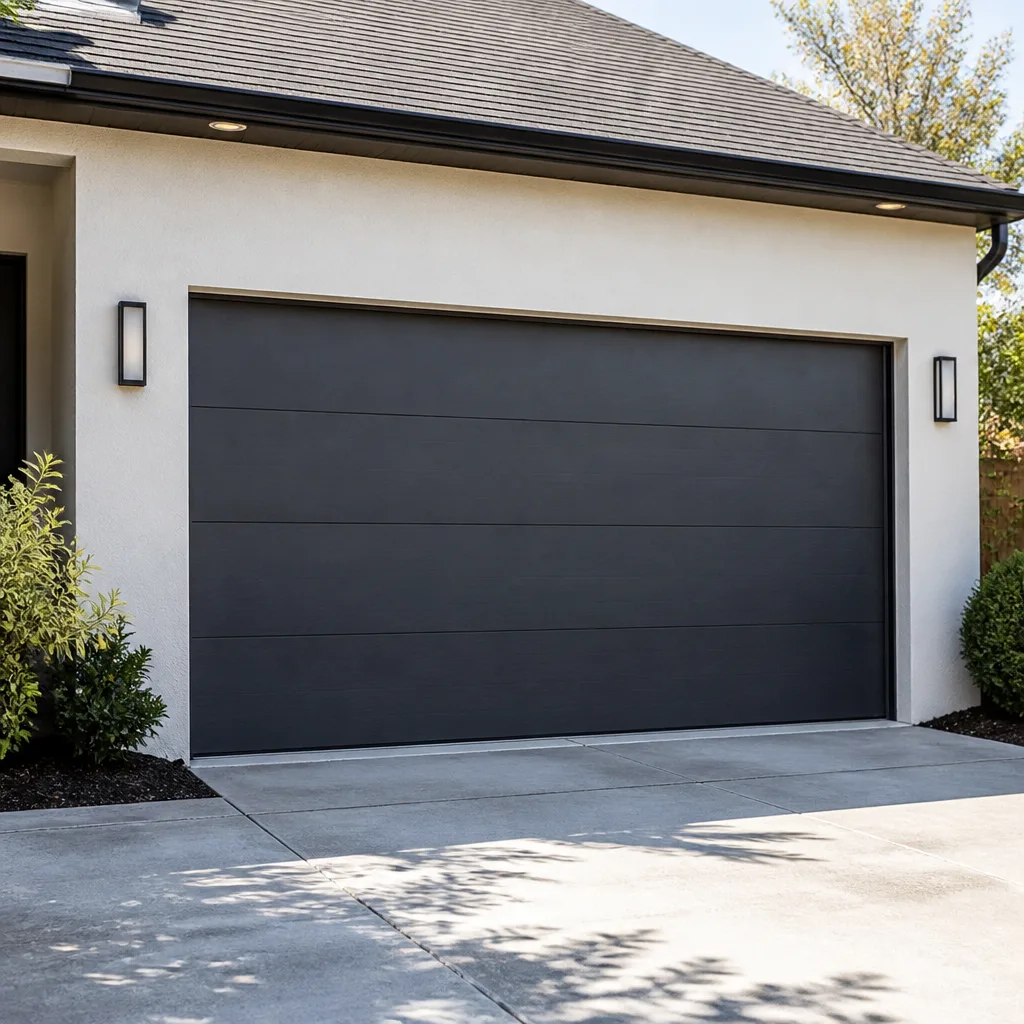
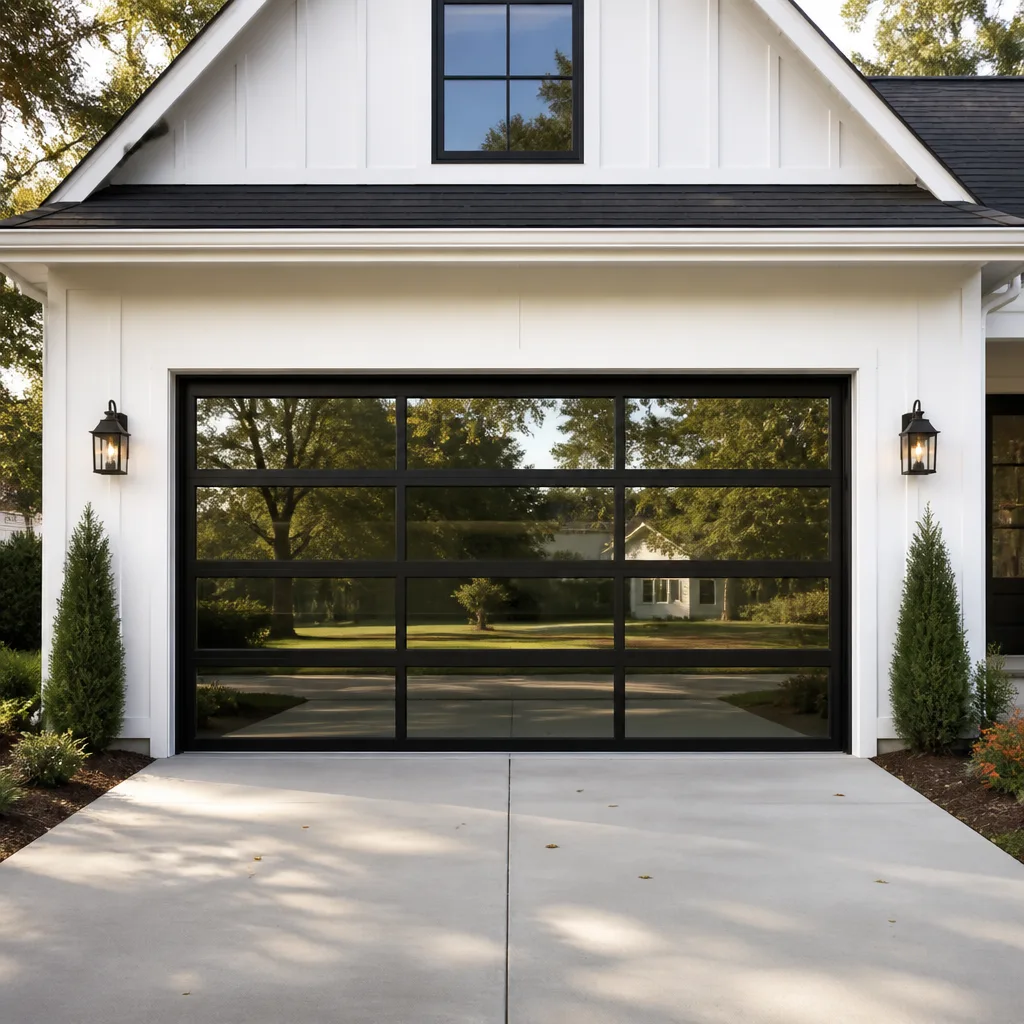
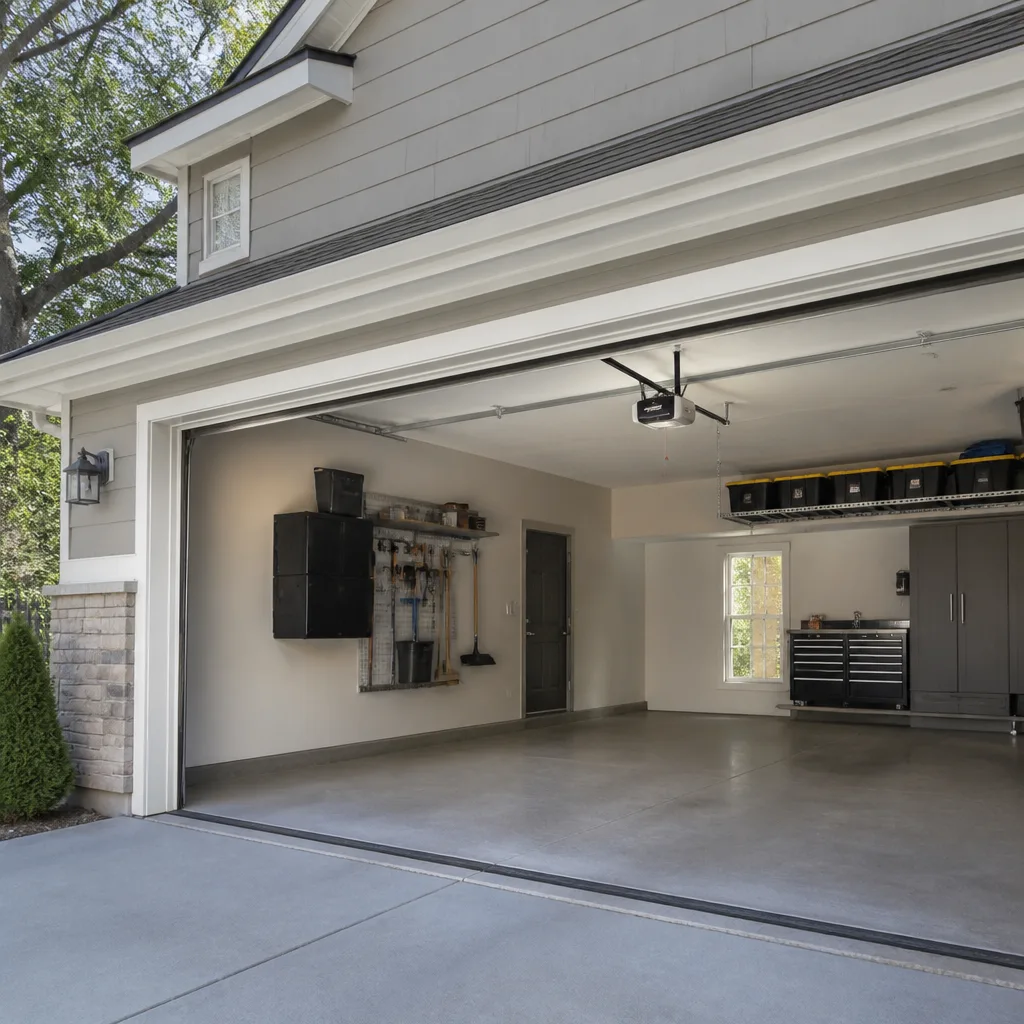
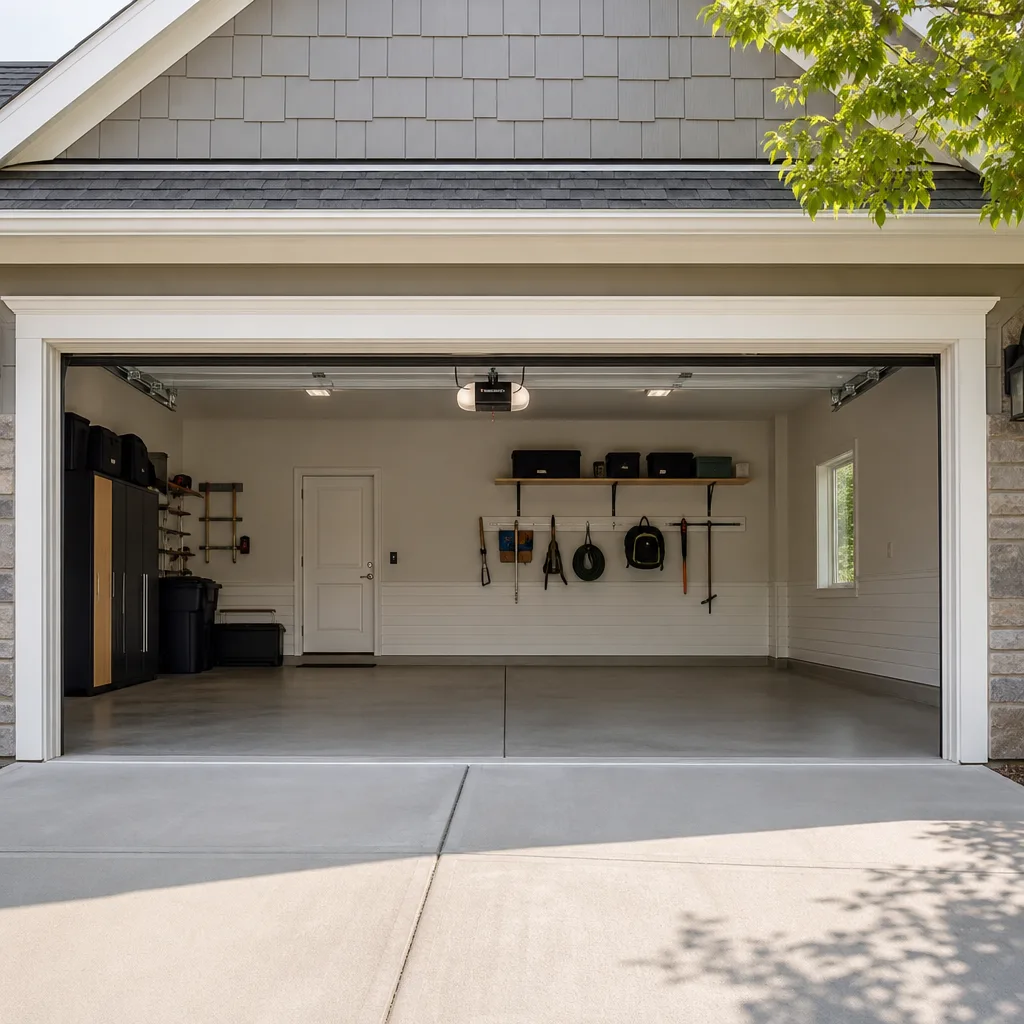
 Before
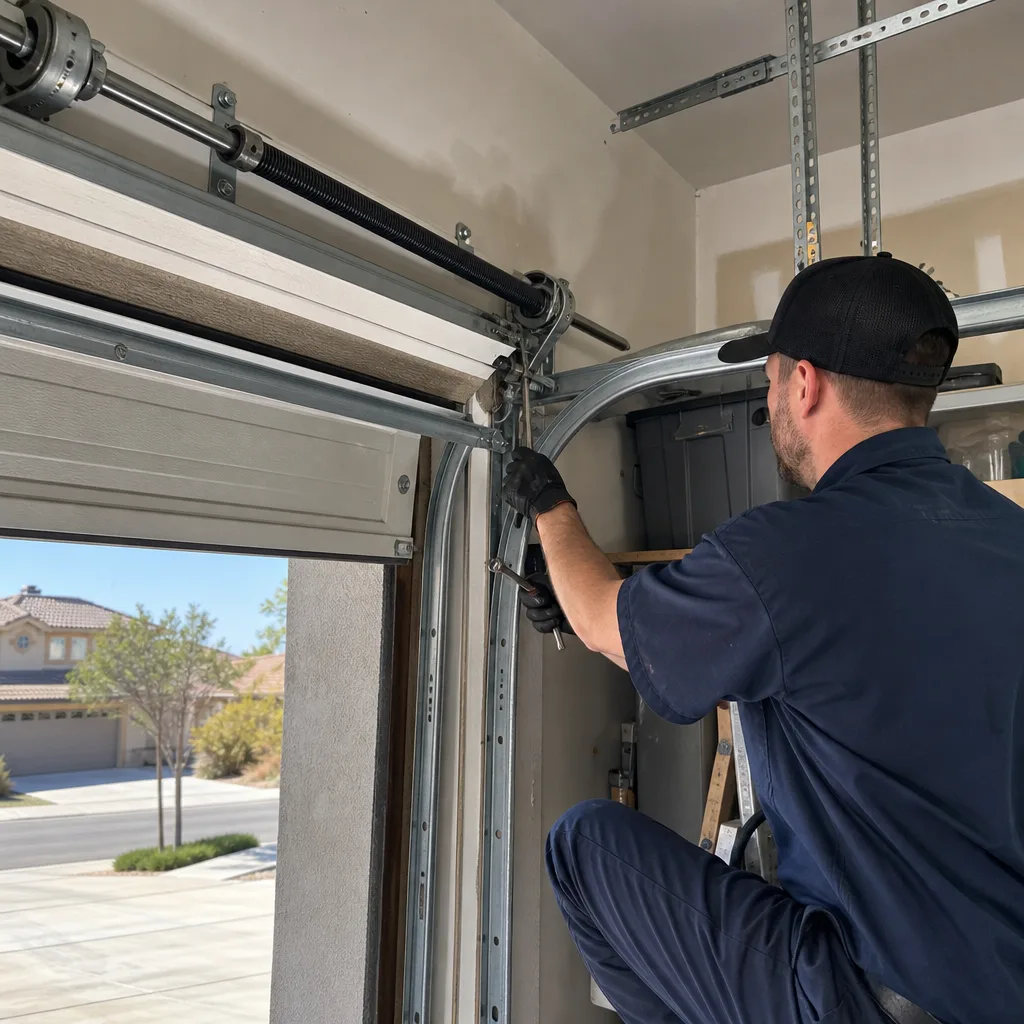 After
After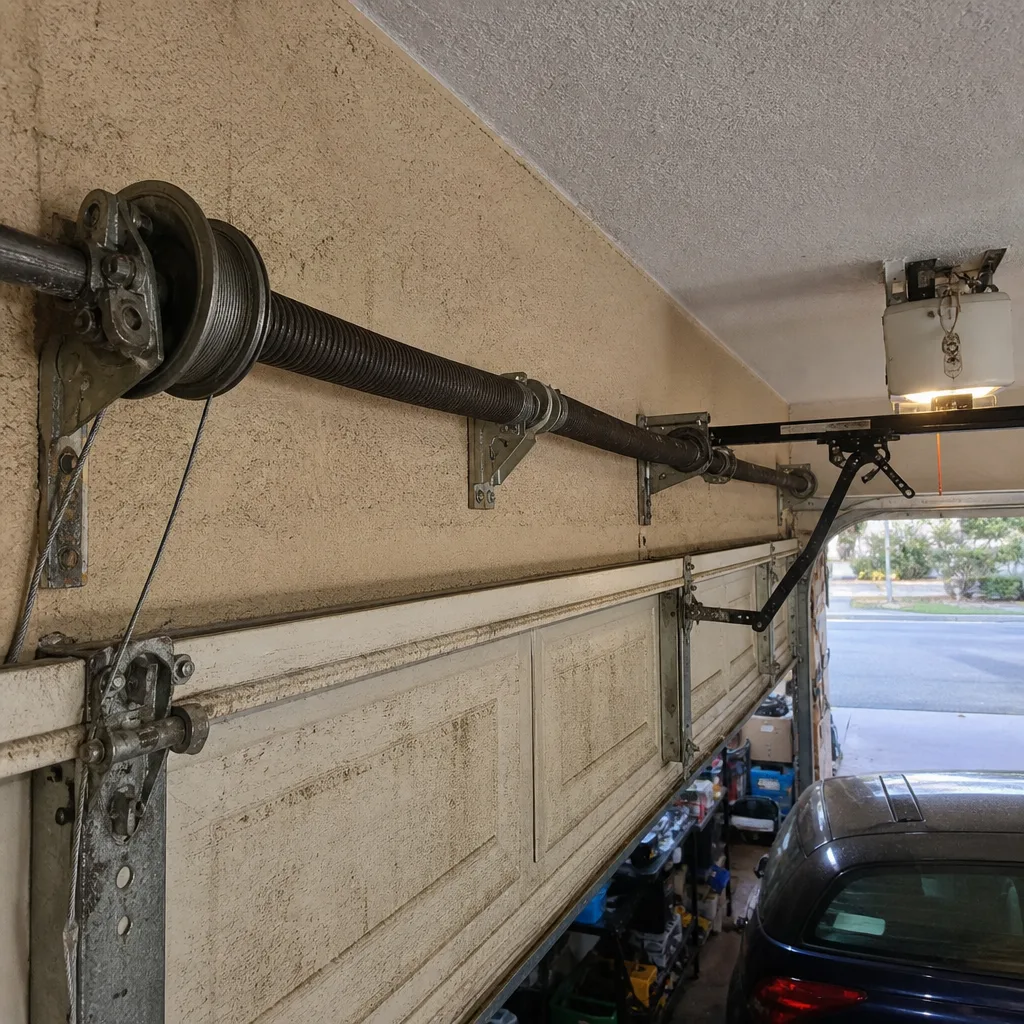 Before
 After
After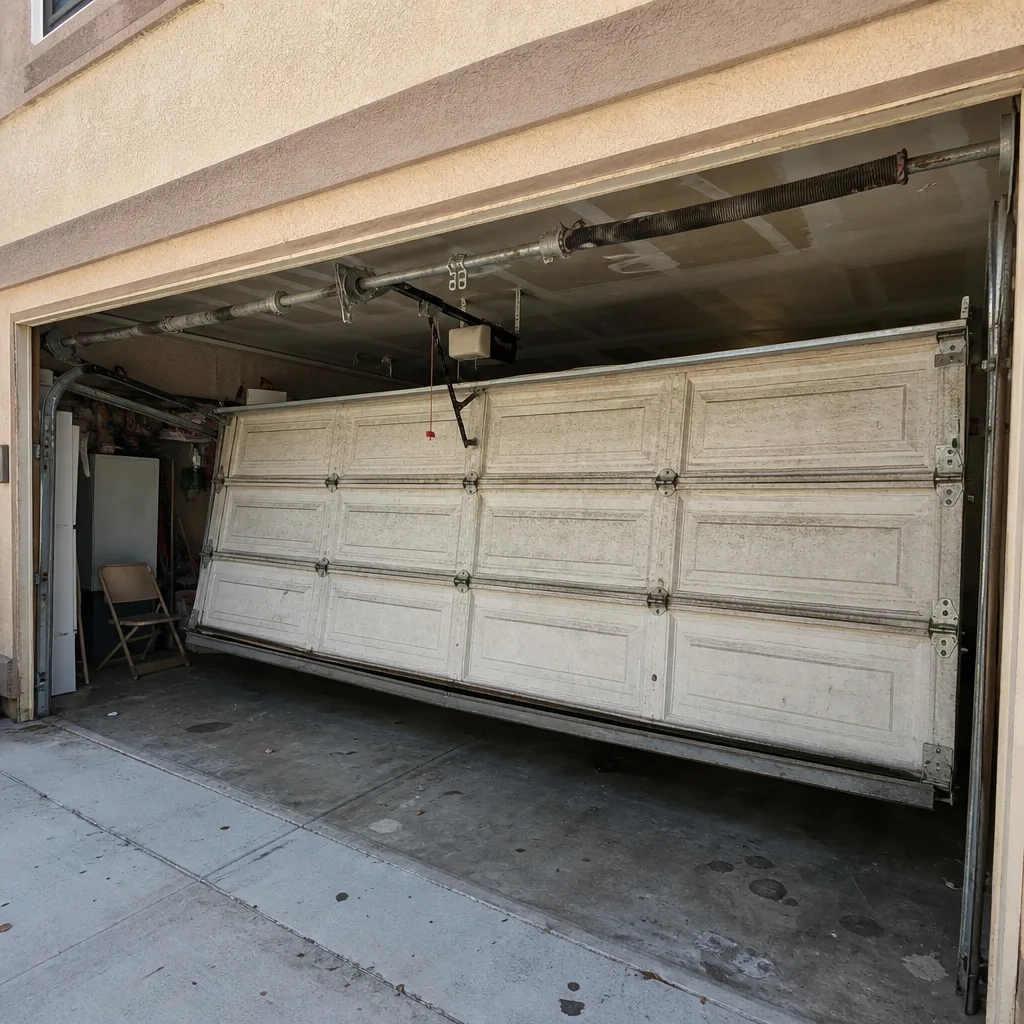 Before
 After
AfterThe Complete Guide to Garage Door in Corona
An inland garage door doesn’t age the way a coastal door does. In Corona, a door faces roughly 200 more hours of direct sun per year than the same model in San Francisco. Add Santa Ana winds that push 60-plus mile-per-hour gusts against 16-foot panels, and you get a failure timetable that most generic maintenance guides simply miss. This guide maps every major component to the specific way Corona’s climate wears it out, what that wear costs to fix, and how to read the paperwork before you sign it. For Garage Door Cost Breakdown: The Corona Homeowner’s Reference for 2026, see our dedicated breakdown.
Quick Answer
Garage door repair in Corona typically runs $150 to $600 depending on the failed component, with spring replacement being the most common repair at $250 to $450 installed. Corona homeowners should expect faster wear on torsion springs, rollers, and weatherstripping compared to coastal Southern California, driven by high UV exposure, heat cycling, and Santa Ana wind events. Deciding whether to tackle issues yourself or call a pro? Read our DIY vs Professional Garage Door: The Corona Homeowner’s Decision Guide. A written price confirmation before work starts is the single most important document you can get from any garage door company in Corona.
Table of Contents
- Torsion Springs in Corona: Why Cycle Ratings Lie to You
- Cables and Lift Mechanisms: Failure Signs You Can Actually See
- Rollers: The $12 Part That Wears Out First
- Panels and Finish: Santa Ana Wind Load vs. Curb Appeal
- Openers: Heat, Logic Boards, and Why Your Remote Works Intermittently
- How to Read an Itemized Garage Door Quote
- Common Mistakes to Avoid
- When to Call a Professional
- Frequently Asked Questions
BeforeAfterTorsion Springs in Corona: Why Cycle Ratings Lie to You
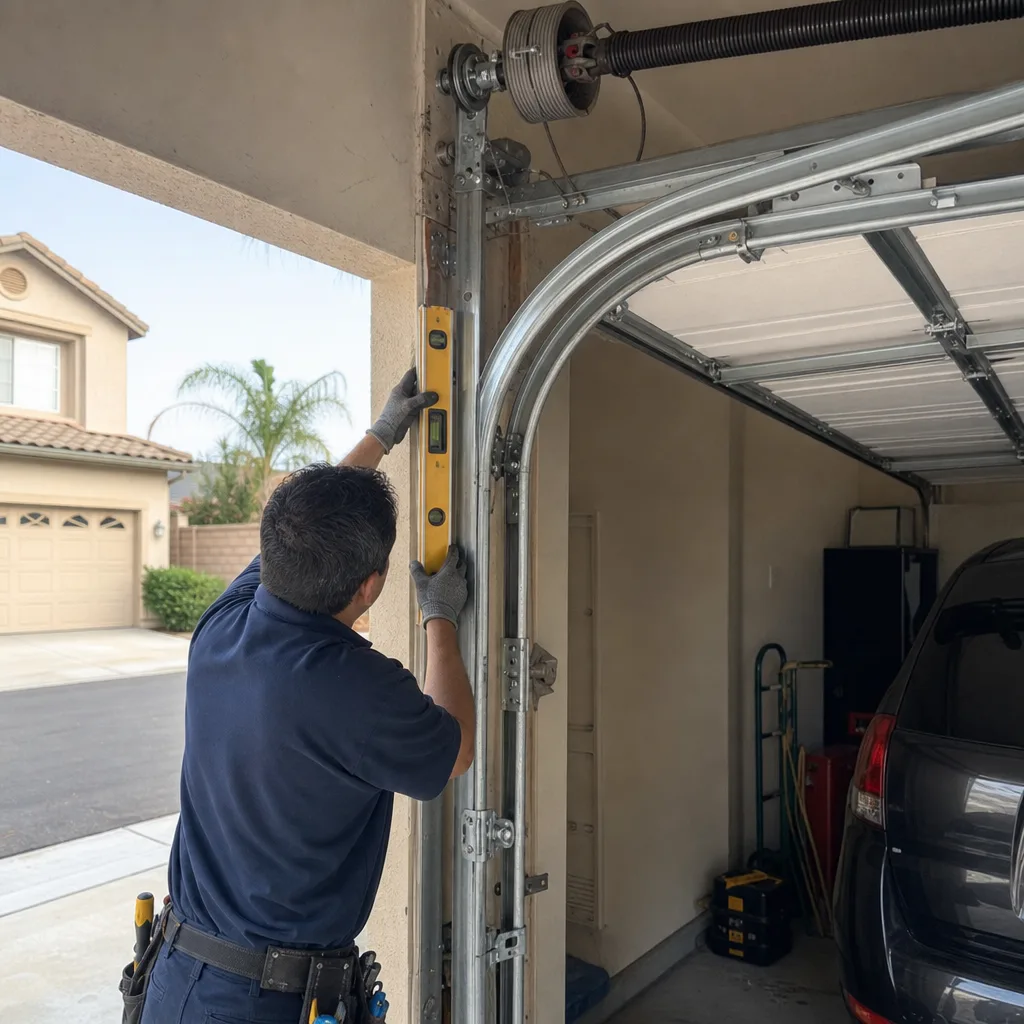
Every torsion spring on the market ships with a cycle rating, usually 10,000, 15,000, or 20,000 cycles. One cycle is a full open-and-close. What the box doesn’t tell you is that those ratings are calculated under a specific set of test conditions that don’t account for sustained heat and UV exposure. In our experience working on garage door repair in Corona, a 15,000-cycle spring in this climate tends to fail measurably earlier than the same spring installed in, say, Irvine or Long Beach.
Here’s why: torsion springs are made of tempered steel, and steel loses a small amount of tensile strength over time when it’s exposed to repeated thermal expansion. Corona’s summer attic temperatures above garage doors routinely climb past 130°F, and nights drop into the 60s. That cycle of expansion and contraction works the metal at a microscopic level. It’s not a dramatic failure, it’s cumulative fatigue. Add a few Santa Ana events where the door gets buffeted while closed, transferring vibration into the spring coils, and the timeline shortens further.
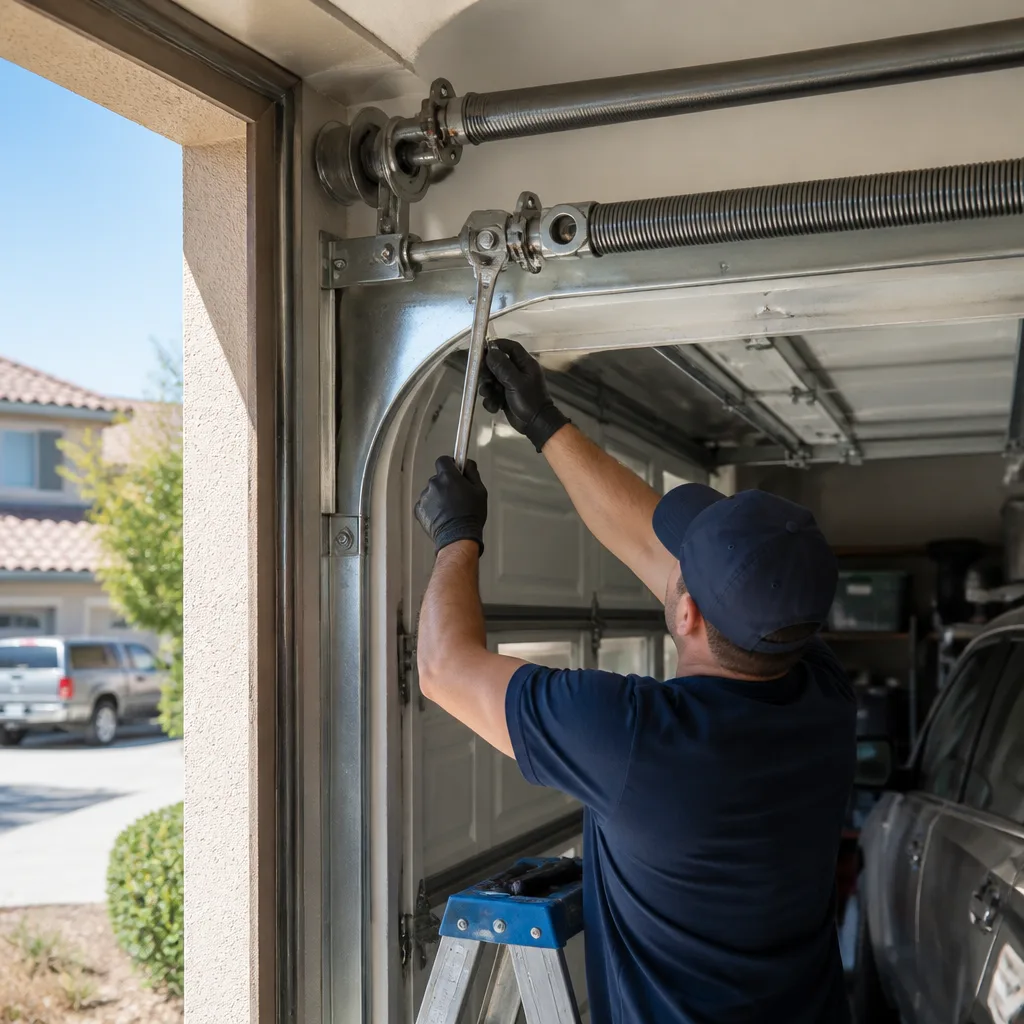
What you should demand in writing: a spring replacement spec that matches the wire diameter, coil length, and inside diameter to the specific weight of your door, not a generic “standard spring” that’s whatever the truck carries. A 16-foot steel door with insulation weighs significantly more than a single-car aluminum door. The spring that’s right for one is wrong for the other, and a mismatched spring either fails early or over-stresses the opener motor.
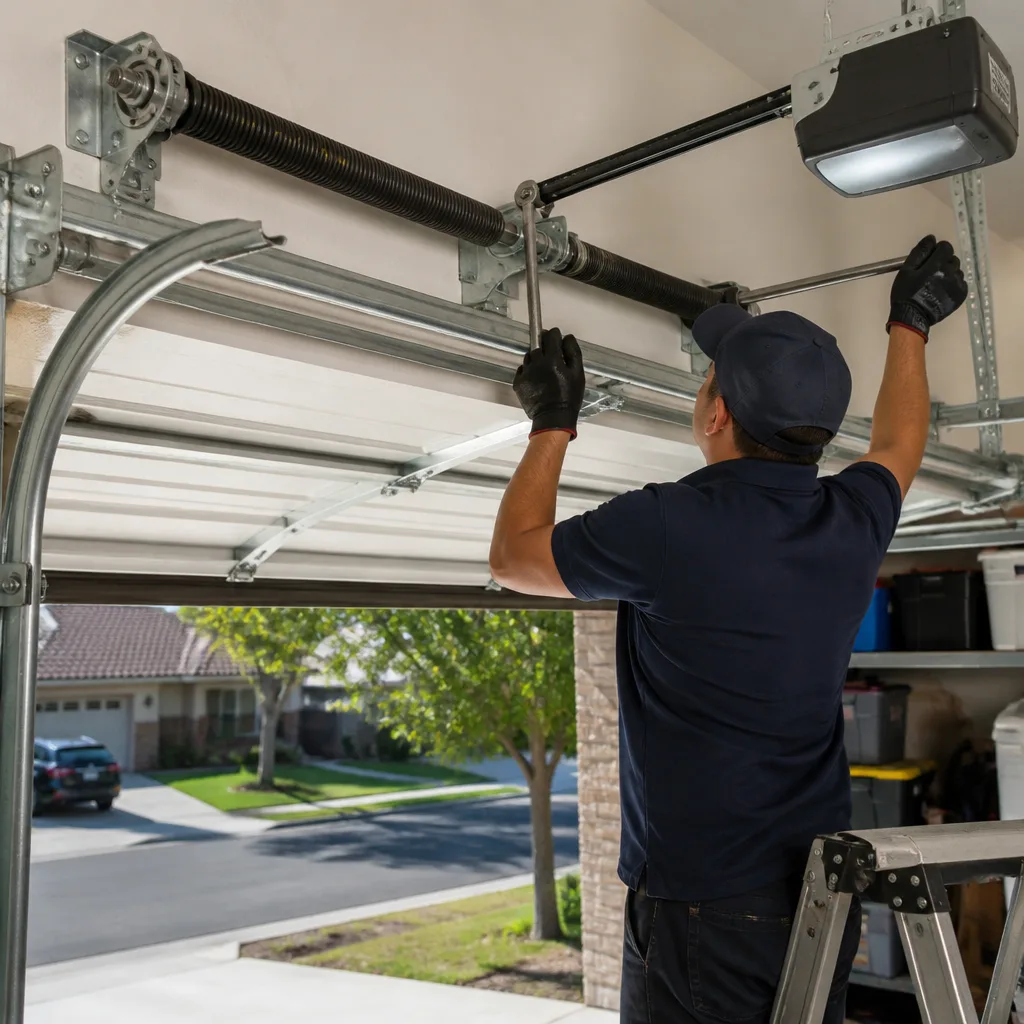
Replacement cost in Corona for a pair of torsion springs is typically $250 to $450 installed, including labor and tuning. Anything below $180 installed should raise a question about spring quality, and anything above $500 should come with a detailed explanation of what makes the door that heavy or the spring that specialized. If a quote doesn’t list the wire gauge and coil dimensions before work starts, the price didn’t come from a measurement.
What to ask for:
- Written spring specification before installation, including wire diameter and inner diameter
- Cycle rating stated on the quote, not verbally
- Explanation of whether the spring matches the actual door weight, measured, not guessed
- Photo of the failed spring before replacement begins
Cables and Lift Mechanisms: Failure Signs You Can Actually See
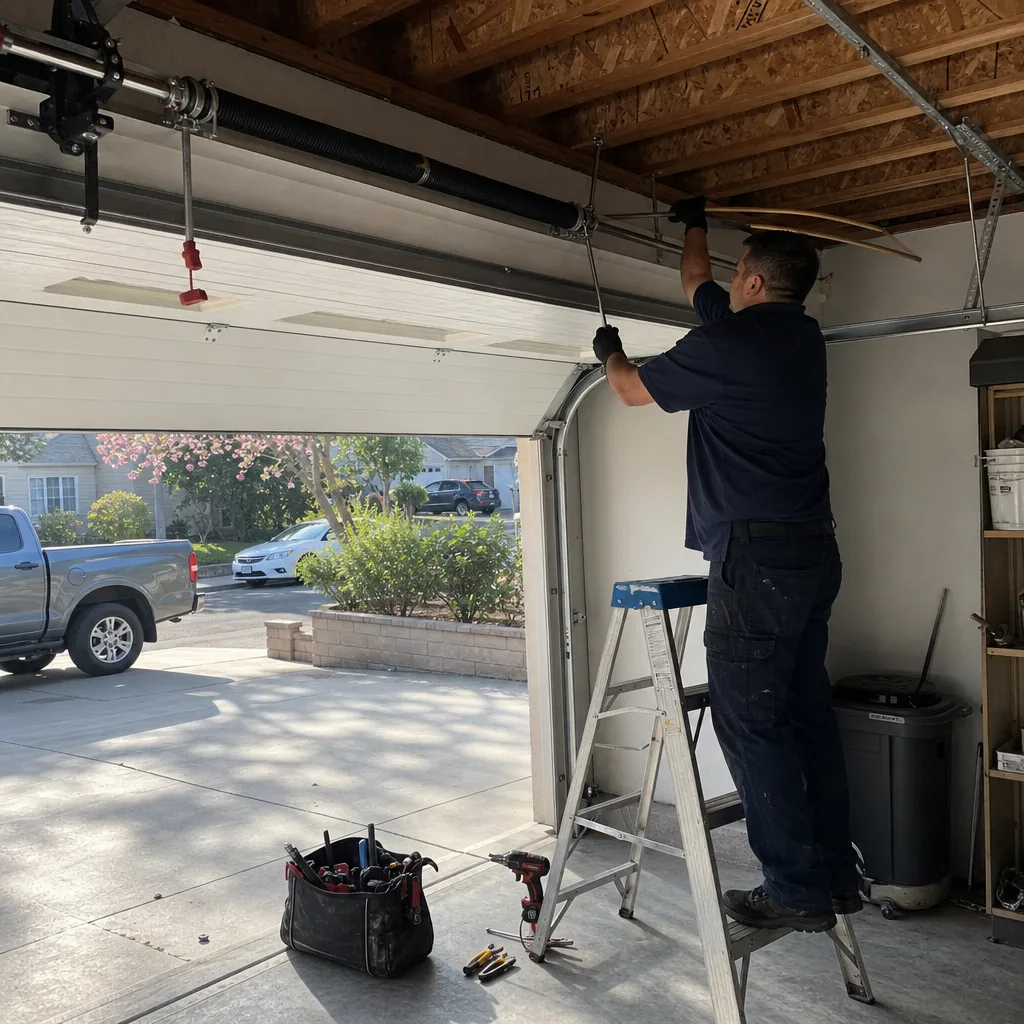
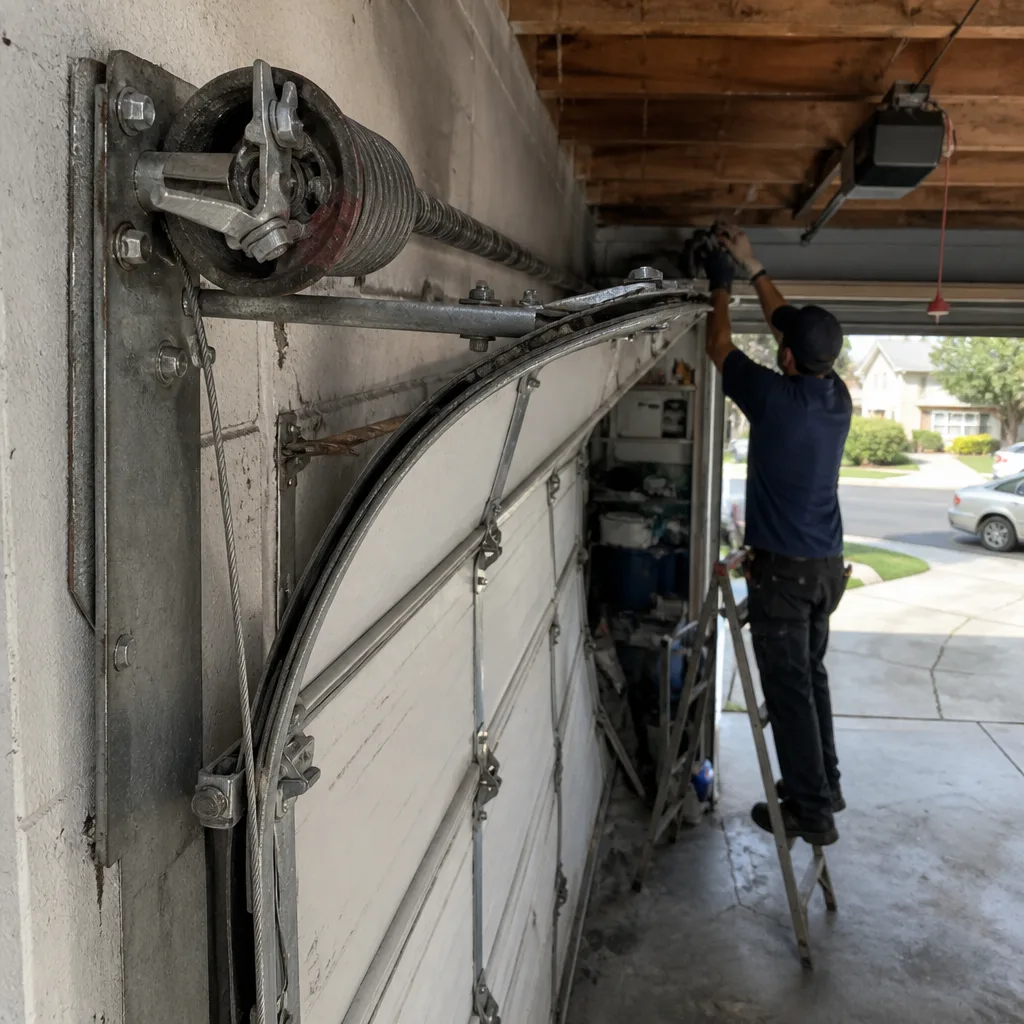
Cables don’t fail silently. They fray before they snap, and the fraying is visible if you know where to look. A garage door cable is a steel wire rope, usually 7×19 construction, running from the bottom bracket up through the drum at the top of the door. When individual strands start to separate, they’re visible as small burrs or stray threads near the drum. If you see that, the cable should be replaced at that visit, not “monitored.” A snapped cable under load is dangerous and usually means the door comes crashing down on one side, twisting the track and damaging panels on the way.
Corona’s dry climate does one surprising thing to cables: it reduces corrosion, which is good, but it also means the red-rust warning sign that coastal homeowners get near the ocean doesn’t appear here. A cable in Corona can look clean on the outside and be worn internally from abrasion against the drum. If your door has made more than about 15,000 cycles, which for a typical Corona household is roughly 7 to 10 years of normal use, the cables are near the end of their service life whether they look worn or not.
Cost to replace a pair of lift cables in Corona: $180 to $320 installed. This is not a DIY job, and it’s not a job where you should accept “we’ll get to it next time.” A cable replacement requires unloading the spring tension safely, and if the spring is still loaded when the cable is removed, the remaining cable takes the entire door weight instantly. This is the point where we’d say the same thing any licensed technician in Corona would say: leave cable work to someone who does it weekly.
One thing the better garage door installation in Corona companies do that changes cable lifespan is set the drum correctly during initial install. A drum that’s even slightly out of alignment will wear one cable faster than the other, and the symptom is a door that sits slightly crooked in the opening over time. That’s not a track problem; it’s a drum problem, and fixing it is a $150 to $250 adjustment, not a door replacement.
Rollers: The $12 Part That Wears Out First
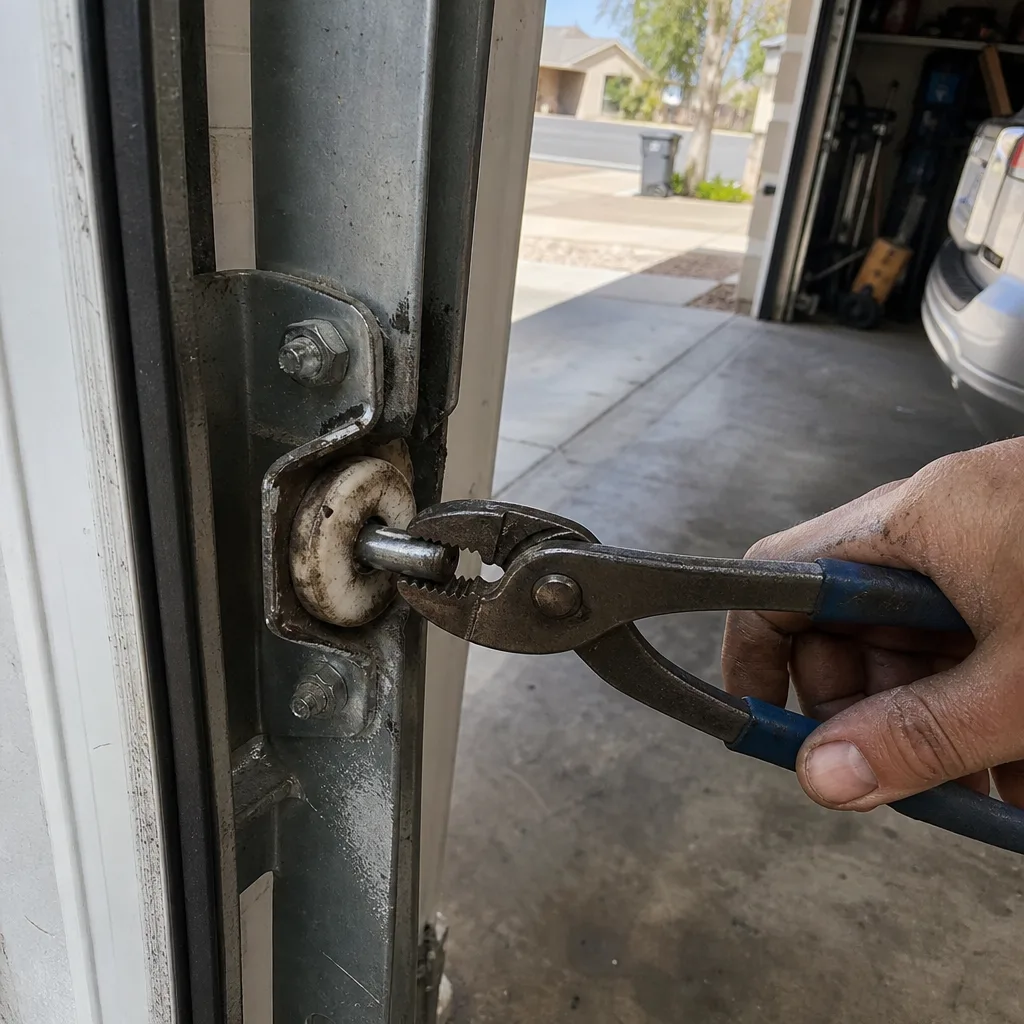
Rollers are the most commonly ignored component on a Corona garage door, and they’re also the highest-frequency failure we see. A standard builder-grade roller is a steel wheel with a plastic bearing. Plastic bearings last 3 to 7 years in Corona’s heat. The plastic degrades, the wheel develops play, and the door starts sounding like it’s shaking itself apart. That sound isn’t the opener, it isn’t the springs, it’s rollers with shot bearings.
Corona’s specific issue is heat. Plastic bearing rollers are rated for a service temperature that assumes a moderate ambient environment. When your garage interior hits 120°F in August, the bearing material softens and wears measurably faster. Nylon rollers with sealed ball bearings are a meaningful upgrade, and the difference in door noise and opener strain is significant. Expect to pay $12 to $25 per roller for quality ball-bearing nylon rollers, plus 30 to 60 minutes of labor for a full set on a double door.
A 10-roller replacement on a two-car door in Corona runs $180 to $300 installed. That’s a fraction of opener replacement cost, and it’s the single most cost-effective way to extend the life of every other component. Worn rollers put lateral stress on the track, which puts uneven load on the springs, which makes the opener work harder. Cheap rollers shorten the life of the entire system.
If you’re hearing grinding, clattering, or a rumbling that wasn’t there six months ago, look at the rollers before you call about the opener. If you can see visible gaps between the wheel and the track, or if the wheel wobbles when you nudge it with a broom handle, the diagnosis is already made.
Roller upgrade timeline for Corona:
- Years 0-5: Builder-grade rollers usually hold up, though by year 5 in a hotter inland garage, they’re getting noisy.
- Years 5-8: Expect one to three rollers to show visible wear. Replace any with cracked or missing plastic bearing material immediately.
- Years 8+: If you haven’t upgraded to ball-bearing nylon rollers, the door is now shortening the lifespan of the springs and opener. Full set replacement is strongly recommended.
Panels and Finish: Santa Ana Wind Load vs. Curb Appeal
Most homeowners choose a garage door panel material based on appearance. In Corona, the Santa Ana season makes panel choice a structural question, not just an aesthetic one. A standard 24-gauge steel panel will flex visibly in a strong Santa Ana gust. Flexing is what causes panel fatigue cracks around the hinge points and the strut attachments. Once a steel panel starts cracking at the hinge line, it can’t be repaired, only replaced.
Here’s the comparison that matters for a Corona home:
- 25-gauge steel: The cheapest option. Fine for a sheltered garage, but it’s the most likely to dent from wind-borne debris and the most prone to flex fatigue. Not recommended for west-facing doors in Corona.
- 24-gauge steel: The standard sweet spot. With a proper strut installed at the top panel and a second strut on wider doors, it handles Santa Ana wind loads acceptably.
- Aluminum panels: Lighter and corrosion-resistant, but notably more prone to denting from airborne debris during wind events. A good choice for east-facing doors where wind exposure is lower.
- Composite or wood-look composite: The most wind-resistant panel material commonly available, but also the highest cost per square foot. For a west-facing double door that takes direct afternoon sun and Santa Ana gusts, it earns its price.
- Insulated steel (polyurethane core): Adds rigidity and thermal resistance. In Corona’s summer, an uninsulated garage can be 10 to 15 degrees hotter than an insulated one, and that heat cycles directly into the spring and opener environment.
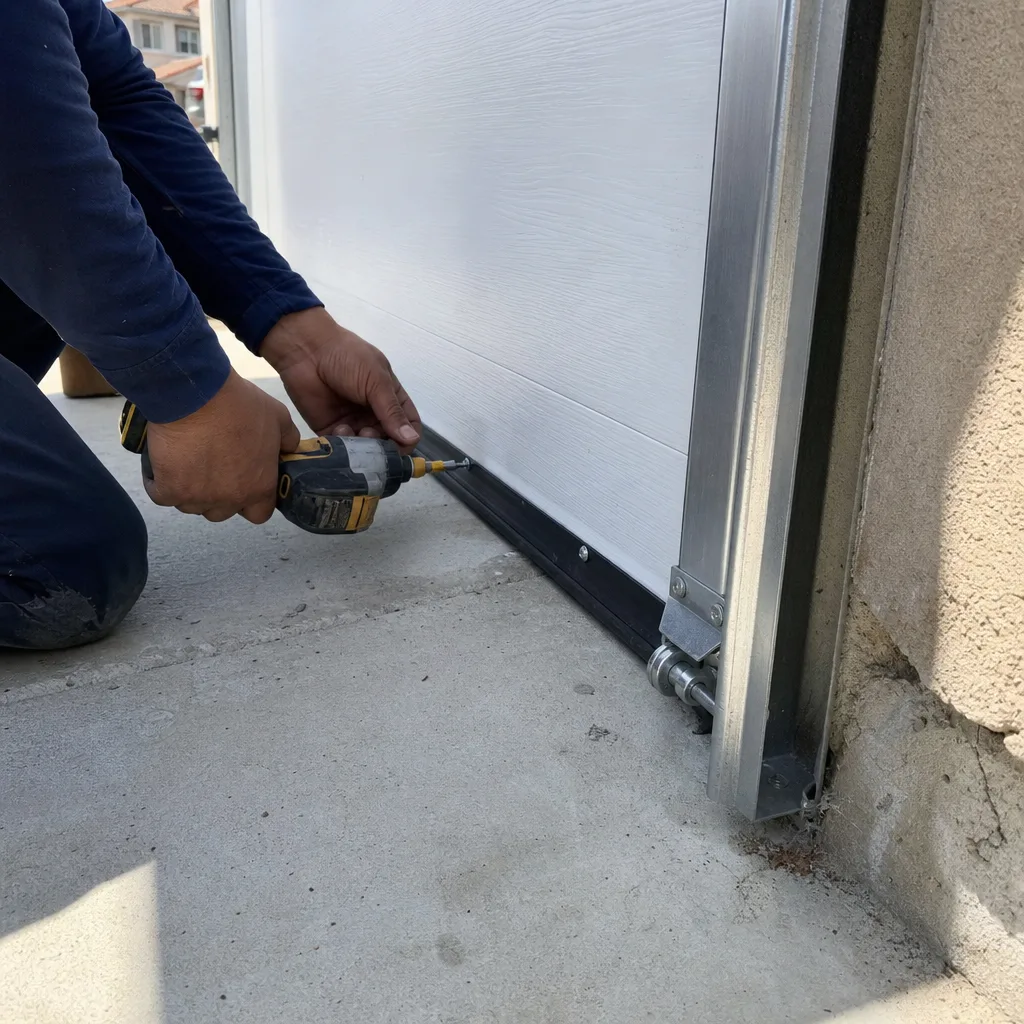
A strut is a U-shaped steel channel bolted across the top panel of the door. If your door doesn’t have one and it’s a wide double door, the top panel is the one most likely to bow or crack under wind load. Adding a strut is a $80 to $150 parts and labor job - cheap insurance against a $400 to $600 panel replacement.
Finish matters more in Corona than on the coast. UV exposure breaks down polyester powder coat finishes faster inland, and the failure mode is chalking: the surface becomes dull and leaves a white residue when you run your hand across it. Once chalking starts, the finish is past the point of polishing. A quality polyurethane-based topcoat or a factory-finished composite panel resists UV breakdown measurably better than a basic polyester finish. If your door faces south or west, ask about the finish chemistry, not just the color.
Openers: Heat, Logic Boards, and Why Your Remote Works Intermittently
Garage door openers in Corona fail in a pattern: first the remote range drops, then the door occasionally reverses for no reason, then the wall button stops working, then the logic board is dead. The root cause is usually heat. The logic board inside the opener housing sits in an environment that regularly exceeds 120°F in an inland garage during summer. Solder joints expand and contract with every heat cycle, and eventually a hairline crack develops. Intermittent remote operation is the early warning sign of logic board fatigue.
The brands we’ve seen hold up best in high-heat installations are LiftMaster and Chamberlain, which share the same parent company and use similar board-level thermal tolerances. Craftsman openers from the 2000s are still common in Corona garages that haven’t been updated, but their older logic boards are reaching the end of service life, and replacement boards for most discontinued Craftsman models are no longer manufactured. At that point, a new opener is cheaper than trying to source a rebuilt board.
Complete garage door opener repair and installation in Corona runs $350 to $700 for a quality belt-drive unit with installation, and $450 to $800 if you’re adding features like battery backup, Wi-Fi connectivity, and a higher horsepower motor for a heavy double door. Chain-drive openers run $100 to $150 cheaper, but they’re measurably louder, which matters if there’s a bedroom above the garage. A belt drive on an insulated door is quiet enough that you won’t hear it from inside the house.
One distinction that matters: opener motor replacement doesn’t extend to the rest of the system. If the springs are weakened or the rollers are worn, a new opener motor will still strain and its lifespan will be shortened. The opener is the most expensive component to replace, but it’s the last one you should replace. Springs, cables, and rollers should be addressed first, then the opener last. When a technician writes up a quote that includes opener replacement but doesn’t mention the spring condition, ask why. The answer should reference the actual measured spring tension, not a vague “it looked fine.”
How to Read an Itemized Garage Door Quote
Most garage door quotes are written in a way that makes it impossible to compare them to anything else. The line items say things like “labor and parts” or “door service” with a lump sum next to them. A defensible quote has specificity: it names the part, the manufacturer, the material, the rating, and the unit price. Here’s how to read one line by line.
An itemized quote should include, at minimum:
- Part names and specifications: “Torsion spring, 0.234-inch wire, 2-inch ID, 24.5-inch length” is a spec. “Garage spring” is a placeholder.
- Labor as a separate line item: Parts cost and labor cost should be separated. If they’re combined into one number, you can’t evaluate whether the part price is inflated.
- Warranty terms in writing: A spring rated for 15,000 cycles should come with a warranty period stated on the quote. If the warranty is verbal, it doesn’t exist.
- Explicit scope of work: What exactly is being replaced, adjusted, or lubricated. “Lube and tune” should list which parts get lubricated and which get adjusted.
- Call-out or diagnostic fee disclosure: Whether the visit fee is waived if you proceed with the repair, and what the fee covers.
The phrase that should stop you from signing: “We’ll figure it out once we get in there.” A technician who measures the door, weighs the door, and inspects the components before writing a quote can tell you exactly what the job will cost before any work starts. That’s not a preference, it’s a mechanical reality - the measurements are all knowable. A company that can’t tell you the price until the door is disassembled is either inexperienced or setting you up for an upsell.
In our work across Corona, we’ve written tens of thousands of flat-price quotes. The process is always the same: measure, photograph, spec, price. Clause 1 of The Haven Standard, the system we’ve built the business around, requires a written price and written scope before any work starts. The customer signs the price, not a blank check. If you’re looking at a quote from another company, the easiest comparison test is simple: does it state the part specification, or does it just state the part category? The former is a quote. The latter is a guess.
A useful checklist for evaluating any quote:
- Does it list specific part names and measurements?
- Are parts and labor separated into distinct line items?
- Is the warranty stated in writing on the quote itself?
- Is there a written scope that describes what will and won’t be done?
- Is there a photo record of the failed component attached or offered?
- Does the company state its license number on the document?
Common Mistakes to Avoid
- Replacing the opener before checking the springs and rollers. If the springs are weak, the new opener will strain from day one. The opener is usually the symptom, not the cause, when a Corona door runs slow or struggles to lift. This mistake costs homeowners $500 to $800 for an opener they didn’t need yet.
- Choosing a door finish based on a showroom sample. A color that looks perfect in a showroom with controlled lighting will look different on a west-facing Corona wall in late afternoon. Ask to see the finish on a completed installation in the same orientation, and ask about the UV rating of the coating chemistry.
- Ignoring a door that’s slightly crooked in the opening. A one-inch gap on one side of a closed door isn’t “just settling.” It’s usually a drum or cable issue that’s getting worse with every cycle, and it’ll eventually take the track out of alignment with it. The fix is cheaper today than it will be in six months.
- Accepting a verbal quote. A spoken price isn’t enforceable and it isn’t comparable. If the company won’t put it in writing with part specifications before starting work, call someone else. Corona has enough qualified garage door companies that you don’t need to gamble.
- Lubricating springs with penetrating oil or WD-40. Penetrating oil displaces the existing lubrication and offers no long-term protection. Use a white lithium grease or a silicone-based garage door lubricant on rollers, hinges, and bearing plates. This is a $12 can of spray versus a $300 spring replacement.
- Treating the garage door as a permanent fixture. A door has moving parts with finite lifespans, and in Corona’s climate those lifespans are shorter than the national average. A door that hasn’t been serviced in 8 years in Corona is overdue for spring, cable, and roller evaluation.
- Hiring on speed alone. The company that answers the phone fastest isn’t necessarily the one that writes the most defensible quote. The customer reviews that matter are the three-star ones - they tell you what actually goes wrong when a job goes sideways.
When to Call a Professional
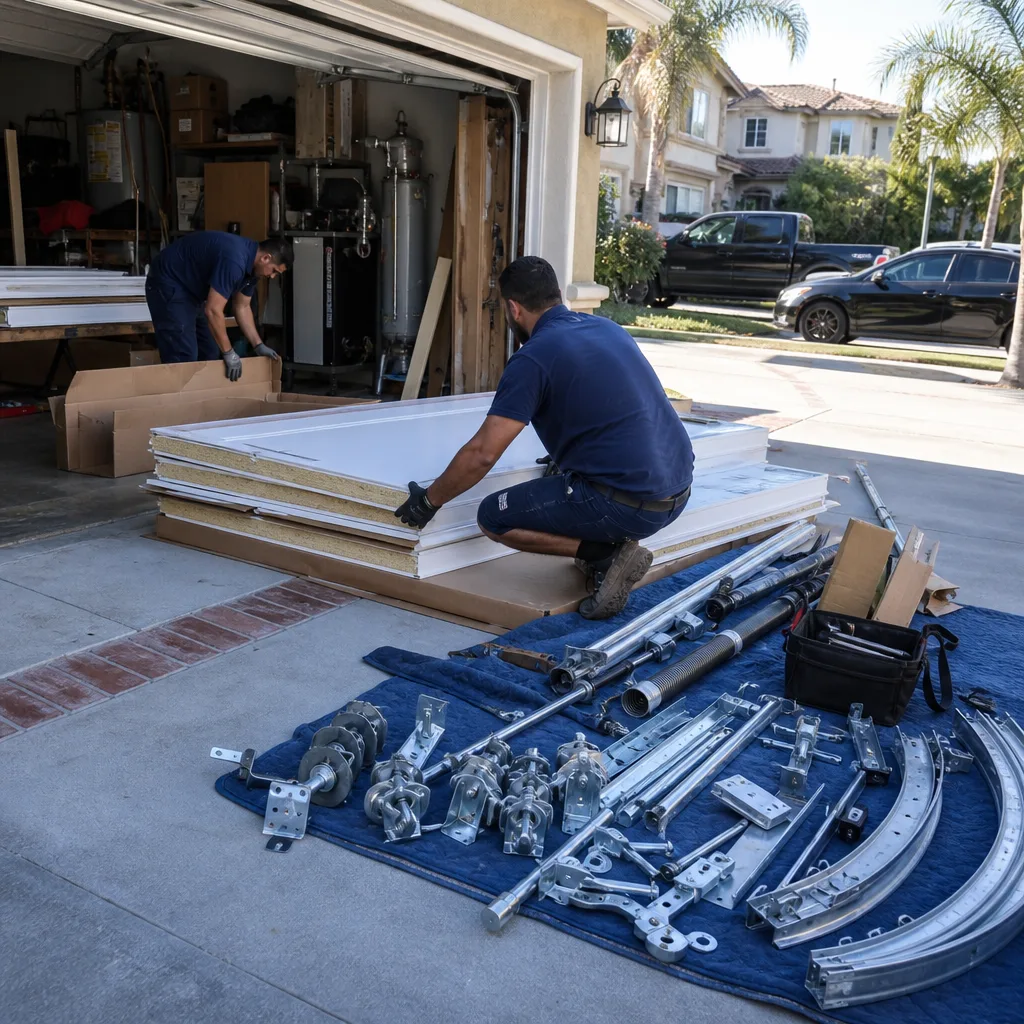
A garage door spring is under several hundred pounds of torque at rest. A cable that snaps under load becomes a steel whip. A panel that cracks mid-cycle can bring the entire door down. These aren’t things you schedule for a free Saturday. If your door makes a loud bang and you find a gap in the torsion spring, the door is unsafe to operate, and professional service is the only call to make. If the door suddenly feels heavier when you disconnect the opener and lift it manually, the springs have failed or are failing. If you see frayed cable strands near the drum, stop using the door. Servo Garage Doors Corona offers free estimates in Corona - call (951) 482-7637 and a technician will give you a flat written price before any work starts.
Frequently Asked Questions
Most garage door repairs in Corona run $150 to $600 depending on the component. Spring replacement is the most common job at $250 to $450 installed for a pair. Cable replacement runs $180 to $320, and a full roller set replacement runs $180 to $300. Opener replacement with installation is $350 to $700 for a quality belt-drive unit. The price should be written, itemized, and agreed to before work starts, which is the standard garage door repair in Corona that we’ve followed since 2015.
Corona’s inland climate combines sustained summer heat above 100°F with cooler nights, creating daily thermal expansion cycles in the tempered steel springs. That thermal fatigue shortens the effective lifespan of the spring compared to the same spring installed in a coastal microclimate. UV exposure on the panels and paint finish compounds the issue for the door’s exterior components.
Yes, we answer calls live around the clock and dispatch to any Corona neighborhood. When you call (951) 482-7637, you’ll speak to a real person who schedules a named technician with a specific arrival window, and you’ll get an on-the-way text when that technician is en route. The technician will photograph the failed spring and hand you a written flat price before any work starts.
Look for specific part names and measurements, not categories. A line item that says “torsion spring, 0.234-inch wire, 2-inch ID” tells you the technician measured the door and spec’d the correct part. A line item that says “spring” doesn’t. Also verify that parts and labor are separate, the warranty is written, and the scope of work is explicit.
If your Corona door has been in service for more than 5 years without a professional inspection, the answer is yes. Rollers, cables, and springs all wear on schedules that are accelerated by inland heat, and early-stage failures are often invisible to an untrained eye. A tune-up that catches a marginal roller bearing at $12 is a better outcome than a seized roller that takes the track out of alignment at $300.
LiftMaster and Chamberlain are the two brands we’ve seen hold up consistently well in high-heat garage environments, and both share the same parent company’s thermal tolerances on their logic boards. A belt-drive unit is the right choice for an attached garage with living space above it, and a battery backup is a useful hedge against the occasional Santa Ana-related power outage in the Riverside County corridor.
The Bottom Line
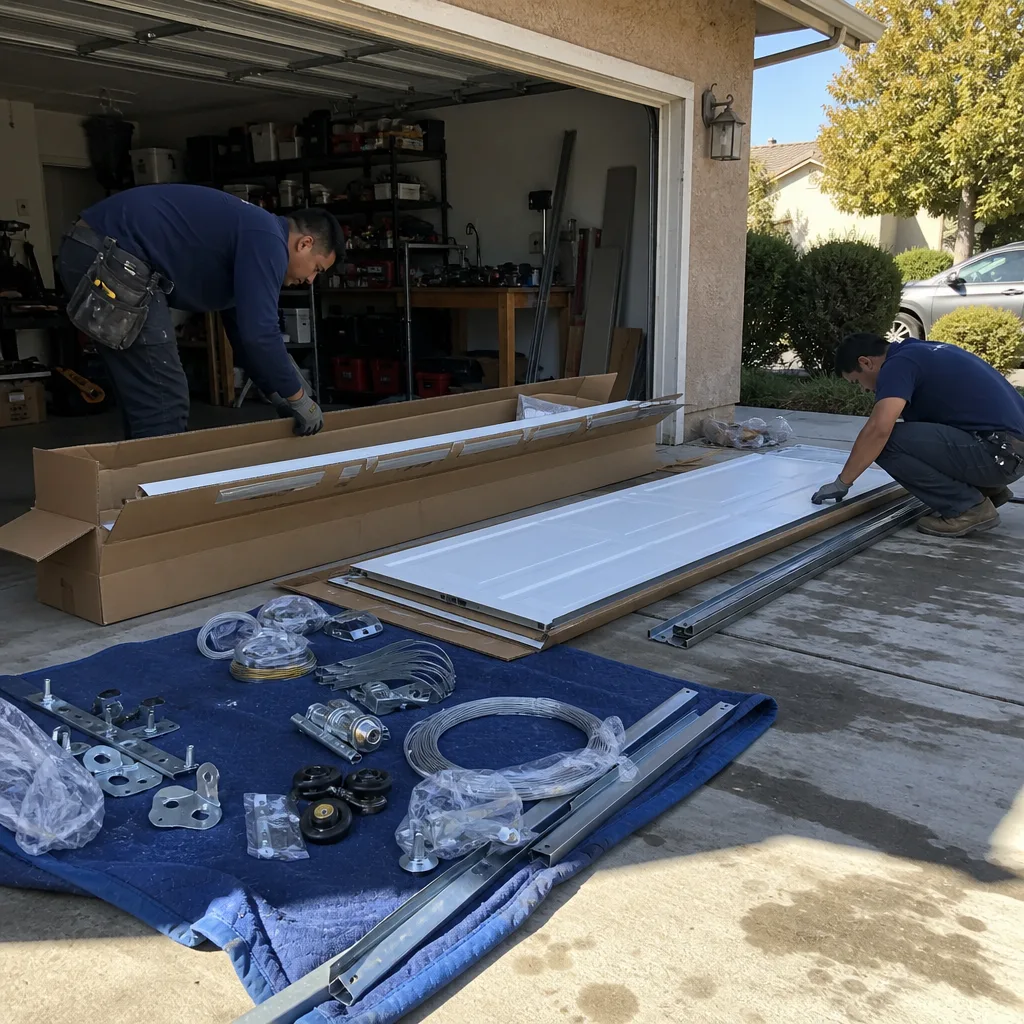
A garage door in Corona is a system with components that wear on accelerated schedules compared to coastal Southern California. Torsion springs fatigue from thermal cycling, roller bearings degrade in sustained heat, and panels flex under Santa Ana wind loads. The fixes are straightforward when they’re caught early, and expensive when they’re not. The single most important protection you can give yourself is a written, itemized, flat price before any work begins. If the quote doesn’t specify the parts, it isn’t a quote. If the warranty isn’t written, it isn’t a warranty. And if a technician won’t show you the failed part before quoting a replacement, you’re not getting evidence, you’re getting a story. We’ve built our entire operation around making that distinction unnecessary.
Written by Marcus Deller, Owner at Servo Garage Doors Corona, serving Corona since 2015.