
Last updated September 20, 2026
Full 25-point door and opener safety check with every visit - springs, cables, rollers, tracks, and your LiftMaster or Chamberlain opener included
You get a price before we start. It does not change when the truck arrives.
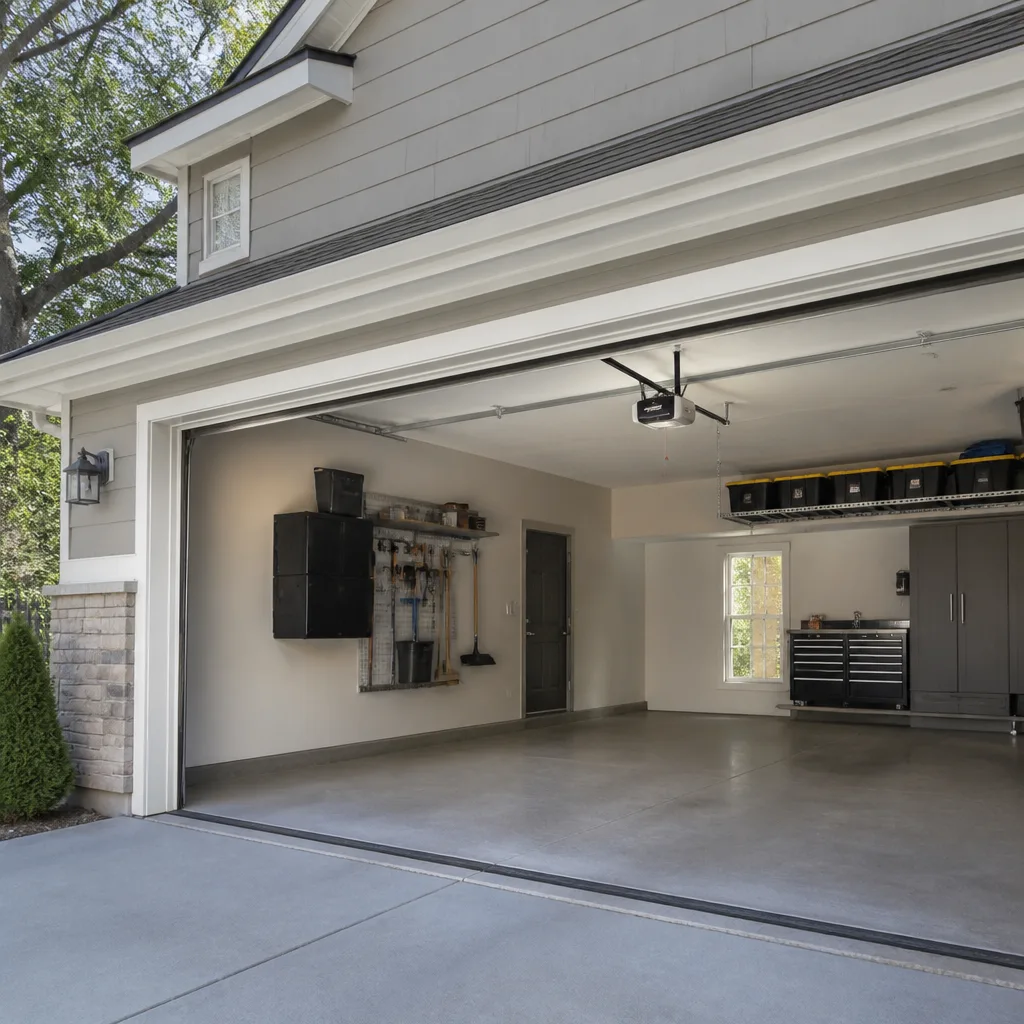
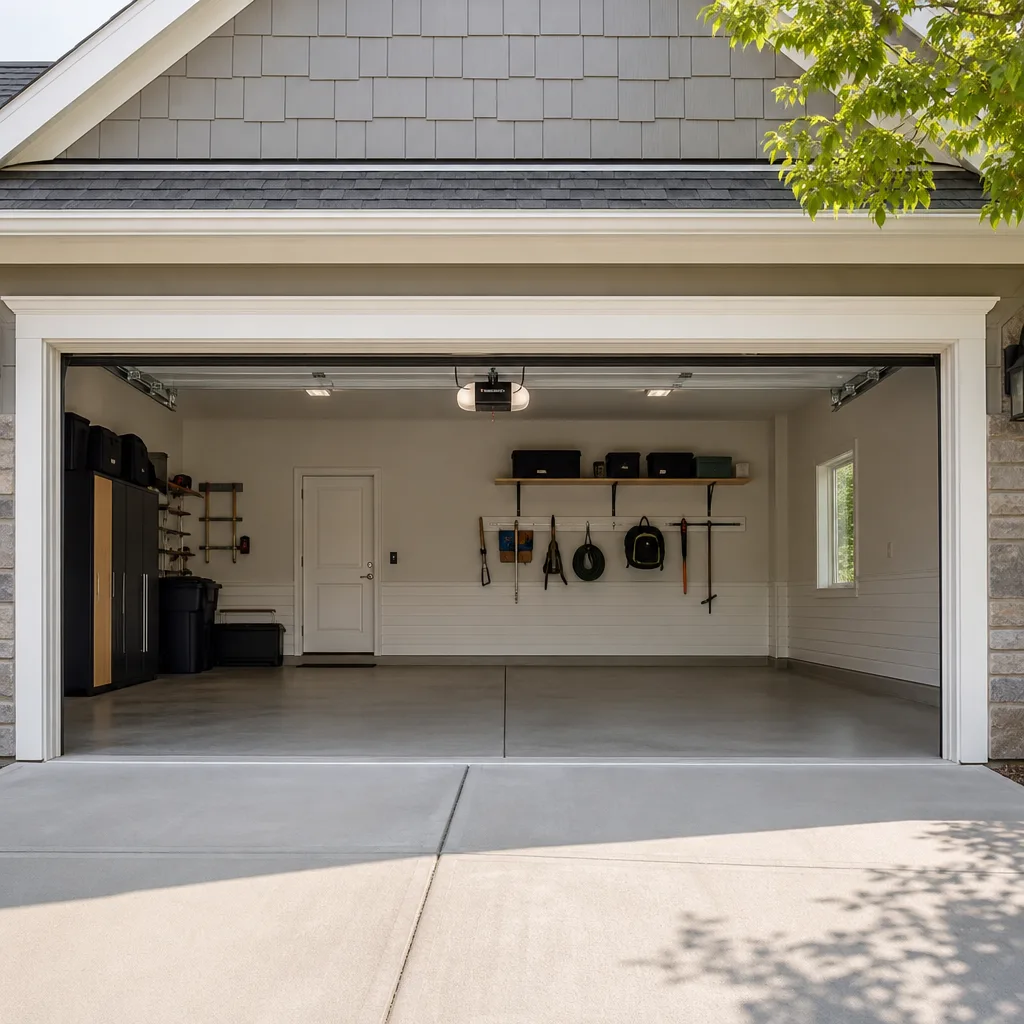
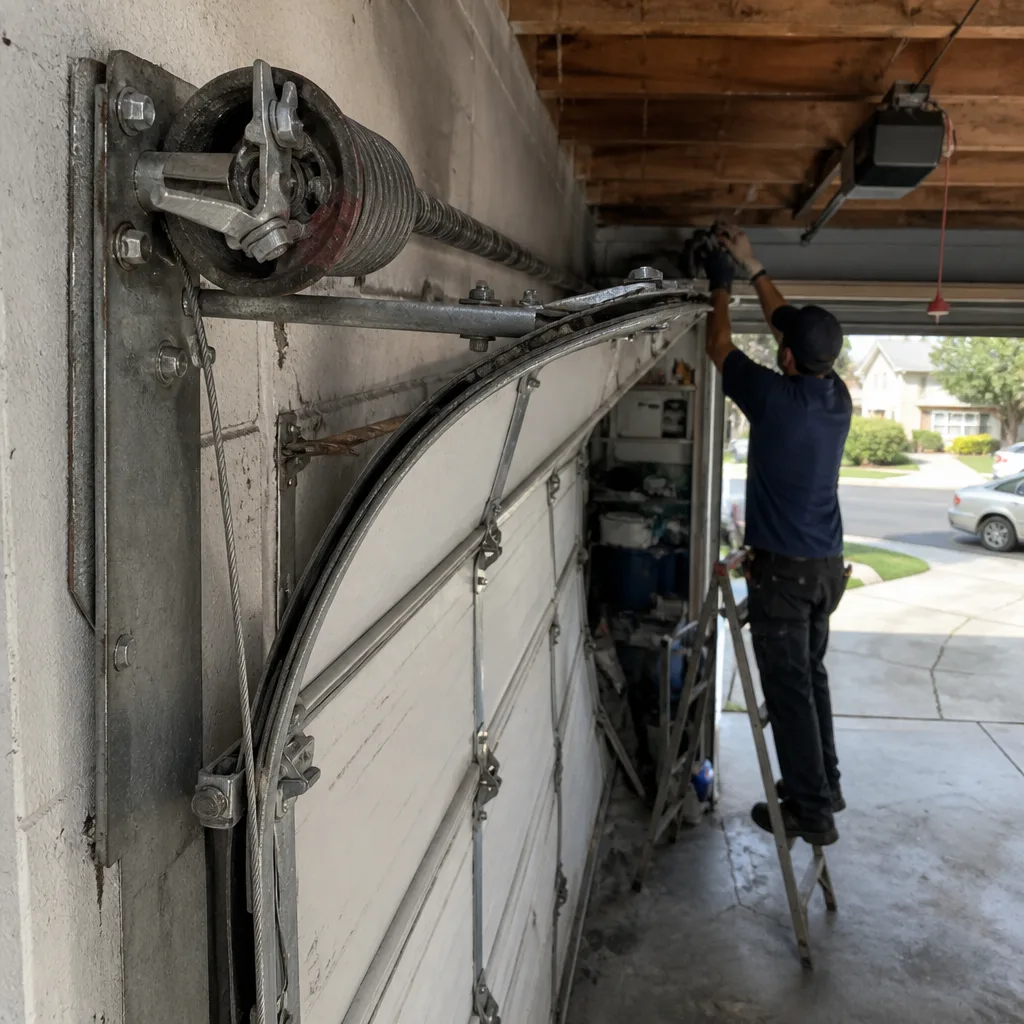 Before
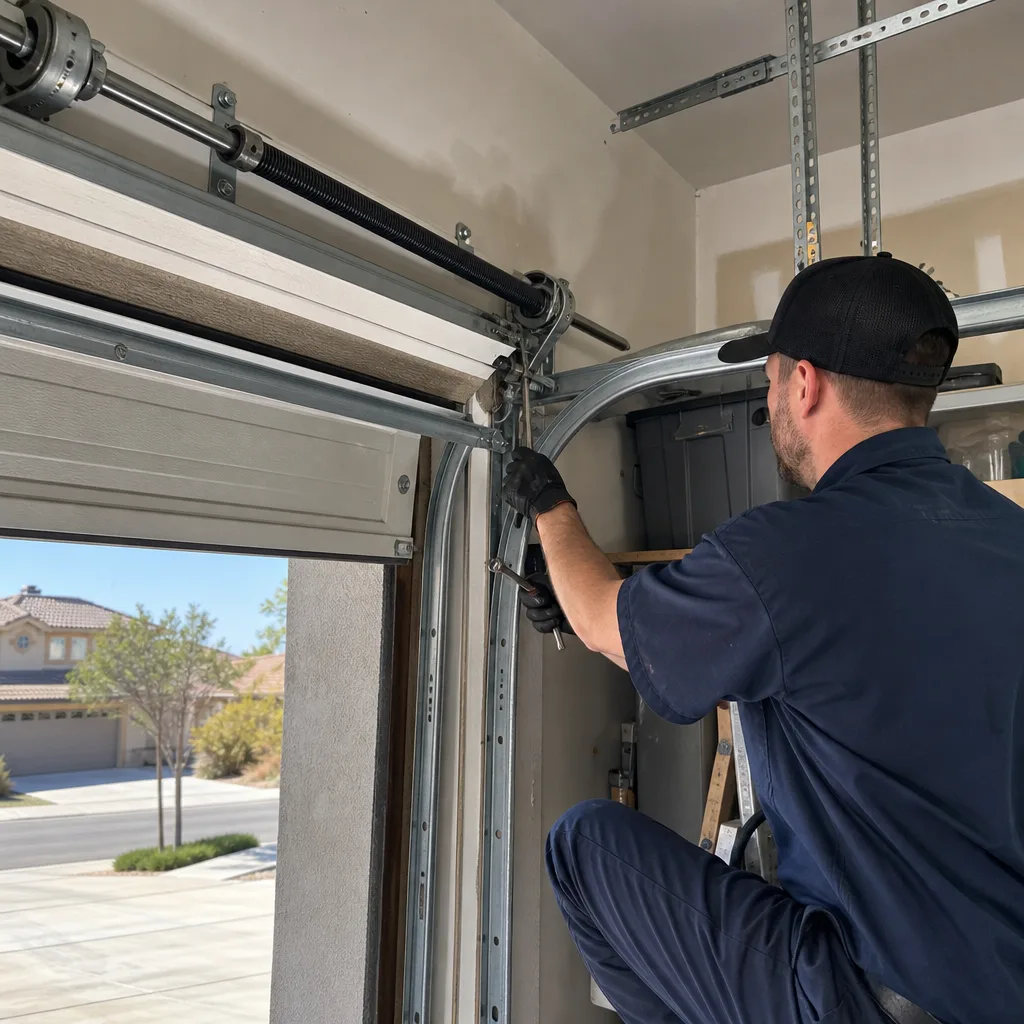 After
After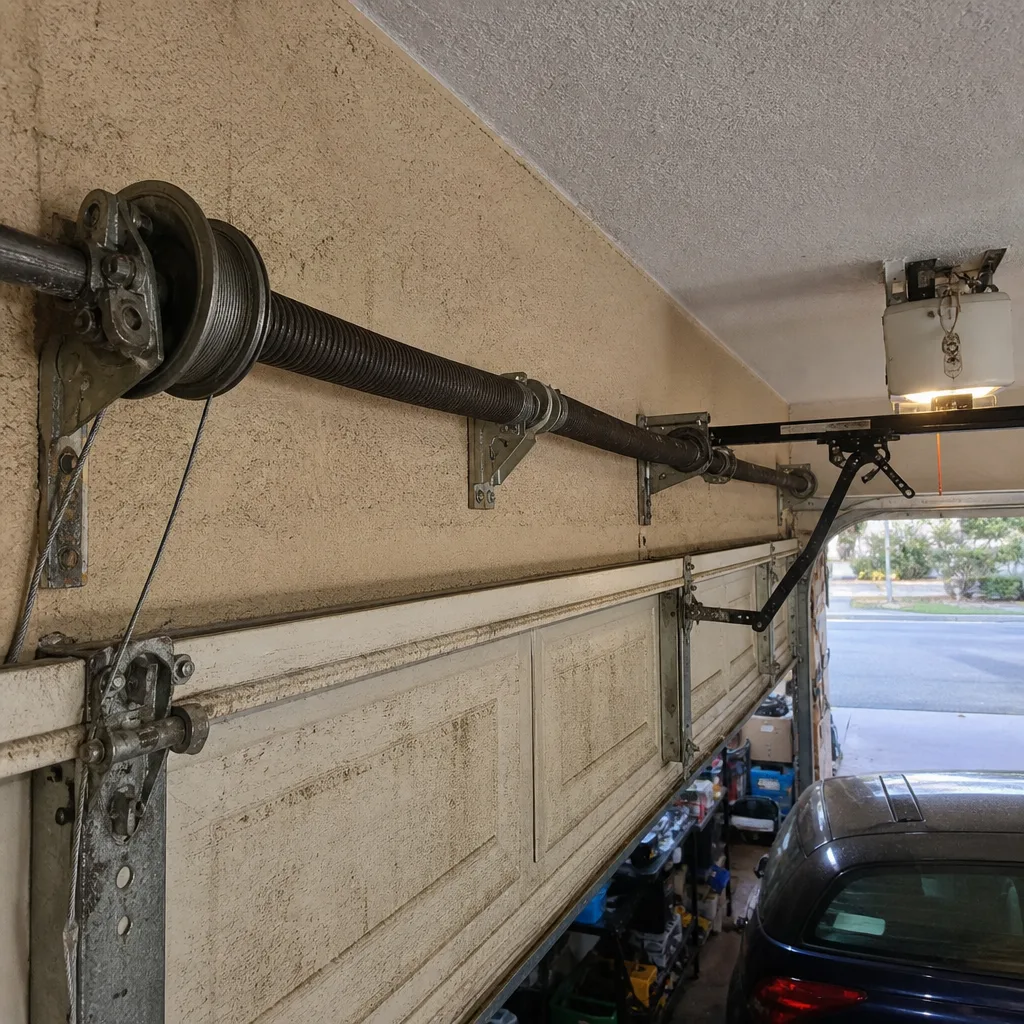 Before
 After
After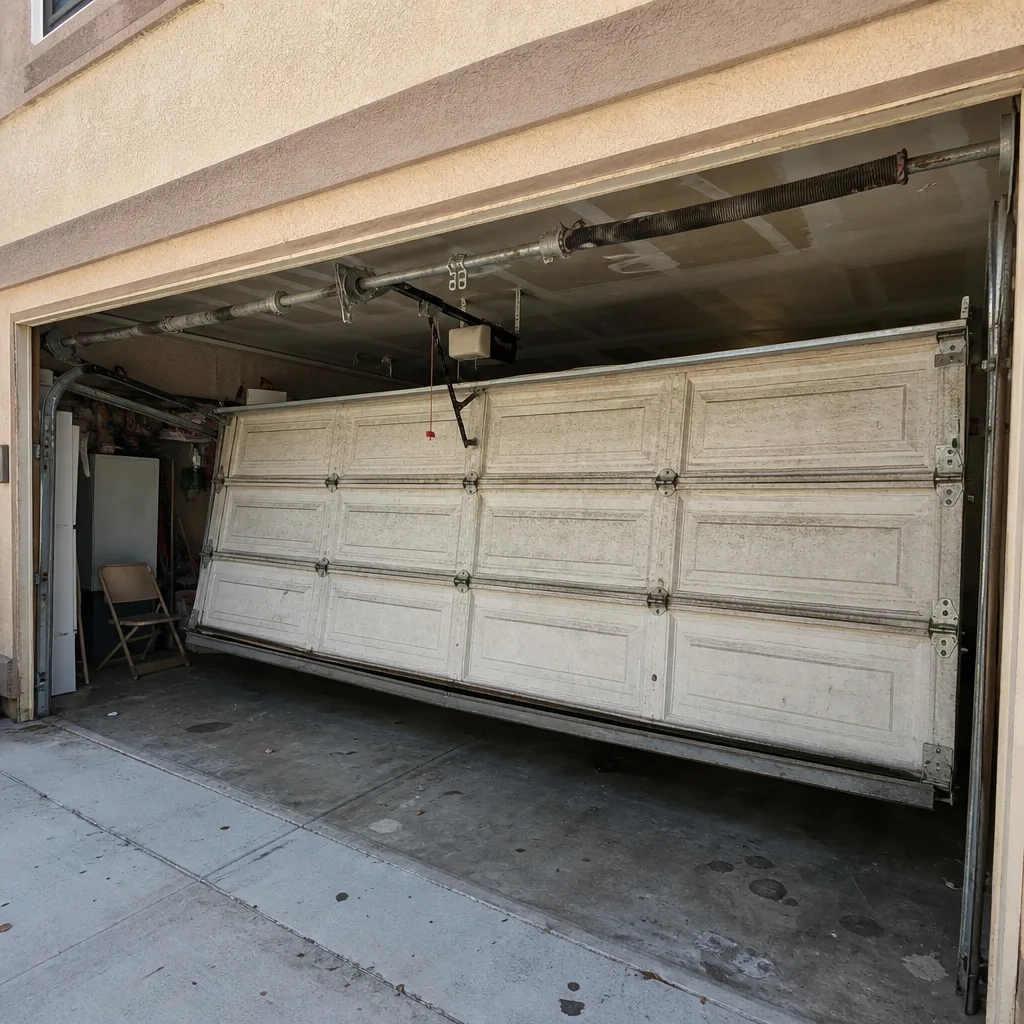 Before
 After
AfterSeasonal Garage Door Care for Corona: Year-Round Homeowner’s Guide
Santa Ana wind events in Corona regularly hit 50-70 mph gusts, and the lateral racking stress on an improperly tensioned door during those events is the leading cause of bent track sections that get misdiagnosed as roller failure. Most homeowners discover this in October, when the first big wind arrives and a door that worked fine all summer suddenly binds halfway up. Our Complete Guide to Garage Door in Corona maps maintenance to the city’s actual climate pattern - a UV/heat stress period, a Santa Ana wind period, and a brief wet window - so you’re checking the right components at the right time, not working through a generic four-season checklist written for somewhere with snow.
Quick Answer
Seasonal garage door maintenance in Corona means three distinct checkpoints, not four: a pre-summer heat inspection focused on torsion spring balance and opener logic board cooling, a pre-Santa Ana wind inspection covering track alignment and bottom seal condition, and a wet-season weatherstripping audit before winter rains arrive. Each period stresses a different subset of components, and skipping one checkpoint means paying for a repair that earlier inspection would have caught at a lower cost.
Table of Contents
- Corona’s Real Climate Pattern: Three Seasons, Not Four
- The Pre-Santa Ana Inspection: Three Checks That Matter Before Wind Season
- Summer Heat and Torsion Spring Tension: Why February Calibration Fails in August
- Wet-Season Weatherstripping Audit: Which Seal Profiles Handle Corona’s Rain
- Year-End Documentation: Photographing Components for a Dated Baseline
- Opener Maintenance in Corona’s Heat: Logic Boards and Limit Switches
- Lubrication Schedule for Corona’s Dust and Temperature Swings
- Common Mistakes to Avoid
- When to Call a Professional
- Frequently Asked Questions
- The Bottom Line
BeforeAfterCorona’s Real Climate Pattern: Three Seasons, Not Four
Corona sits in the western Inland Empire, where summer highs routinely exceed 95°F in neighborhoods like South Corona, Eagle Glen, and Sierra del Oro. The climate splits into three functional periods: a May-through-September heat stress window, an October-through-December Santa Ana wind season, and a January-through-April wet period with intermittent driving rain from the Pacific. What Corona does not get is a freeze-thaw cycle, which means the spring calibration charts written for Midwestern garages do not apply here. A torsion spring that holds perfect balance through a Minnesota winter behaves differently after four months of 100-degree afternoon heat radiating through an uninsulated garage door.
Here is the component-to-season map we use when scheduling maintenance across Corona service calls:
- Heat stress period (May-September): torsion springs lose tension incrementally; opener logic boards overheat in uninsulated garages; nylon rollers wear faster in sustained heat; lubricant thins and migrates off hinges.
- Santa Ana wind period (October-December): lateral racking stress bends track sections when door tension is off; bottom seals crack from airborne dust and grit; emergency release cords get used for the first time in months and need testing.
- Wet period (January-April): weatherstripping takes driving rain from the west; steel bottom brackets corrode; rust develops on cable drums if the installer used ungalvanized hardware; wood jamb seals swell and split.
If you only remember one thing from this guide, make it this: the component most likely to fail is different every four months, and a maintenance calendar that treats all parts equally will consistently under-maintain the ones that matter. The Garage Door Repair in Corona work we do in November looks nothing like the work we do in July, because the failure profile is completely different.
The Pre-Santa Ana Inspection: Three Checks That Matter Before Wind Season
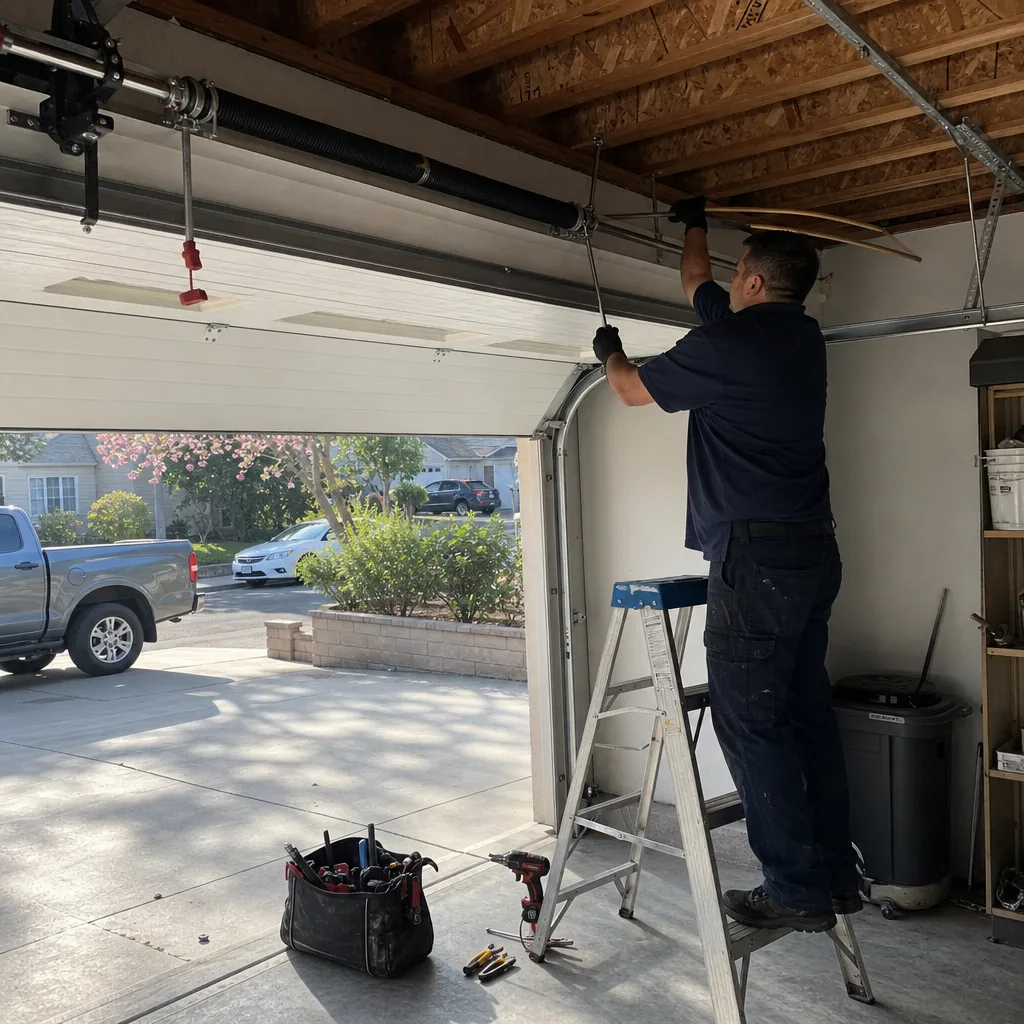
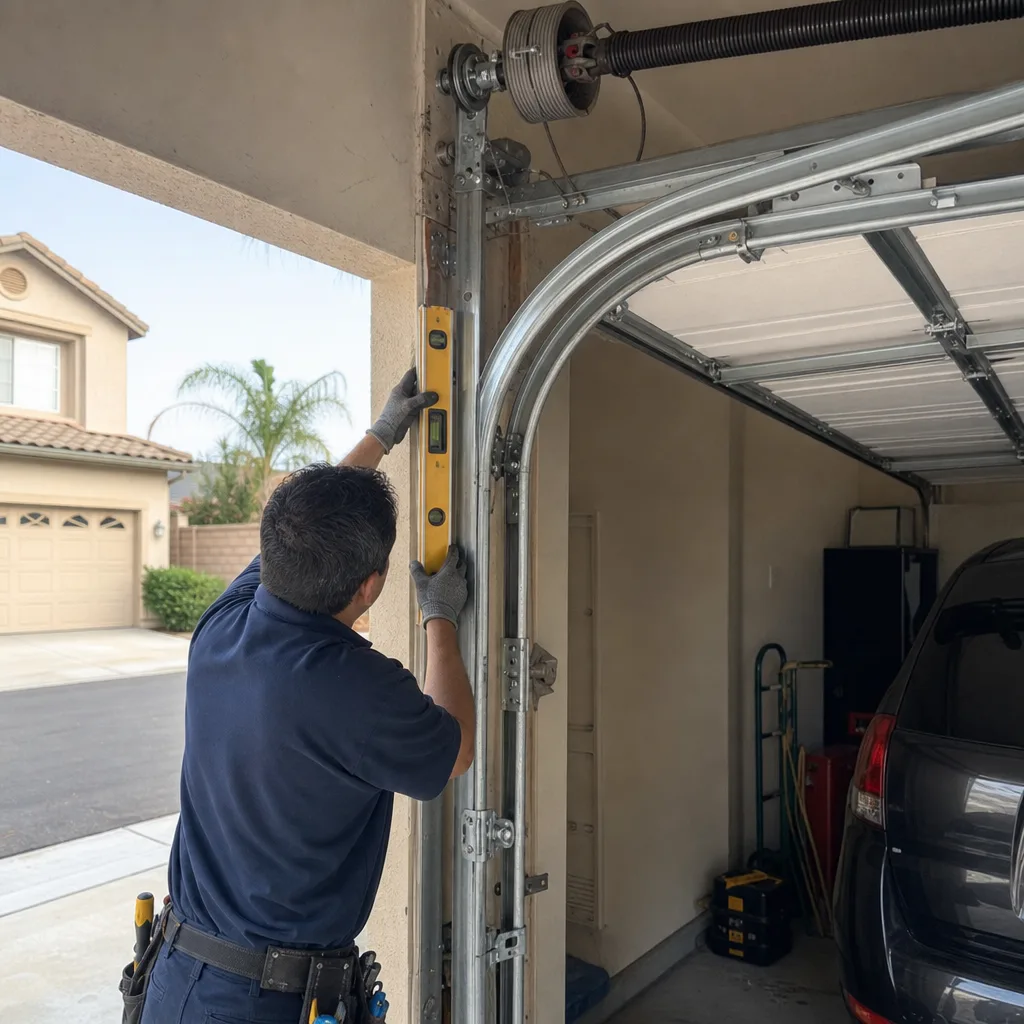
Santa Ana winds hit a garage door differently than anything else in Corona’s climate. The wind pushes against the full face of a sectional door like a sail, and if the torsion spring tension is even slightly off, that lateral force transfers directly into the track channels. The door’s own weight usually holds it straight; when the spring is weak, the wind wins and the track bends. Here are the three checks to complete before October:
- Track alignment inspection. Disconnect the opener and run the door up and down by hand. It should move with roughly equal effort through the full travel and the rollers should sit centered in the track channel, not riding against one side. If you hear a scraping sound from either vertical or horizontal track sections, or see visible daylight between the roller and the track on one side only, the track is out of true. Note it before wind season, not after the first 60 mph gust turns a minor misalignment into a bent section.
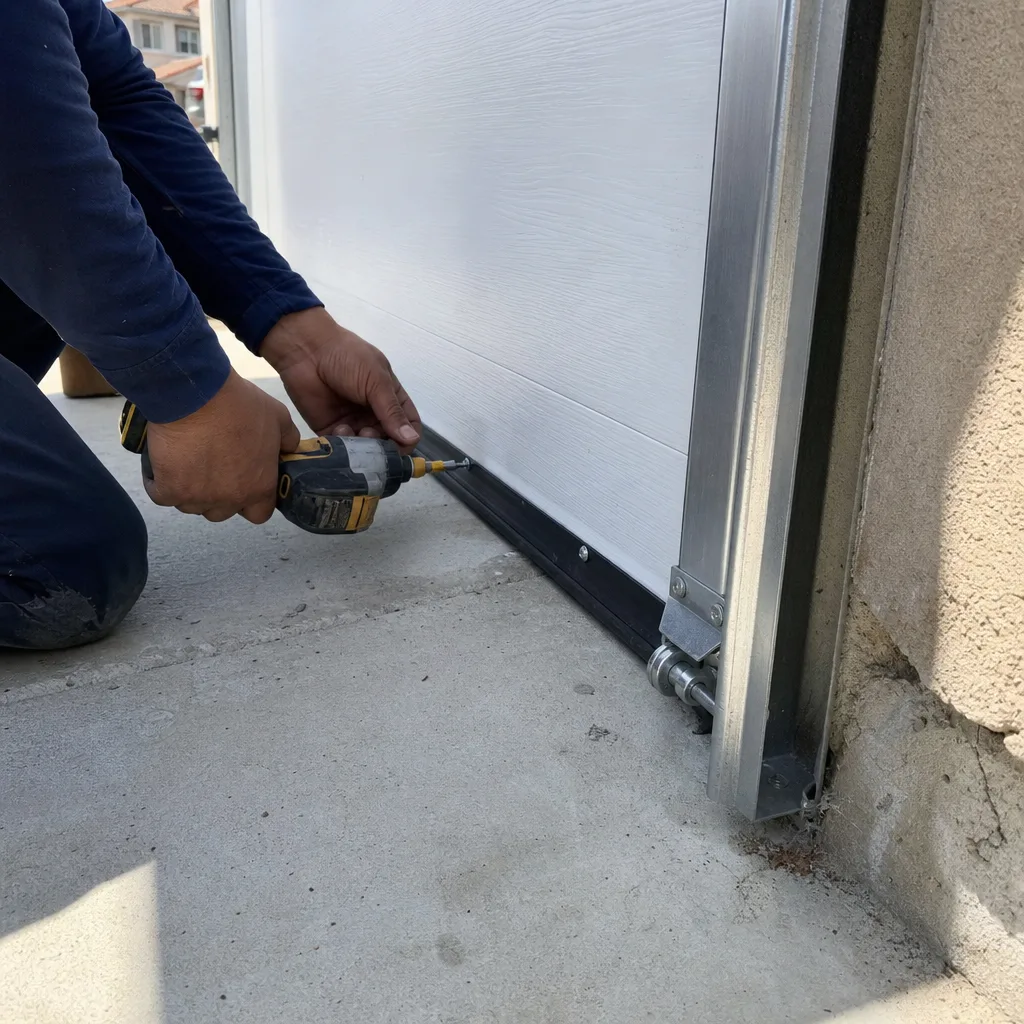
- Bottom seal condition check. The bottom seal is the door’s only contact point against wind-driven dust and water. In Corona, UV exposure and blowing grit from October through December eats rubber seals faster than most homeowners expect. Run your hand along the underside of the door with it closed. The seal should feel pliable and make continuous contact across the full width. Cracks, gaps, or a seal that has gone hard and glossy means replacement is due before the wind finds a weakness.
- Emergency release function test. This is the least-tested component on most Corona garage doors because it only matters when it matters. The emergency release is the red cord hanging from the opener rail. Pulling it disconnects the door from the opener carriage so you can open the door by hand during a power outage, which Santa Ana wind events frequently cause in Eagle Glen and the surrounding foothill neighborhoods. Test it quarterly: pull the cord, confirm the door moves freely by hand, then reconnect and run one full open-close cycle to re-seat the carriage.
In our experience at Servo Garage Doors Corona home, the door that fails during Santa Ana season is rarely the one with an obviously broken part. It is the one where track alignment drifted by a quarter inch over summer and nobody noticed until the wind found the slack.
Summer Heat and Torsion Spring Tension: Why February Calibration Fails in August
A torsion spring is a chunk of hardened steel wire wound tight enough to counterbalance your door’s weight. The tension is set at installation and then, like everything made of steel, the spring responds to temperature change. Here is what happens in Corona: a spring calibrated correctly on a February morning at 58°F behaves differently on an August afternoon at 104°F, because thermal expansion alters the wire’s load-bearing capacity by a measurable margin. The effect is small per degree, but across a 46-degree seasonal swing, it adds up.
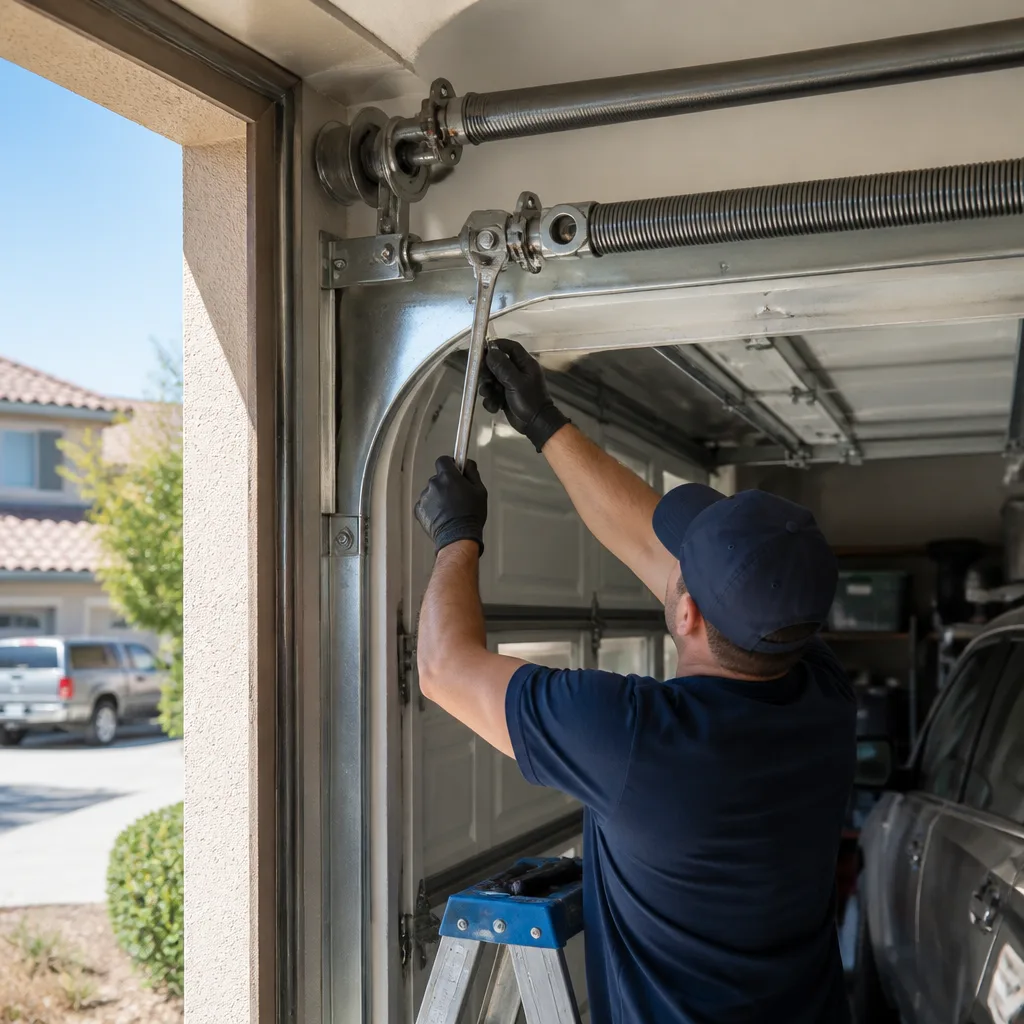
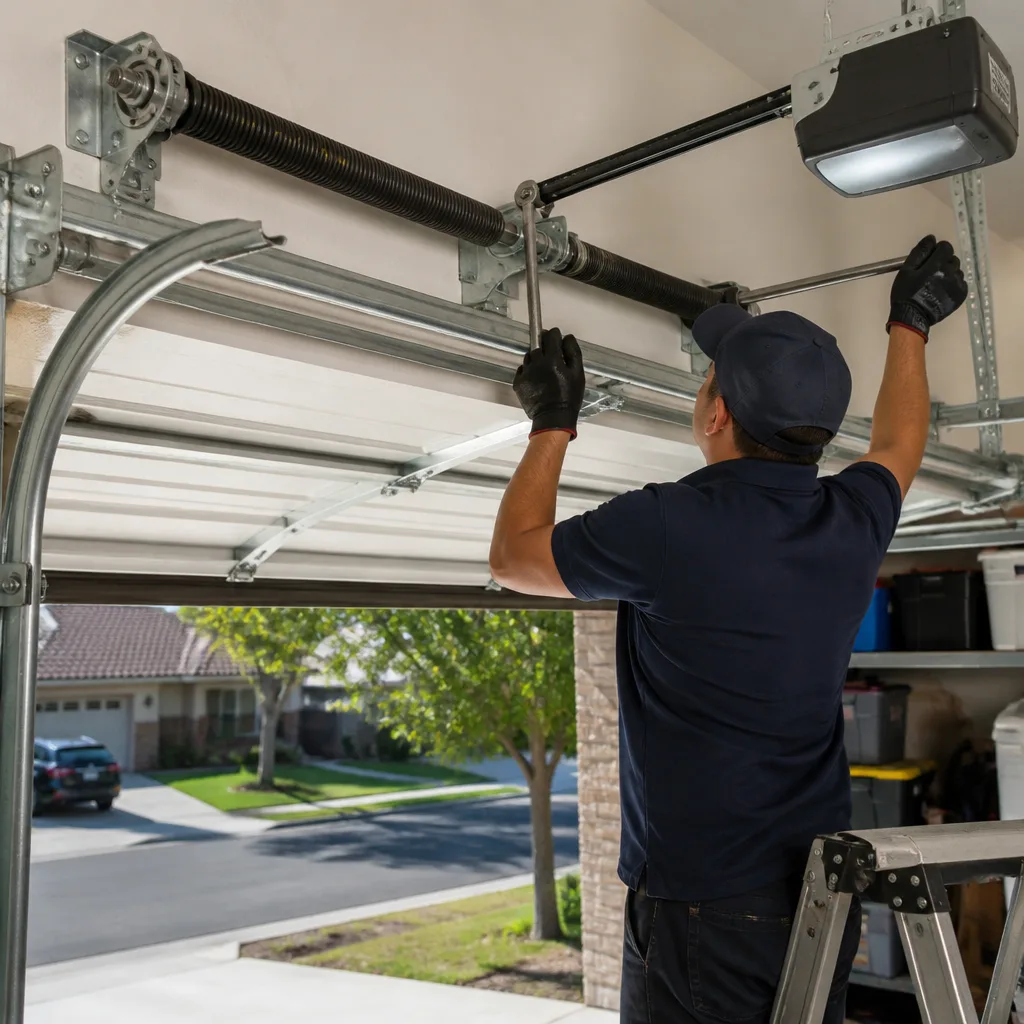
The practical consequence is that a door perfectly balanced in February may test slightly heavy in August. You are lifting an extra five to ten pounds of effective door weight, and you will notice it most when the door is halfway up and you have to push harder to finish the trip. The tolerance range is what matters: most residential torsion spring systems are designed to absorb a 5-8 percent deviation without meaningful wear. If the door is noticeably heavier in August and the imbalance persists after lubrication and roller inspection, the spring has likely lost permanent tension through metal fatigue, not temperature alone. Adjustment is a job for a technician; torsion springs are under several hundred pounds of stored torque, and a spring that lets go during adjustment puts the person in front of it in the hospital. Do not attempt a spring adjustment yourself.
What you can do before calling a professional: run the door to the halfway point and let go. It should hold position. If it drifts down, the spring is under-tensioned. If it drifts up, the door is under-sprung or the wrong springs were installed. Either way, write down what you observe, note the door brand (we service Garage Door Installation in Corona across all major brands including Clopay and Amarr), and describe the behavior when you call. A technician who receives “door drifts down from halfway” arrives with the right diagnostic plan, not a guess.
Wet-Season Weatherstripping Audit: Which Seal Profiles Handle Corona’s Rain
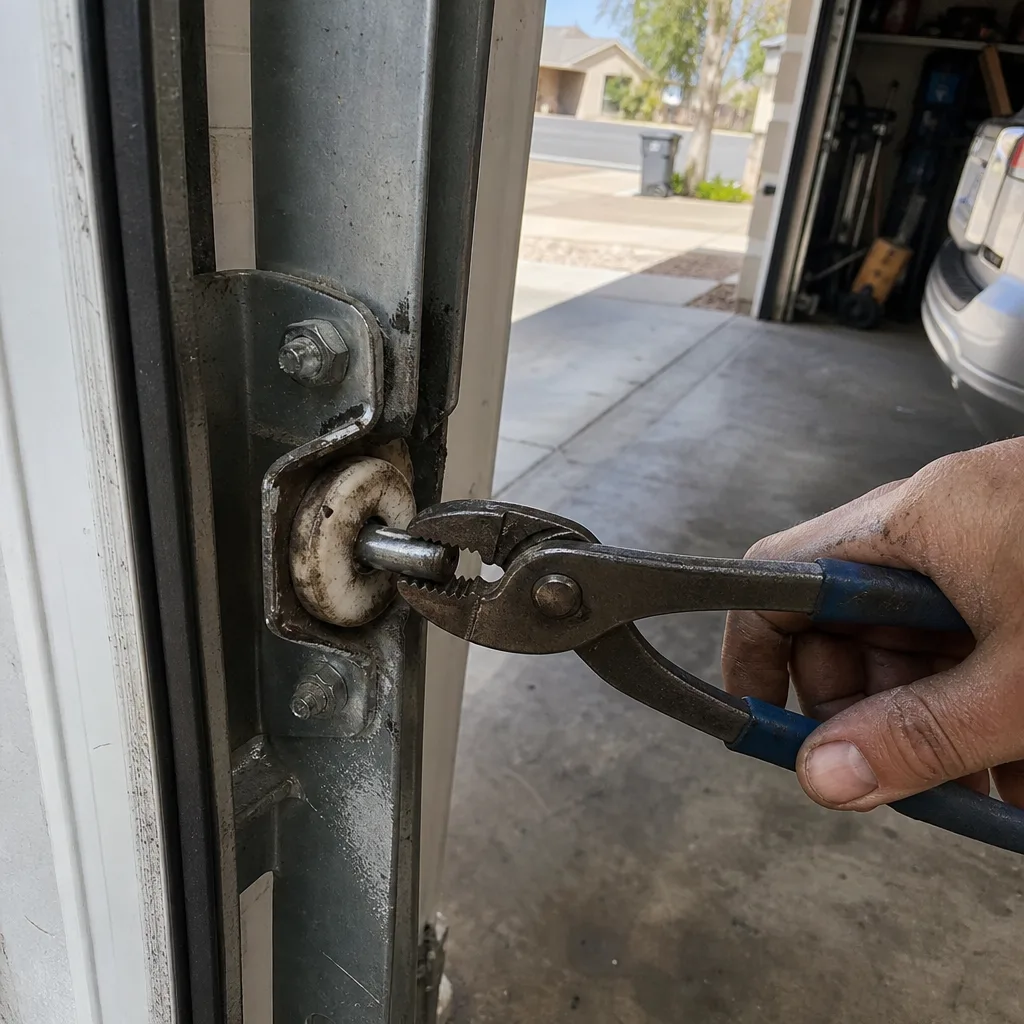
Corona’s wet season runs January through April, with most rain arriving on westerly fronts that drive water directly against north- and west-facing garage doors. The weatherstripping profile that works on a south-facing door may fail on a west-facing door because the rain hits at an angle and wind pressures it into every gap. This is the overlooked variable in most generic maintenance guides.
There are three common bottom seal profiles on sectional doors in Corona:
- T-style single channel: a T-shaped rubber extrusion that slides into a retainer on the door bottom. Common on Clopay and Amarr doors. Adequate for light rain, fails against wind-driven rain because the rubber deflects without a secondary bulb to stop water.
- Bulb-style double channel: a round bulb seal above a flat base. The bulb compresses against the driveway and rebounds after the door opens, which makes it the better choice for west-facing doors in Corona that take direct rain pressure. The bulb closes the gap that a worn T-seal leaves open.
- L-shaped reverse angle: used on older doors with uneven floors. The L shape bridges larger gaps but provides less compression, so it works best on south-facing doors that rarely see direct wind pressure.
Identifying the correct replacement profile starts with the door bottom geometry, not the old seal. Look at the underside of the door with it open. If there is a single aluminum retainer channel, you need a T-style seal. If there are two channels, bulb-style. If there is no retainer at all and the seal is screwed or nailed to the door face, you have a retrofit door and should take a photo of the bottom edge before buying a replacement, because post-2010 doors from different manufacturers use different channel widths. Bringing the photo to a supplier avoids buying a seal that slides in but leaks at the ends. If you want a second set of eyes, our Free Second Opinion offer applies to any written estimate from another company, including weatherstripping quotes.
Year-End Documentation: Photographing Components for a Dated Baseline
Here is a practice that saves Corona homeowners real money: in December, before the winter rains and after the Santa Ana season has passed, take dated photographs of the following components: torsion spring set (including the stationary cones), both cable drums, all roller stems, bottom seal along the full width, track brackets at every mounting point, and the opener rail where the trolley carriage connects. Store these photos somewhere durable. They become your evidence base.
Why this matters: if any component fails in the coming year, you now have a dated record of its condition before the failure. That resolves the single most common dispute in residential garage work, which is whether the technician caused the damage or inherited it. When we quote a replacement at Servo Garage Doors Corona, Clause 4 of The Haven Standard requires that we photograph the failed component before quoting a replacement. The customer sees the break before they see the number. Your own December photos extend that same principle backward: you see the pre-failure condition with your own eyes, dated and timestamped, before any dispute can arise.
Photographing components in December also makes next year’s maintenance plan cheaper to execute. When you call for service in July and the technician asks “what springs are on the door,” you answer from a photo instead of a guess. That saves diagnostic time, which saves the service fee, and it tells the technician whether to stock a standard wire size or a specialty spring before dispatch.
Opener Maintenance in Corona’s Heat: Logic Boards and Limit Switches
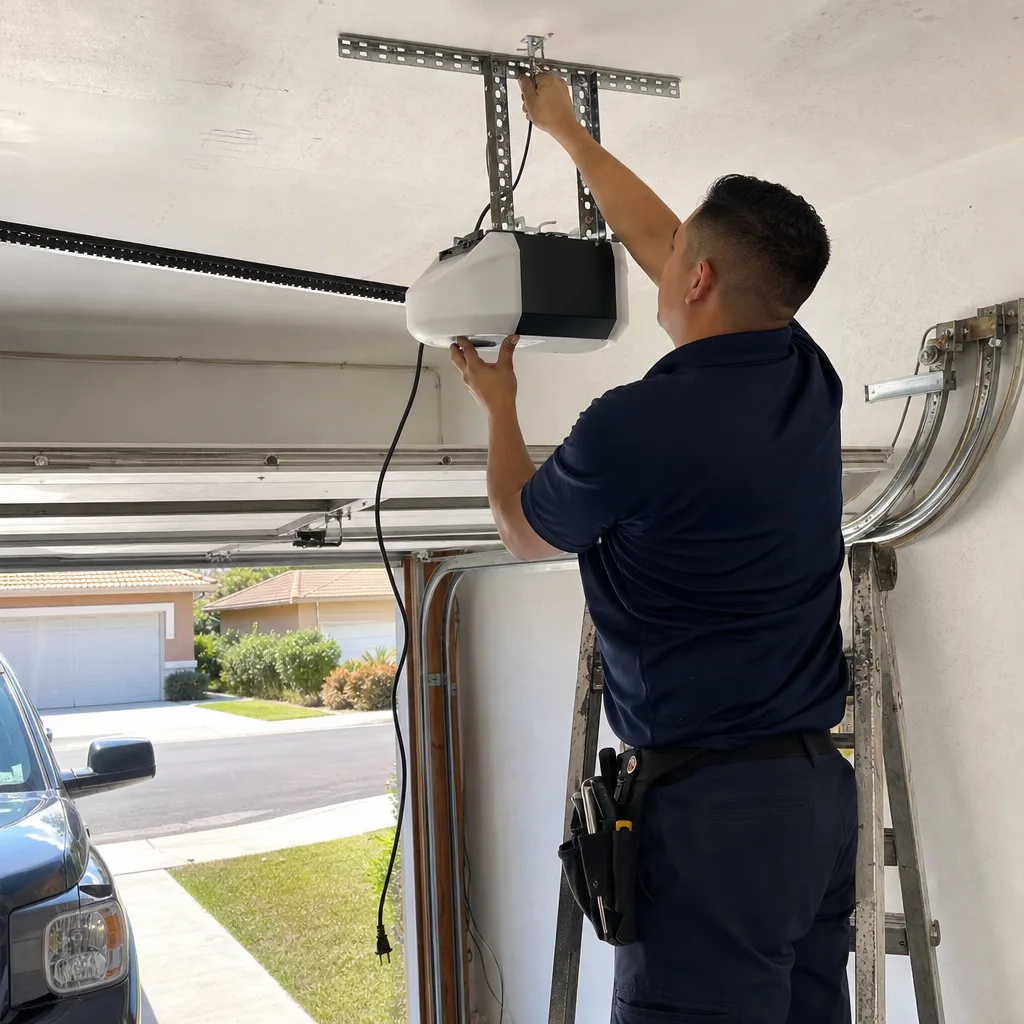
Garage door openers fail in Corona for two heat-related reasons that other climates rarely see. First, the logic board - the small circuit board inside the opener housing that interprets signals from the wall button and remotes - sits in a metal box bolted to the ceiling of an uninsulated garage. In August, the air temperature inside that garage can exceed 110°F, and the logic board is running at a thermal threshold its manufacturer designed for 85-degree suburban garages in Ohio. Heat accelerates the degradation of solder joints and capacitors. The symptom is an opener that works in the morning, quits working in the afternoon, and works again after sunset. If you have experienced this intermittent pattern, the logic board is the likely culprit, not the remote battery.
Second, limit switches - the small mechanical or electronic controls that tell the opener where “up” and “down” positions are - drift out of calibration as the opener rail expands and contracts through Corona’s daily temperature swings. A door that reverses immediately after touching the floor, or stops six inches short of fully closed, is usually a limit switch problem, not a door problem. Both issues appear disproportionately in uninsulated garages, and the cheapest prevention is to ensure the garage has at least passive ventilation, like a turbine vent or screened side vents, to draw hot air down from the ceiling. For Garage Door Opener Repair & Installation in Corona, we carry Genie and Chamberlain parts commonly stocked for the geographic area, but the best opener for a Corona garage is one with a DC motor, which runs cooler than AC equivalents and handles our heat profile with fewer board failures.
Lubrication Schedule for Corona’s Dust and Temperature Swings
Garage door lubrication in Corona is not a once-a-year task. The heat accelerates lubricant breakdown and the Santa Ana season loads the door with airborne dust that mixes into the lubricant and turns it into grinding paste. Here is the schedule that keeps moving parts moving:
- April, after the wet season: clean the tracks with a dry rag, then apply a white lithium grease to the torsion spring (yes, the spring itself), a silicone-based spray to the rollers and hinges, and a drop of light oil to the opener chain or screw. Do not lubricate nylon rollers, which are self-lubricating; the moisture just attracts dust.
- September, before Santa Ana season: wipe down the tracks again to remove the summer’s dust accumulation, reapply white lithium grease to the spring, and inspect the chain tension on chain-drive openers. The chain stretches in sustained heat, and a slack chain slaps against the rail during wind gusts, which sounds like a failing opener when it is just a tension adjustment.
- December, after Santa Ana season: one more light pass on hinges and bearing plates. The grit from two months of wind has worked into the grease, so wipe and reapply rather than layering fresh lubricant over contaminated material.
Use white lithium grease on steel springs and bearing plates, silicone spray on steel rollers and hinges, and nothing at all on nylon rollers. WD-40 is a degreaser, not a lubricant, and it will strip the grease you applied in April in under two weeks of Corona heat.
Common Mistakes to Avoid
- Lubricating the track channel with grease. The track channel is not a moving part; the roller moves inside it, and grease in the channel just collects dust and makes the rollers bind. Clean the channel, lubricate only the roller stems and hinges.
- Adjusting torsion spring tension without a winding bar and proper training. Torsion springs hold hundreds of pounds of stored torque, and a spring that releases during adjustment will seriously injure anyone standing in the arc of the winding cone. Our technicians see the results of DIY spring work too often in Corona garages; the hospital bill exceeds the repair bill every time.
- Replacing the bottom seal without checking the retainer channel width. Post-2010 doors from Clopay, Amarr, and other manufacturers use different channel widths, and the wrong seal slides in, then leaks at both ends the first time the wind shifts to the west. Photograph the channel before buying.
- Ignoring the emergency release cord because the power never goes out. Santa Ana winds knock out power across Corona neighborhoods every year, and the emergency release is the only way to get your car out of a garage when the opener has no power. If it has not been tested in a year, the probability that it will work when you need it is lower than you want it to be.
- Using a pressure washer on the door exterior. The bottom seal channels, the weatherstripping, and the insulation layers in steel sandwich doors are not rated for high-pressure water. A garden hose and a soft brush are enough, and they will not drive water into the door where it can cause rust from the inside.
- Painting over rust without treating the metal. Surface rust on the inside of the door panels spreads under paint if not first wire-brushed and primed. Treat rust with a rust converter, then prime, then paint. You are buying years of door life with an extra half hour of prep.
When to Call a Professional
Call a professional when the spring is broken or visibly worn, when the track is bent or the door binds against the track channel, when the opener runs intermittently or the logic board shows heat damage, and when you are not comfortable working with a torsion spring system under load. None of these are DIY jobs, and the cost of a failed repair attempt usually doubles the final bill. Servo Garage Doors Corona offers free estimates in Corona - call (951) 482-7637. We show up with a written price and a written scope of work before any labor begins, per Clause 1 of The Haven Standard, and we photograph the failed component before we quote the replacement. That is the founding rule the company was built on in 2015, and it has not changed.
Frequently Asked Questions
A seasonal lubrication and inspection visit in Corona typically runs $89-$150, while a torsion spring adjustment or replacement runs $180-$340 depending on spring size and whether the spring is standard or high-cycle. For full pricing context, see our Garage Door Cost Breakdown: The Corona Homeowner’s Reference for 2026. Every job at Servo Garage Doors Corona is quoted as a flat, written price before work starts, so the number you approve is the number you pay. Call (951) 482-7637 for a free estimate.
Three times a year - April after the wet season, September before Santa Ana season, and December after the winds clear - matches how Corona’s climate actually degrades lubricant. The heat thins it in summer, the dust contaminates it in fall, and a fresh winter pass clears the grit before the rains arrive.
That pattern points to a logic board overheating inside a hot garage. As the garage interior exceeds 110°F in August, the board’s solder joints and capacitors degrade, and the unit fails until the temperature drops. It is not your remote, and it is not a bad battery; it is a thermal limit problem that affects openers in uninsulated garages throughout Corona.
No. Torsion springs on residential doors hold several hundred pounds of stored torque, and an improperly wound spring can release without warning and cause serious injury. Our technicians carry the correct winding bars and use proper protocols, and we recommend every homeowner treat spring work as a professional-only repair.
Check track alignment, bottom seal condition, and emergency release function. These three items cover the failure modes that Santa Ana winds exploit: lateral racking bends tracks, wind-driven dust and water get through cracked seals, and power outages make the emergency release matter for the first time all year. This is the pre-wind protocol we recommend for every Corona garage before October.
Yes. Our Free Second Opinion offer applies to any written estimate from another garage door company. Bring the paperwork, and we’ll tell you what we agree with, what we would price differently, and what we would not recommend at all. There is no charge and no obligation, and the answer is based on the documented condition of your door, not on our willingness to beat a number by twenty dollars.
The Bottom Line
Corona’s garage doors fail on a three-season schedule: heat stress in summer, wind stress in fall, and wet-season weatherstripping failure in winter. The maintenance calendar that matches this reality is simple: pre-summer spring and opener checks, pre-Santa Ana track and seal inspection, wet-season sealing audit, and year-end photo documentation. If you do those four things every year, you will catch most repairs at the adjustment stage instead of the replacement stage, and you will have dated photos that resolve any dispute about what broke and when. For more guides & resources, explore our blog, or when something does fail, call (951) 482-7637 for a free estimate from Servo Garage Doors Corona - written price first, documented photo record when the work is done, and the 365-Day Done Right Promise behind it.
Written by Marcus Deller, Owner at Servo Garage Doors Corona, serving Corona since 2015.