
Last updated September 20, 2026
Full 25-point door and opener safety check with every visit - springs, cables, rollers, tracks, and your LiftMaster or Chamberlain opener included
You get a price before we start. It does not change when the truck arrives.
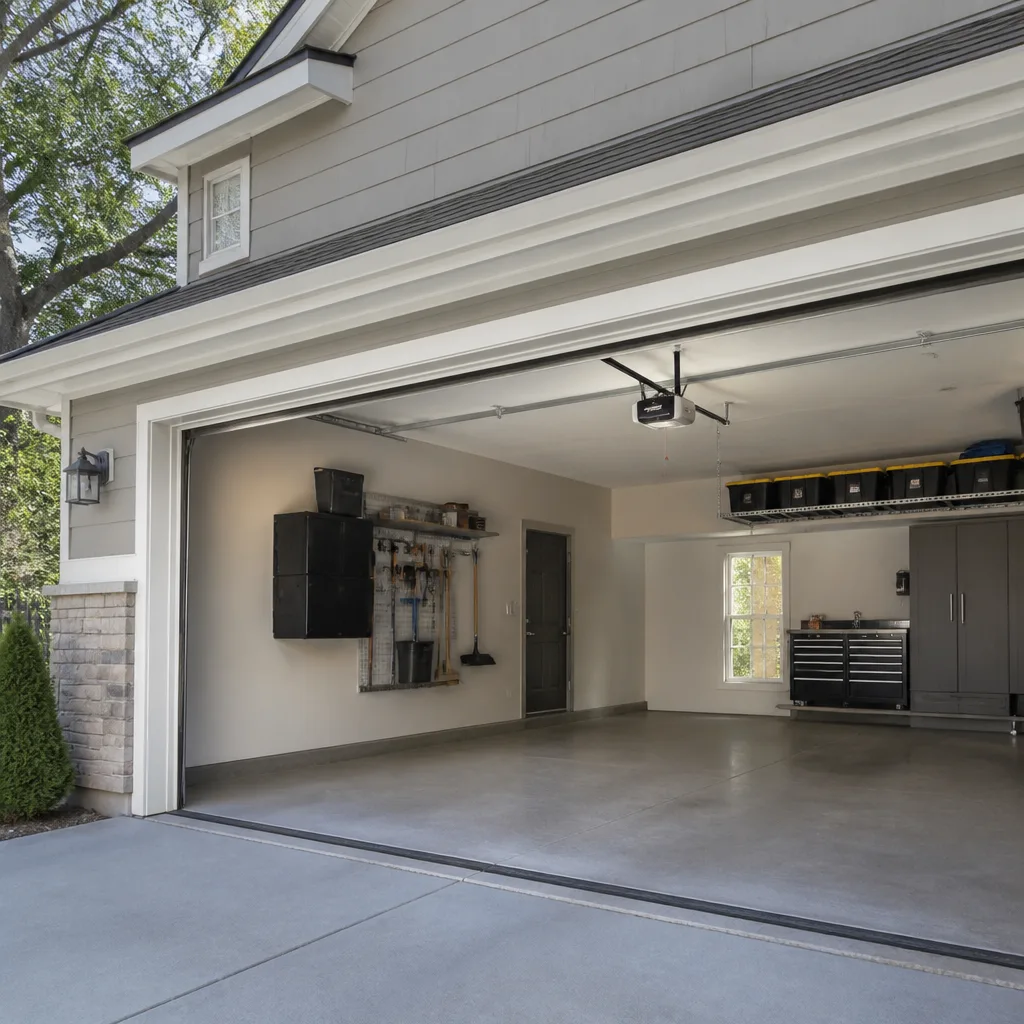
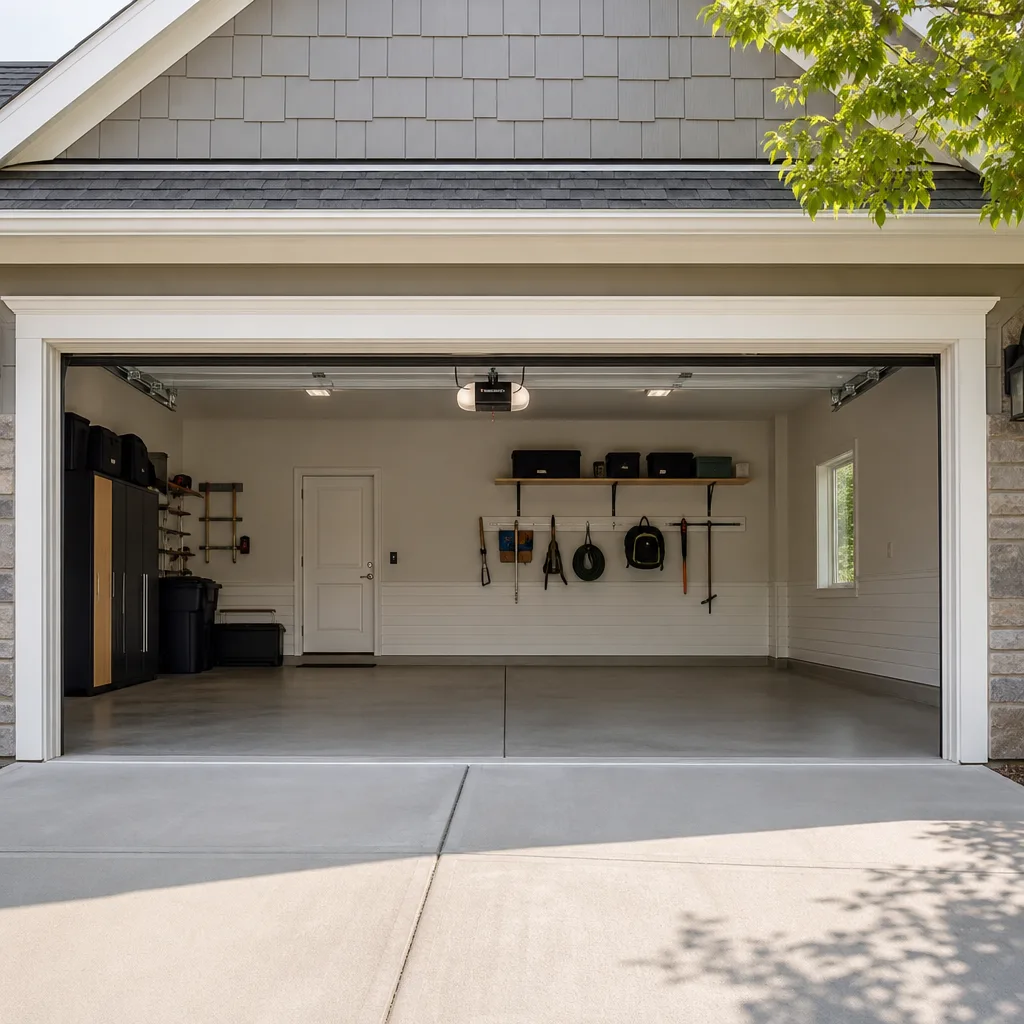
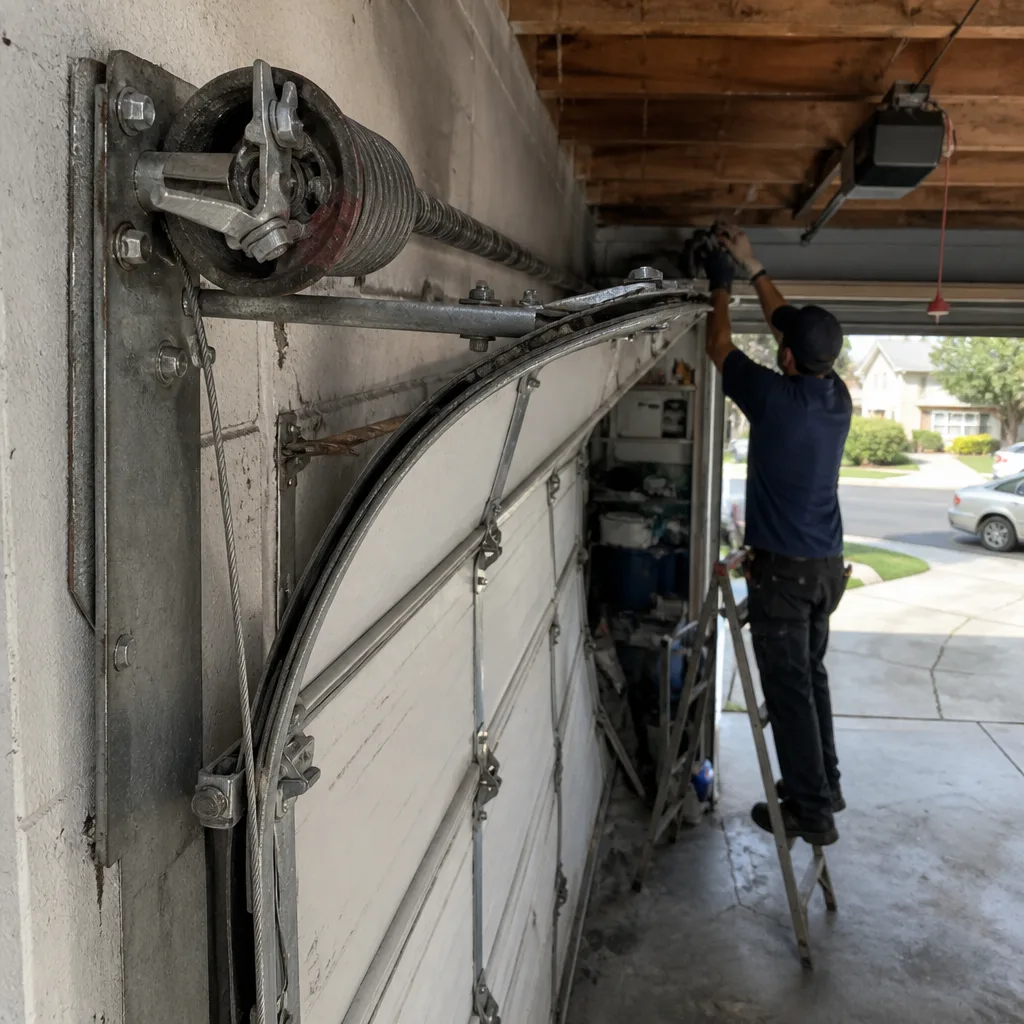 Before
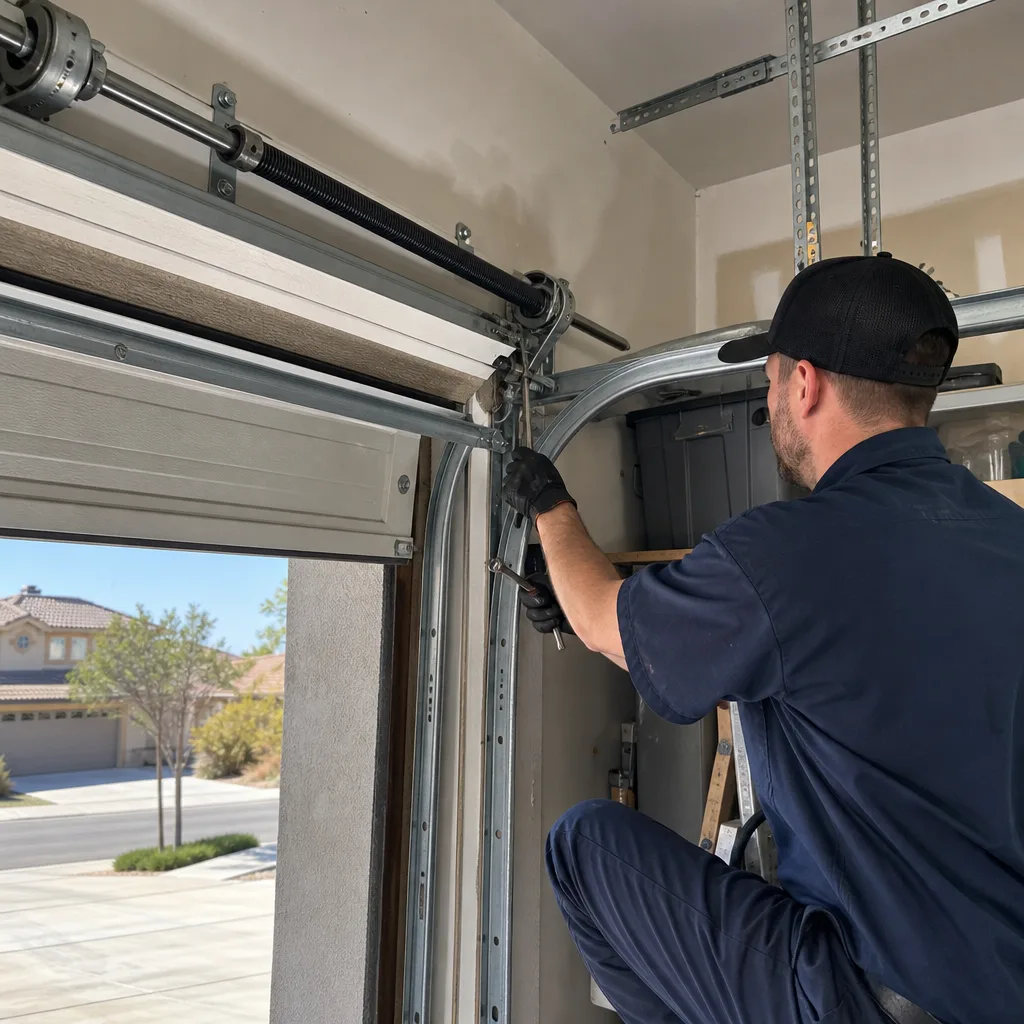 After
After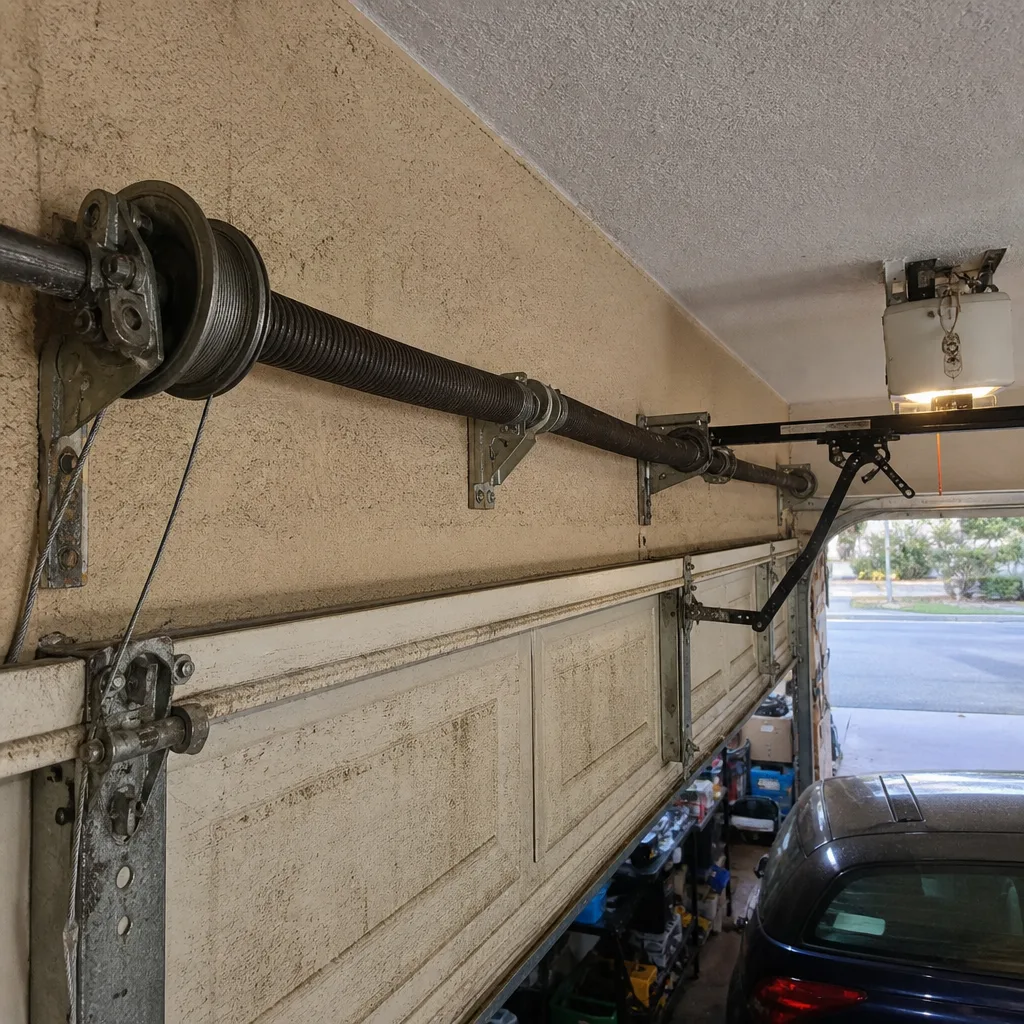 Before
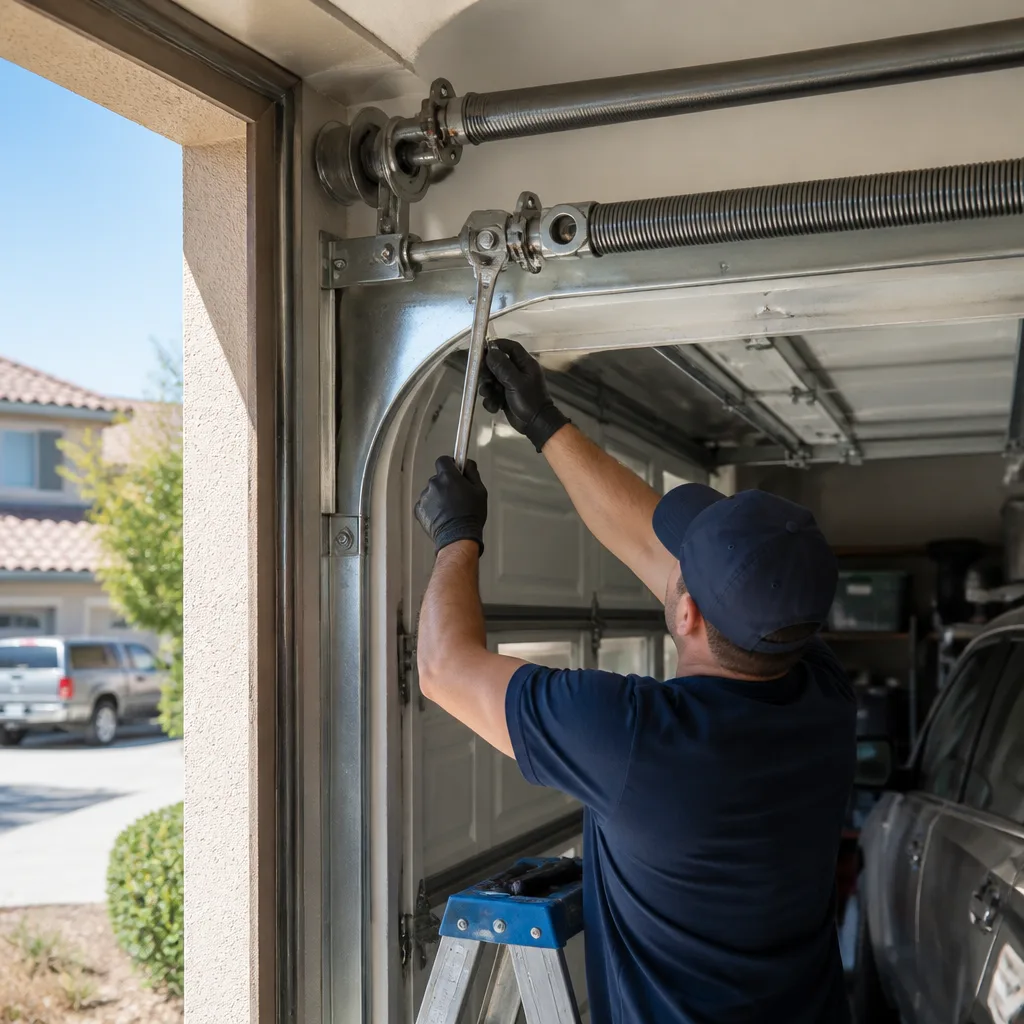 After
After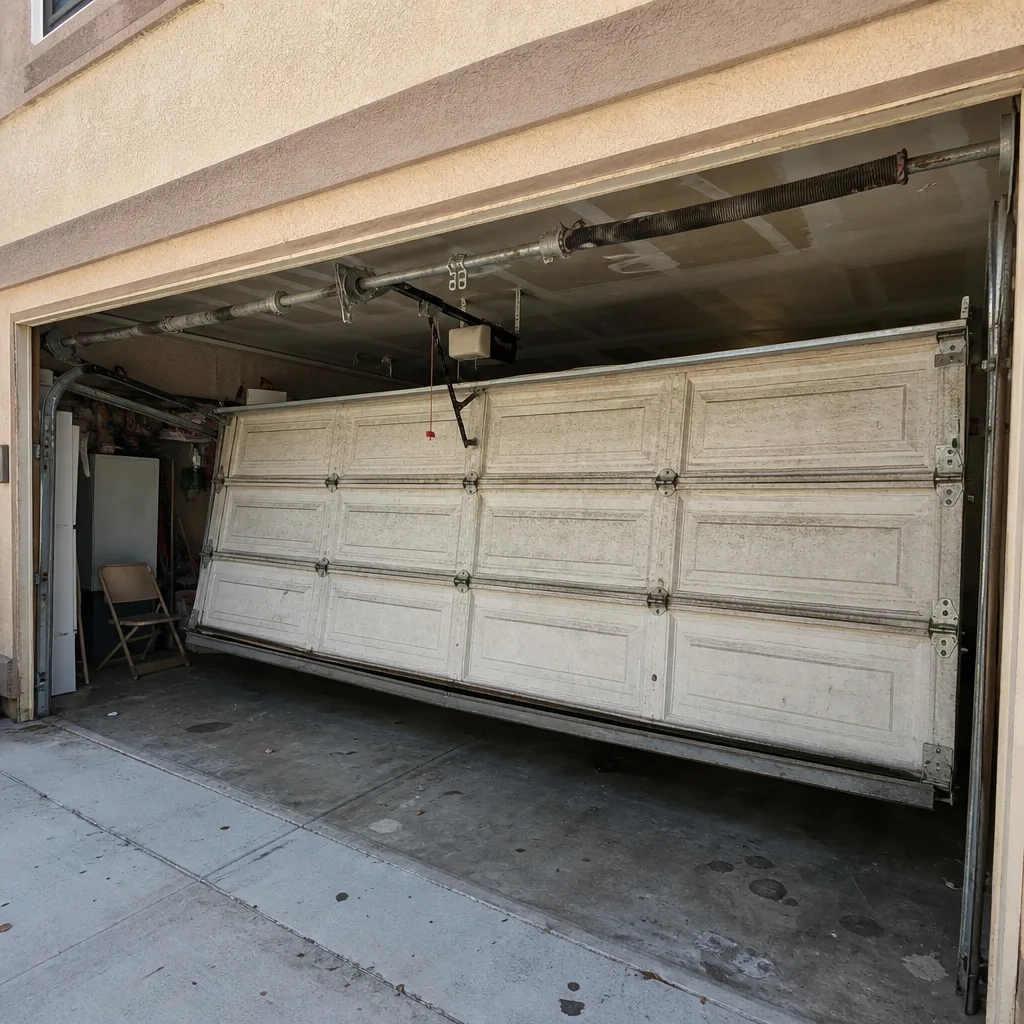 Before
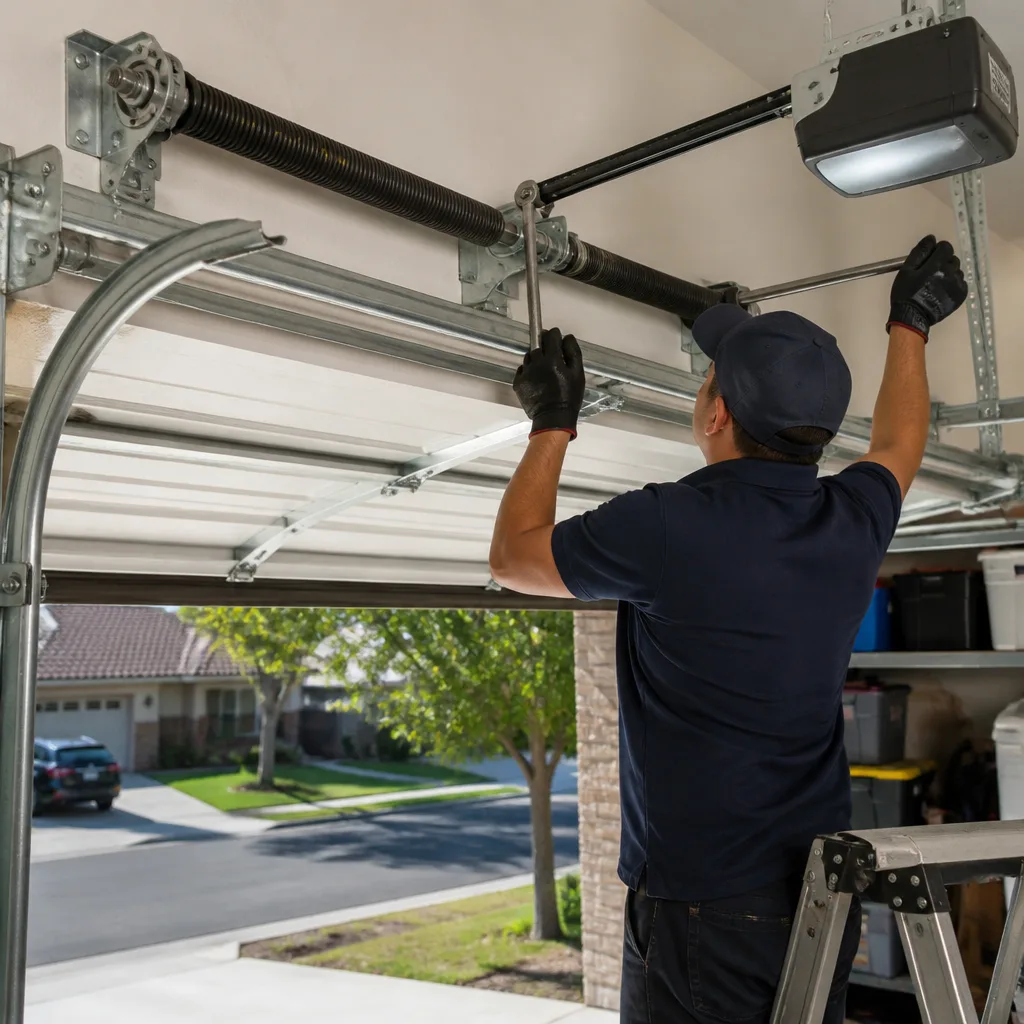 After
AfterHow to Hire a Garage Door Contractor in Corona: A Step-by-Step Guide
California’s CSLB license lookup takes 90 seconds and eliminates roughly 30% of the garage door “companies” advertising in Corona, yet fewer than one in five homeowners checks it before booking. The garage door industry in Riverside County has a structural problem: it’s easy to hang a shingle, print a magnet for the side of a pickup, and call yourself a garage door company. Nobody stops you until something goes wrong. This guide walks you through how to hire a garage door contractor in Corona the way a cautious homeowner should: license first, documentation second, written price third, and a paper trail throughout. For The Complete Guide to Garage Door in Corona and more guides & resources, see our blog.
Quick Answer
To hire a garage door contractor in Corona, verify their CSLB license (classification C-61/D-28) on the state’s license lookup tool, require a written estimate that includes the full scope and flat price before any work starts, ask for photos of the failed component, and get the cancellation policy in writing. Skip any contractor who prices verbally, pressures you with same-day urgency, or won’t put the scope on paper.
Table of Contents
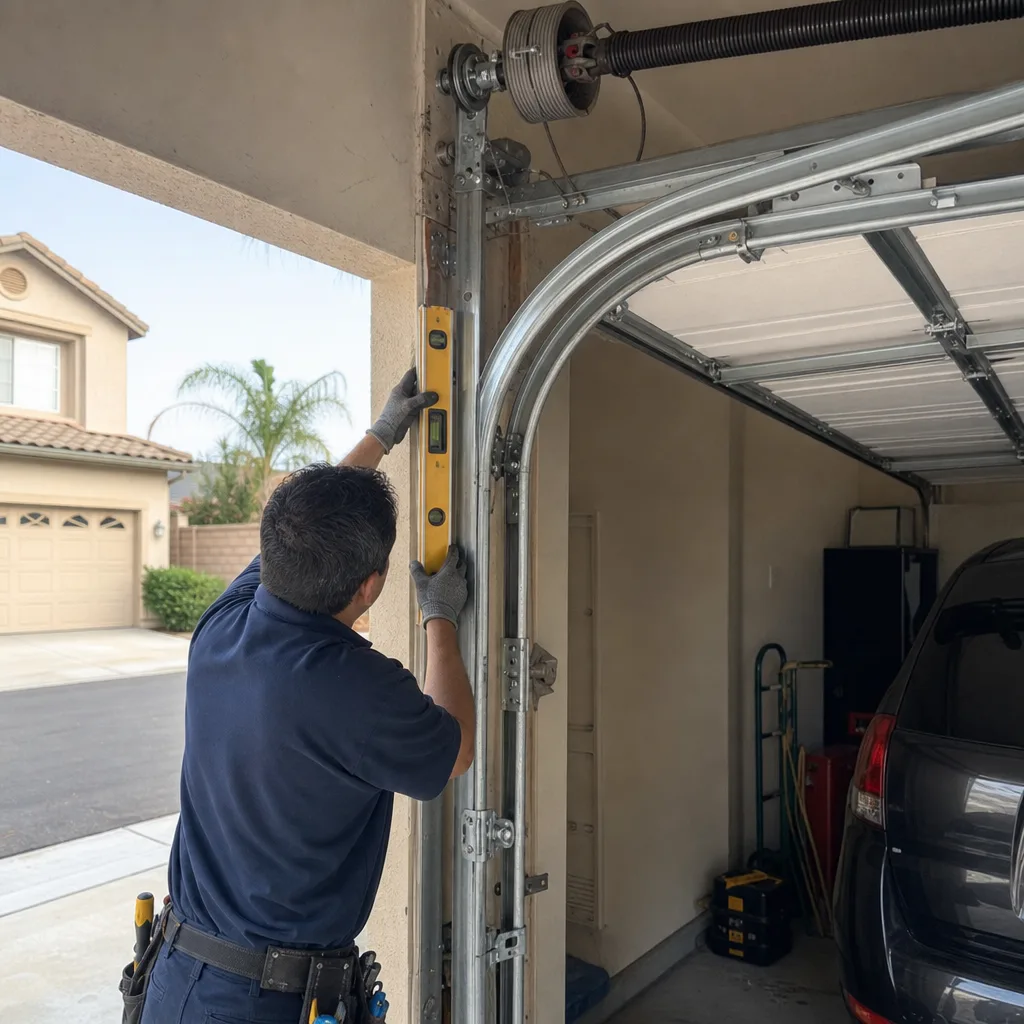
- Step 1: Verify the CSLB License Before Anything Else
- Step 2: Demand Documentation, Not a Handshake
- Step 3: Six Phone Questions That Expose Situational Pricing
- Step 4: What a Compliant Written Estimate Must Include
- Step 5: Understand the Corona Garage Door Market
- Step 6: Warranty Terms and What “Done Right” Actually Means
- Red-Flag Decoder: Quotes That Can’t Be Enforced
- Step 7: Booking the Job and What to Expect On-Site
BeforeAfterStep 1: Verify the CSLB License Before Anything Else
Garage door work in California falls under the Contractors State License Board (CSLB) classification C-61/D-28, which covers door, gate, and activating device installation and repair. Any contractor advertising garage door repair or installation in Corona must carry this classification. Not a handyman license. Not a general contractor license. C-61/D-28 specifically.
Here’s the walkthrough, because the CSLB website is not built for first-timers:
- Go to cslb.ca.gov and click “Check a Contractor’s License” or use the “Find My Licensed Contractor” tool.
- Enter the business name or, better, the license number. The license number should be printed on the contractor’s website, business card, and any vehicle that shows up at your door. If it’s not on the website, that’s your first flag.
- Confirm three things on the license record: the classification includes C-61/D-28, the expiration date is in the future, and the business name matches the entity you’re dealing with.
- Check the “Workers’ Compensation” field. If the contractor has employees and no workers’ comp policy on file, you as the homeowner can be held liable if someone gets hurt on your property.
- Look at the “Bonding” section. California requires a $25,000 contractor bond for most classifications. This bond exists to compensate you if the contractor fails to perform.
What does an unlicensed operator’s quote legally cannot bind? Let’s be blunt: an unlicensed contractor’s written estimate is worth approximately the paper it’s printed on when something goes wrong. Under California law, an unlicensed contractor cannot enforce a contract, cannot file a mechanic’s lien, and in many cases cannot legally collect payment above $500 for a project when licensing was required. If the person quoting you a $1,400 torsion spring replacement in Corona has no license, you have no CSLB complaint path, no bond to claim against, and no leverage when the work fails.
In our experience across the Corona area, the unlicensed operators cluster around the low end of the price spectrum and the high end of the urgency spectrum. “Cash price” is a phrase that should end the conversation. The CSLB lookup takes less time than ordering a coffee, and it’s the single highest-value step you can take before booking.
Step 2: Demand Documentation, Not a Handshake
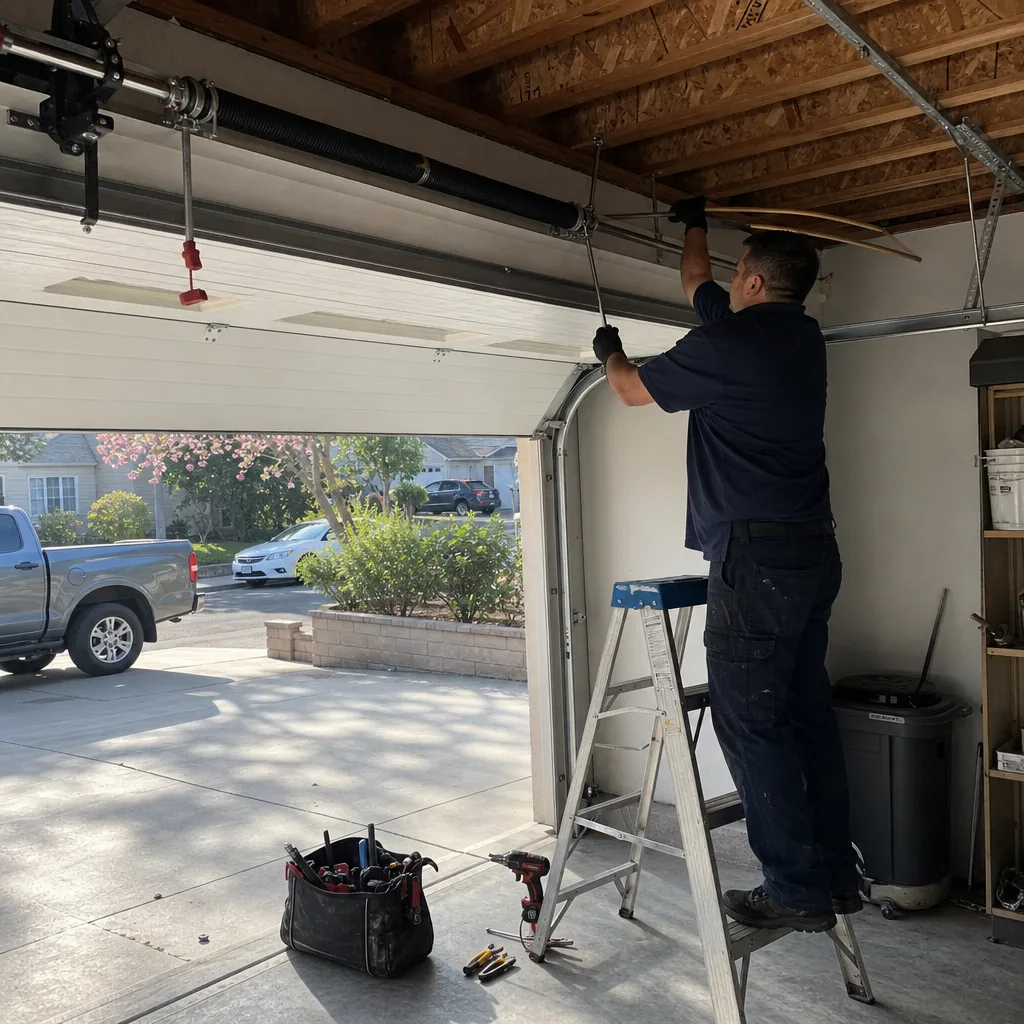
Here’s the test that separates a legitimate garage door contractor from someone who prices by feel: ask the contractor to show you the failed component photographed and described before they name a price. If they can’t, the price is not tied to a diagnosis. It’s tied to whatever number they think you’ll tolerate.
A torsion spring failure is a specific, diagnosable event. A trained technician can photograph the spring, measure the wire diameter, note the break point, check the bearing plates, and give you a flat replacement price that reflects the actual scope of work. A broken logic board on a LiftMaster opener is identifiable on sight. A stripped trolley carriage is obvious when the rail is inspected. None of these require guesswork, and all of them can be documented before any money changes hands.
This is the pre-quote documentation test. In Corona, where summer heat exposure and hard water can accelerate spring fatigue and roller wear differently than in coastal cities, the failure mode matters. For Seasonal Garage Door Care for Corona: Year-Round Homeowner’s Guide on how climate affects your door. A spring that broke at the winding cone tells a different story than a spring that snapped mid-coil due to metal fatigue. The technician who can show you the former versus the latter is the technician who understood what they were looking at.
Ask for this on the phone: “Will the technician photograph the failed part and show it to me before quoting?” A contractor who says no, or who gives you a vague answer, isn’t running a diagnosis-based business. They’re running a volume business. The photo record matters for a second reason: it’s your evidence if the repair fails and the warranty becomes a dispute.
Step 3: Six Phone Questions That Expose Situational Pricing
You can learn more about a garage door contractor in a six-minute phone call than from fifty reviews. The key is asking questions that force specificity. Specific answers come from systems. Vague answers come from improvisation.
Here are the six questions to ask, in order:
- “What is your written cancellation policy?” A contractor with fixed pricing has a fixed cancellation policy. A contractor who wings it will stumble on this question. If the answer is “we’ll figure it out if it comes up,” the pricing is likely situational too.
- “Will the price you quote over the phone match the written estimate?” If the phone quote and the written quote can differ, the phone quote is a marketing tool, not a number. In our operation, the number on the written estimate is the number on the invoice. No discovery fees, no surprise line items.
- “Do you charge for the service call if you don’t do the work?” This is a legitimate fee structure question. Many Corona contractors charge a diagnostic fee that’s waived if you proceed with the repair. What you’re watching for is whether they’ll tell you this before they arrive. If it’s disclosed only after the technician is in your garage, run.
- “Who does the work, you or a subcontractor?” Subcontracting is common in garage door installation but it should be disclosed. If the person quoting is not the person working, you need to know. Insurance, warranty responsibility, and quality all hinge on this answer.
- “What brands do you stock parts for on the truck?” A company that stocks torsion springs, rollers, and opener parts for LiftMaster, Chamberlain, Genie, and Clopay can complete a repair in one visit. A company that has to “order the part” for a common failure either doesn’t do volume repair work or is padding the timeline.
- “Can you send me the written estimate before the technician arrives?” For a new installation or opener replacement, the written estimate should be deliverable in advance. For repair work, the estimate follows diagnosis on site. Either way, the contractor should commit to a written document, not a verbal number. If they resist putting anything in writing before arriving, that’s the tell.
One more worth mentioning: ask whether the person answering the phone is an employee of the company or a dispatch service. In Corona, some garage door “companies” are really just call centers that sell leads to whoever’s available. A real local operation answers its own phone. This matters when you have a follow-up question on a Tuesday and the number you called now belongs to a different company.
Step 4: What a Compliant Written Estimate Must Include
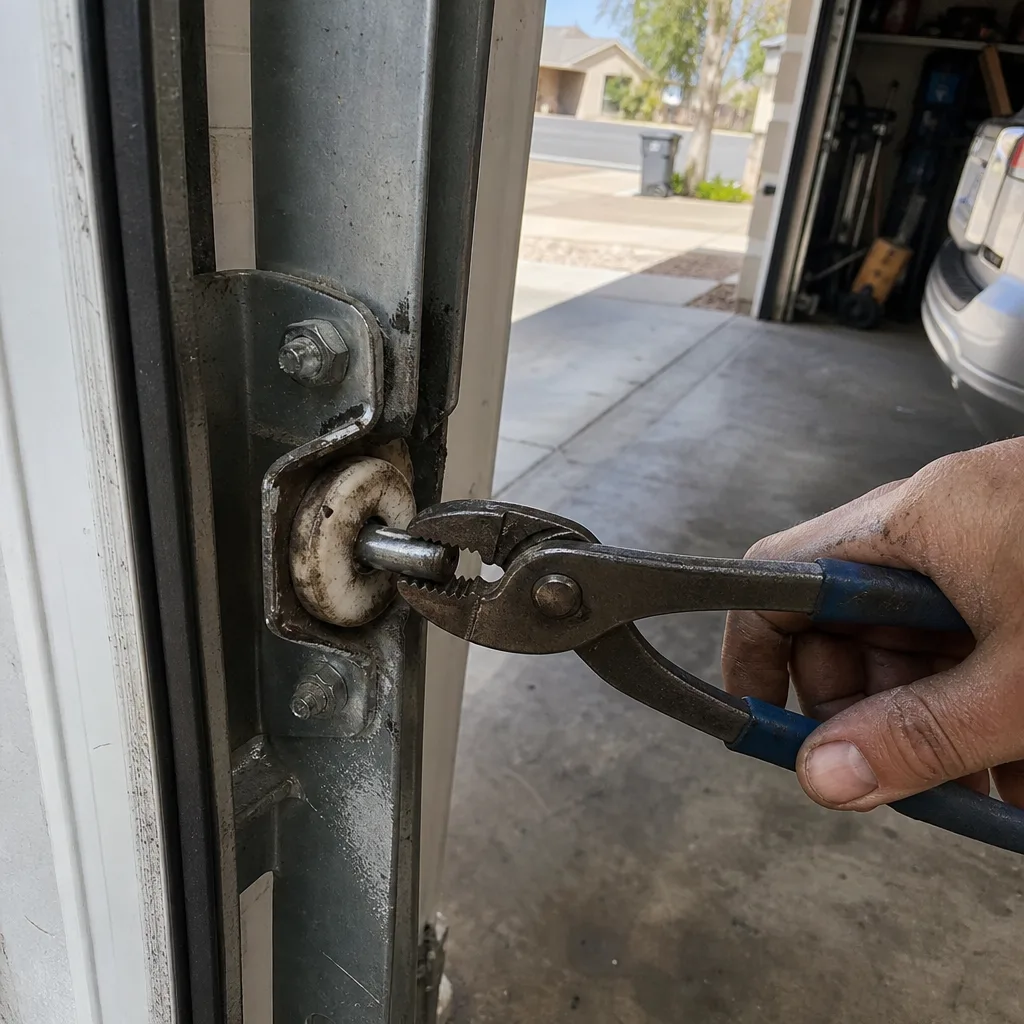
California Business & Professions Code § 7159 governs home improvement contracts, and garage door work falls under it. A compliant written estimate isn’t a courtesy. It’s a legal document with required fields, and your contractor’s willingness to produce one is a signal of whether they operate above board.
Here’s what § 7159 requires on a written home improvement estimate or contract:
- Contractor’s name, business address, and CSLB license number - not just a phone number and a first name
- A description of the work to be performed - specific enough that a third party could read it and understand the scope
- The total price - flat, not a range; “between $800 and $1,500” is not a compliant quote
- The payment schedule - including a down payment amount that cannot legally exceed $1,000 or 10% of the project price, whichever is less, for most residential work
- The approximate start and completion dates - approximate is fine, absent is not
- A notice of the right to cancel - three business days for most residential contracts, unless the work qualifies as an emergency repair you requested in writing
- A change order process - any scope change must be in writing and signed by both parties before the additional work is performed
Here’s how to spot one that’s missing required fields: the “contract” is one page. A compliant garage door contract in Corona is typically two to three pages, because § 7159 requires disclosure language. A one-page invoice-style document with a price and a signature line is a red flag. Another tell: the license number is written in pen after the fact, or the document uses the phrase “work to be determined on site.” That phrase is the legal equivalent of a blank check.
The written estimate should also include the warranty terms. Verbal warranties are worth nothing in a dispute. If the contractor won’t put the warranty period and coverage in writing, assume there is no warranty.
Step 5: Understand the Corona Garage Door Market
Corona sits at the edge of the Inland Empire, and its garage door market reflects the city’s housing stock. Most homes in neighborhoods like South Corona, Corona Hills, and Eagle Glen were built between 2000 and 2020. That means you’re likely dealing with a steel sectional door, a torsion spring system, and an opener installed by the original builder. The doors themselves are usually fine. The springs, rollers, cables, and openers are the components that fail first.
Corona’s climate plays a role in how garage door components age. Summer temperatures routinely climb past 100 degrees, and that heat cycles the torsion springs every time the door opens. A standard torsion spring is rated for roughly 10,000 cycles, which translates to seven to ten years of typical use in Corona. If your door sees multiple open-close cycles per day and you don’t have high-cycle springs, the failure isn’t sudden. It’s scheduled.
What does this mean for hiring? A contractor who operates in Corona regularly sees these failures and can quote them from memory, with parts on the truck. A contractor based in Orange County who “services Corona” sees them less frequently and may need to order. That’s not a disqualifier, but it’s a reason to ask about parts stocking.
Pricing in Corona for garage door work is generally more competitive than coastal Orange County and less variable than LA proper. A torsion spring replacement on a standard two-car garage door typically runs between $220 and $380 in Corona, depending on spring wire diameter and whether you’re getting one spring or two. A full opener replacement including labor typically runs between $450 and $750, depending on brand and features. A new 16-foot steel sectional door installed runs from $1,800 to $3,200 depending on insulation, window count, and panel design. These are Corona market numbers as of 2025, and any contractor quoting significantly outside them should be asked to explain why.
Step 6: Warranty Terms and What “Done Right” Actually Means
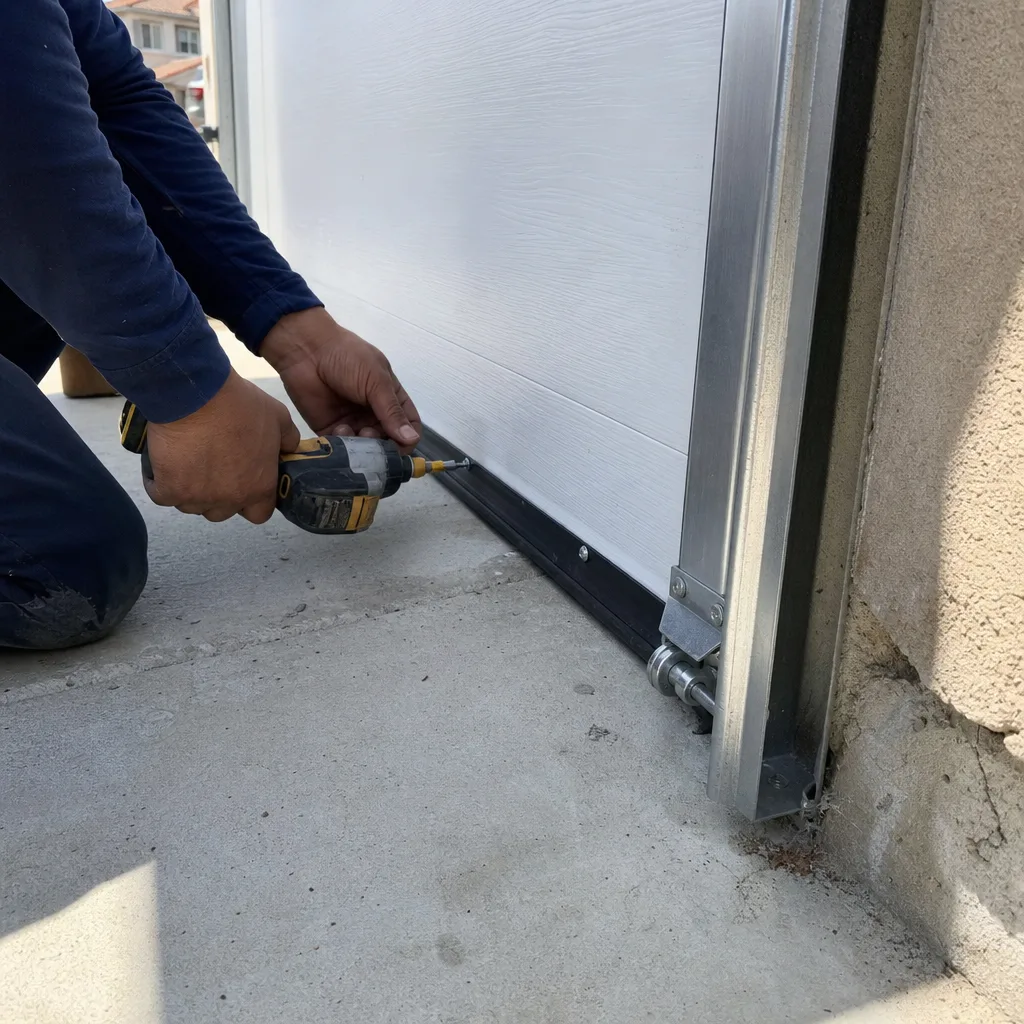
The warranty conversation is where garage door contractors in Corona lose the plot. A vague “we stand behind our work” is not a warranty. A written, dated warranty with a defined coverage period and a defined remedy is a warranty. Ask for the difference.
Here’s what you should expect to see in a legitimate repair warranty:
- Parts warranty: 90 days to lifetime, depending on the part. Torsion springs typically carry a one- to five-year parts warranty when the technician installs the correct wire diameter. Openers carry manufacturer warranties that run one to five years depending on the model.
- Labor warranty: 30 to 90 days is standard. A contractor who offers a year or more on labor is either confident or betting you won’t call. Either way, get it in writing.
- The remedy clause: What happens if the repair fails? Does the contractor return and fix it at no charge? Is there a time window for claims? The remedy should be specific.
Our approach at Servo Garage Doors in Corona is to put the warranty period on the written estimate before work starts, then back it with a 365-Day Done Right Promise: if it’s not done right, we make it right. That’s not a slogan. It’s a written commitment tied to our terms, and it’s one of the reasons we structure every job as a documented transaction rather than a handshake.
Ask a contractor what happens if the spring they install breaks in month six. The answer tells you more than the warranty period. A good answer is: “We replace it under warranty. Here’s the coverage document.” A bad answer is: “That’s not really something we see.”
Red-Flag Decoder: Quotes That Can’t Be Enforced
Every garage door contractor in Corona has heard these lines from unhappy customers: “The quote was $400 and the invoice was $900.” “He said the spring was fine, then it broke two weeks later and now he won’t answer my calls.” “The guy who did the work isn’t the guy I hired.” These are exactly the scenarios covered in our DIY vs Professional Garage Door: The Corona Homeowner’s Decision Guide.
These disputes share a root cause: the customer accepted a verbal quote, a vague quote, or a quote that wasn’t tied to a documented diagnosis. Here’s how to spot the pattern before you book:
- “We’ll know the price when we open it up.” For some work, yes, there’s diagnostic uncertainty. But the contractor should quote the diagnostic scope and the flat rate for the most likely repair before touching anything. A blanket “we’ll see” means the meter runs at their discretion.
- Same-day urgency framing. “If we don’t replace this today, the door could fail completely.” A broken spring doesn’t need to be replaced today. It needs to be replaced before you use the door again. Any contractor leveraging urgency to close a deal is selling pressure, not repair. Legitimate urgency exists for a door that won’t close and a house that’s unsecured. That’s a real emergency. Everything else can wait for a written estimate.
- Verbal-only quotes. If the number isn’t on paper with a scope and a signature line, it doesn’t exist in a dispute. In California, a verbal quote for home improvement work is legally weak, and a verbal quote from an unlicensed operator is legally irrelevant.
- The upsell cascade. You called about a broken spring. The technician finds “dangerous” rollers, “worn” cables, and a “borderline” opener that all need replacement same day. This is statistically the most common upsell pattern in the garage door industry. Ask for photos of each claimed failure. If the cable is visibly frayed, you’ll see it in the photo. If it’s not frayed, the technician is guessing. Photos end the debate.
- Cash discount pressure. A contractor offering a discount for cash and no receipt is not offering a discount. They’re offering you a transaction with no paper trail. In Corona, this shows up most often with door installation, where the tax dodge gets buried in a “cash price.”
The common thread: a structured operation produces documentation. An unstructured operation produces a performance. You’re hiring the former.
Step 7: Booking the Job and What to Expect On-Site
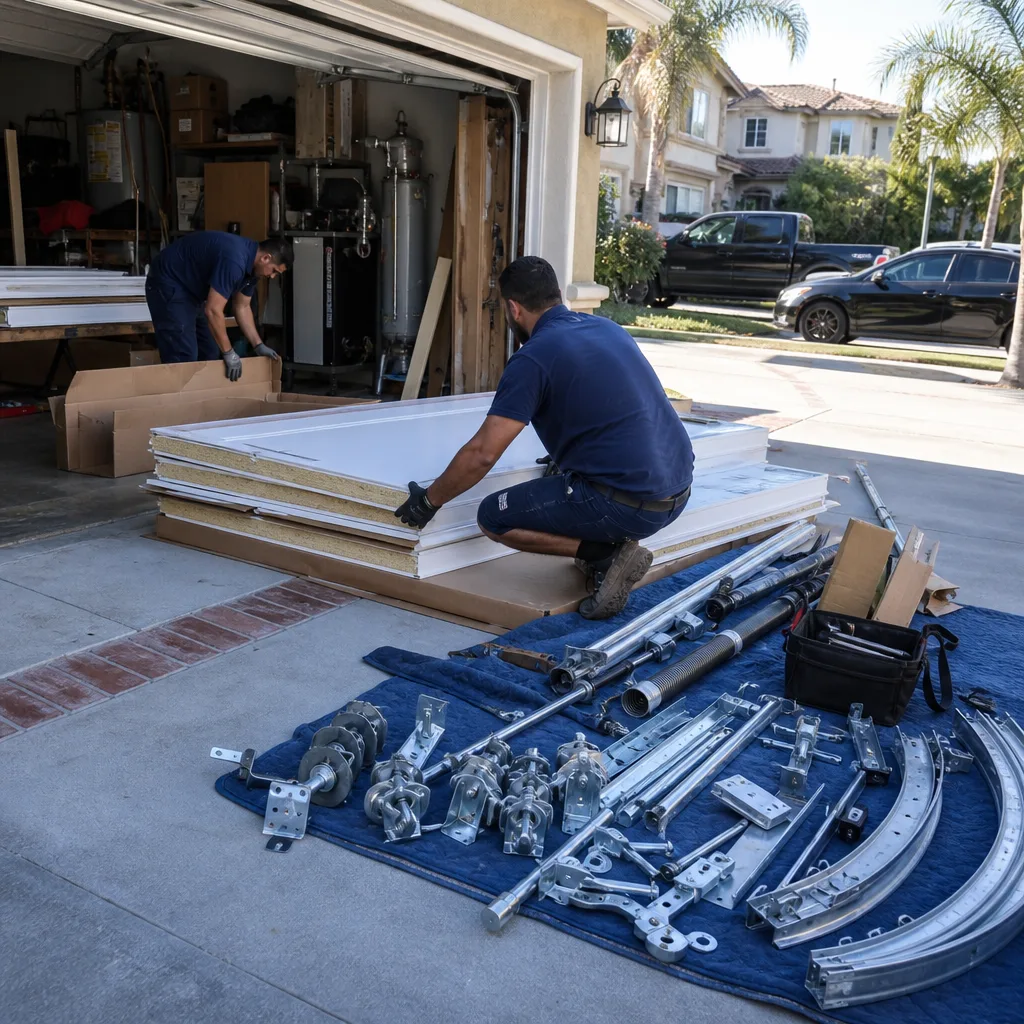
You’ve verified the license, asked the six questions, reviewed the written estimate, and felt good about the answers. Now you book. Here’s what a professional garage door visit in Corona should look like:
Confirmation before arrival. You should receive the technician’s name and a specific arrival window by text or email. You should not be waiting on a four-hour “sometime between noon and 4” with no update.
Identification at the door. The technician should arrive in a marked vehicle or identifiable uniform, and should be able to produce a company ID. If the person at your door doesn’t match the name you were sent, ask why.
Diagnosis before pricing. The technician should inspect the door, the springs, the cables, the rollers, the track, and the opener, then present you with a written estimate for the repair or replacement before any work begins. You should receive photos of the failed components. At Servo Garage Doors, this photo record is delivered to you on every visit. It’s our founding rule, codified as Clause 4 of The Haven Standard: photograph the failed component before quoting a replacement. If a technician can’t show you what’s broken, the price is not tied to a diagnosis.
Written approval before work. You sign the written estimate before the technician starts. No signature, no work. This protects you and the contractor. The price you approve is the price you pay. No change orders after the fact.
Photo record on completion. The technician should photograph the completed work and provide you with a summary of what was done, what was replaced, and what remains. If you don’t receive this, ask for it. It’s your record for warranty claims and future reference.
Post-job documentation. You should leave with or receive by email: the signed estimate, the invoice matching the estimate exactly, the warranty document, and the photo record. Four documents. If you only get an invoice, something was skipped.
For new garage door installation in Corona, expect a measure appointment first, a written quote at that appointment, a lead time of one to three weeks depending on the door, and a full removal and reinstallation on the day of install. Installation jobs should never be completed same day as the quote. If someone offers to measure, quote, and install a new door in one afternoon, you’re not getting a new door. You’re getting whatever’s on the truck.
Common Mistakes to Avoid
- Skipping the CSLB license check. Ninety seconds on the state website would have eliminated roughly a third of the garage door operators advertising in Corona. Don’t be the homeowner who learns this from the fine print in small claims court.
- Accepting a phone quote as a binding price. A phone quote is a screening number until it’s on paper with a scope of work. In Corona’s market, phone quotes for repair work are usually accurate, but the word “usually” is doing a lot of work there.
- Paying a large deposit for repair work. California caps residential down payments at 10% or $1,000, whichever is less. A spring repair doesn’t require a deposit. If someone asks for 50% upfront on a repair, that’s a financing problem, not a business practice.
- Buying urgency instead of documentation. “If you book today I can knock $100 off” is the garage door version of a timeshare pitch. Corona homeowners who research before they call are not this contractor’s target customer. The contractor’s goal is to close before you have time to compare. Let them walk.
- Hiring the cheapest quote without reading the scope. A $180 spring replacement quote with no spring wire diameter specified, no warranty in writing, and no labor coverage is not cheaper. It’s less documentation. The expensive part of a garage door repair is the one that fails again in four months.
- Confusing the door manufacturer with the installer. A Clopay door purchased from a dealer who subcontracted the installation means your warranty claims route through the dealer, not Clopay. If the dealer vanishes, so does your warranty path. Ask who services the door after year one.
- Not asking for the photo record. In a dispute, the homeowner with photos always wins. The homeowner who accepted “yeah, we replaced the spring” without seeing the broken spring has nothing to enforce. This is the difference between a contractor who can show their work and one who’s asking for trust without evidence.
When to Call a Professional
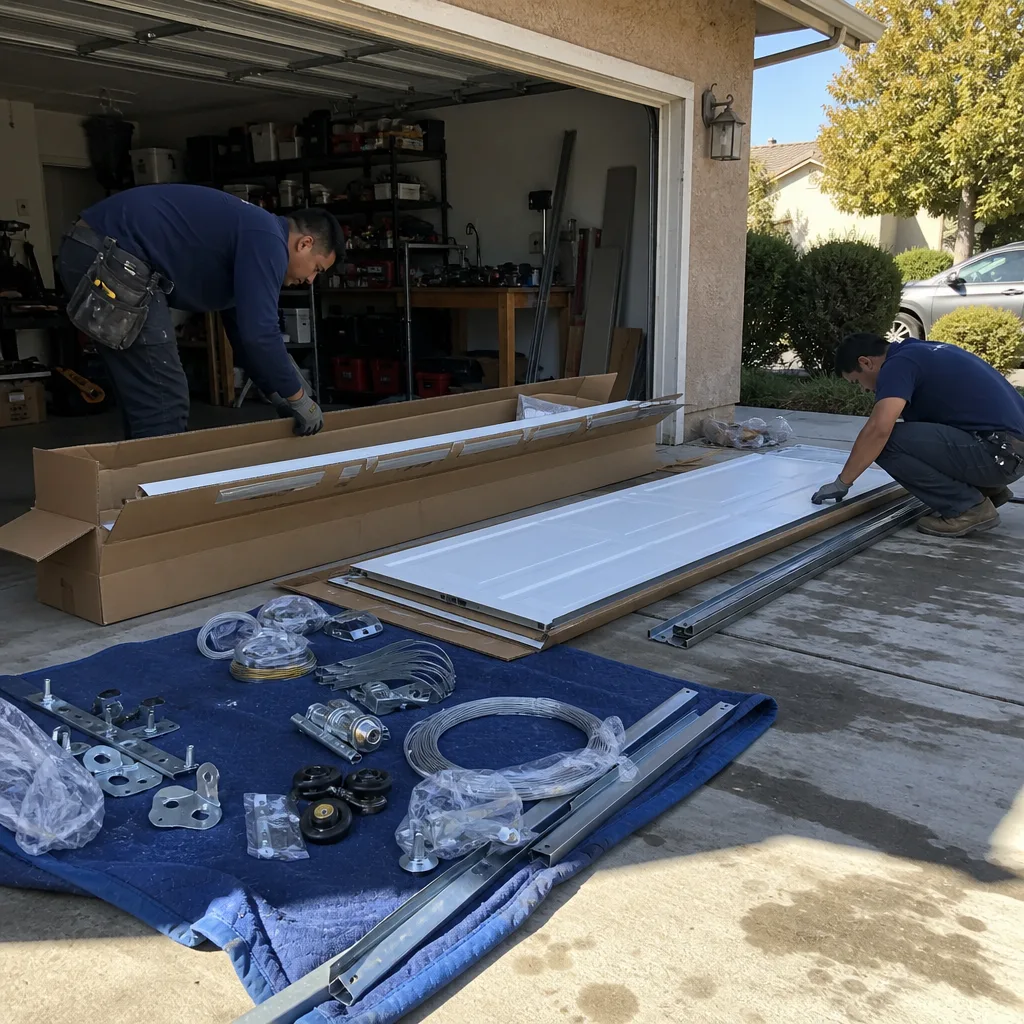
A garage door’s torsion system is under hundreds of pounds of tension. A spring that lets go while you’re working on it can cause severe injury or death. This is not a DIY diagnosis situation, and it’s not a job for a handyman with a spring from a hardware store. Call a professional when the door won’t open or close, when you hear a loud bang from the spring area, when the door reverses mid-travel, when the cables look frayed or the door hangs unevenly, or when the opener runs but the door doesn’t move. This is safety-critical work, and a trained technician with the right parts on the truck is the only sane option. Servo Garage Doors Corona offers free estimates in Corona, call (951) 482-7637.
Frequently Asked Questions
A typical garage door repair in Corona costs between $150 and $400 depending on the component. Torsion spring replacement runs $220 to $380 for a standard two-car door, while roller replacement runs $120 to $200, and cable repair runs $150 to $250. These are 2025 Corona market ranges, and any written estimate should specify the exact part, the wire diameter for springs, and the labor included. Call (951) 482-7637 for an exact quote, estimates are free.
Go to cslb.ca.gov, click “Check a Contractor’s License,” enter the business name or license number, and confirm the classification includes C-61/D-28 for garage door work. The license record will show the expiration date, bond status, workers’ compensation coverage, and any disciplinary actions. If the license number isn’t displayed on the contractor’s website or vehicle, ask for it directly.
If your opener is more than 15 years old and the logic board has failed, replacement is usually the better value. A new Chamberlain or LiftMaster opener with a belt drive, battery backup, and smart home compatibility runs $450 to $750 installed in Corona. If the opener is under 10 years old and the failure is a gear, capacitor, or limit switch, repair is often $150 to $300. The technician should show you the failed part before you decide.
The Haven Standard is a written operating standard for independently owned garage door companies that agree to flat, written pricing before work starts, documented photo records on every visit, and warranty terms in writing. It’s not a franchise. It’s a set of commitments the local business agrees to work to, and each clause is specific enough to be audited.
Yes, legitimate garage door contractors in Corona offer weekend and emergency service, and most answer their phones 24/7 for door failures that leave a home unsecured. A door that won’t close is a security emergency, and you should expect a live person on the phone, not a callback service. For non-emergency repair, same-day or next-day scheduling is typical.
It shouldn’t, if the written estimate was based on a proper diagnosis. The scope of work on the signed estimate is the scope of work on the invoice. The only legitimate reason for a price change is a change order, which must be in writing and signed by you before the additional work is performed. If a contractor tells you the price depends on what they find after they open it up, the price isn’t fixed. Call (951) 482-7637 for a flat, written price in Corona.
The Bottom Line
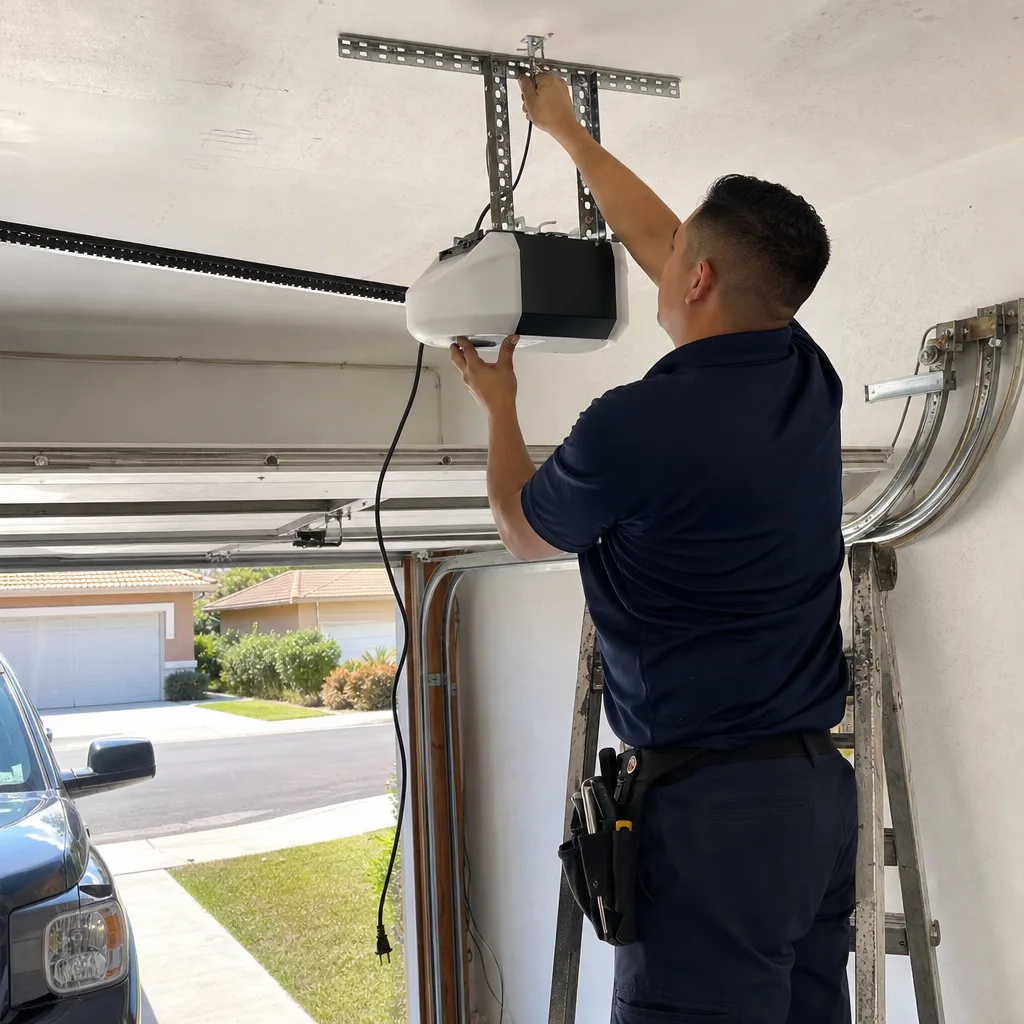
Hiring a garage door contractor in Corona comes down to one question: what paper is this person willing to put in your hand before the first bolt is turned? A license number that checks out on the CSLB website. A written estimate that meets California § 7159 requirements. Photos of the failed part before you’re quoted a price. A warranty with a defined period and remedy. A signed scope that matches the final invoice. Most homeowners don’t ask for any of this, and most garage door disputes in Corona could have been avoided if they had. The contractor who hands you documentation instead of a sales pitch is the contractor who will stand behind the work. Everyone else is handing you a story. The story ends when the invoice arrives. The documentation lasts as long as the door.
If you’re researching garage door contractors in Corona, start with the Servo Garage Doors Corona home page to see how we structure our process, or call (951) 482-7637 for a free estimate. We’ll send you a written price before any work starts, and you’ll get a photo record of everything we find and everything we do.
Written by Marcus Deller, Owner at Servo Garage Doors Corona, serving Corona since 2015.