
Full 25-point door and opener safety check with every visit - springs, cables, rollers, tracks, and your LiftMaster or Chamberlain opener included
You get a price before we start. It does not change when the truck arrives.
 Before
 After
After Before
 After
After Before
 After
AfterRaynor Weather Seal Replacement: The Corona Owner’s Guide
We stock and install Raynor-compatible weather seal replacement in Corona, with most jobs running $110-$220 installed, parts included. The typical swap takes under an hour, and our trucks carry the common Raynor profiles so we can usually handle it same-day. Most homeowners discover the problem the same way: they notice daylight under the door, a stiff draft near the garage entry, or leaves and dust collecting along the inside floor line after a Santa Ana wind event.
The weather seal, sometimes called the astragal, is the rubber strip running along the bottom of your garage door. On Raynor doors it sits in a T-shaped aluminum retainer that bolts to the bottom panel. When that rubber gets brittle, splits, or pulls away from the retainer, the door still opens and closes fine, but you lose the seal against water, dust, and the kind of heat that makes a Corona summer garage feel like an oven. The fix is straightforward: pull the old strip, slide in the new one, and confirm the door still closes flush.
Which Raynor Models This Applies To
Raynor has used a few different bottom seal profiles over the years, and matching the right one matters more than most people expect. The current residential lines, including the Aspen, Rockford, and Designer series, typically use a T-style bulb seal that slides into a 1/4-inch or 5/16-inch retainer channel. Older Raynor doors from the 1990s and early 2000s, including some of the old Relante and Decade series, often used a narrower channel, which is why a seal that looks close at the hardware store will either bind on install or fall out the first time the door cycles.
The fastest way to identify what you need: look at the aluminum retainer on the bottom of the door. On most post-2010 Raynor doors, there’s a part number stamped on the inside face of that retainer. It’ll start with “RY” or just show a four-digit code. If there’s no stamp, we measure the channel width and the bulb height. We also pull the exposed end of the current seal where it’s usually most deformed, which tells us the original profile. For Raynor specifically, we default to OEM weather seal when it’s available, because Raynor’s bulb shape is slightly taller than the generic T-style seals sold at big-box stores. The aftermarket equivalents do work on most Aspen and Rockford doors, but on some Designer series panels the generic bulb sits too low and drags on the slab. We carry both and check the fit before anything gets bolted back.
We’re an independent service provider, not affiliated with Raynor. We do stock their common seal profiles alongside quality equivalents, and we service the other major brands too, including LiftMaster, Chamberlain, and Genie, for openers and related hardware.
Signs Your Raynor Weather Seal Replacement Is Failing
- Daylight visible under the door corners. The seal has compressed or torn at the ends, which is where it fails first. This lets heat in during Corona’s July heat waves and gives rodents a line to inspect.
- Water or dampness along the inside floor line. Bottom seals wear unevenly. Once water starts pooling past the seal, it’s past the point of re-seating; the rubber has lost its spring.
- The rubber feels stiff or cracked to the touch. Our inland heat and dry air accelerate rubber breakdown. A seal on a Corona door facing west sun typically hardens two to three years sooner than one on a shaded north-facing door.
- The seal pulls out of the retainer at one end. This usually means the retainer channel has debris in it or the seal was the wrong profile for the track. It will keep walking out until the profile is corrected.
- More dust and leaves inside than usual. During fall, when the Santa Anas pick up everything loose in the yard, a failing bottom seal shows itself fast.
BeforeAfterReplacement Cost & What’s Included
Raynor weather seal replacement in Corona runs $110-$220 installed. The spread comes down to door width, which seal profile your Raynor uses, and whether we’re also addressing a corroded or bent retainer. Here’s how that price breaks down:
| Item | Typical Range |
|---|---|
| Raynor OEM or equivalent bottom seal (16 ft) | $35-$70 |
| Labor to remove, install, and test | $75-$150 |
| Total installed price | $110-$220 |
If the aluminum retainer is damaged, we’ll show it to you before anything else happens. Clause 4 of The Haven Standard is why our technician photographs the failed part before quoting a replacement. You see the crack, the corrosion, or the mangled channel, and then we quote the fix. The price is written and flat before any work starts, per Clause 1. Our 365-Day Done Right Promise covers the labor and the seal fit; if it pulls loose or fails within a year, we come back and set it right.
DIY or Call Us?
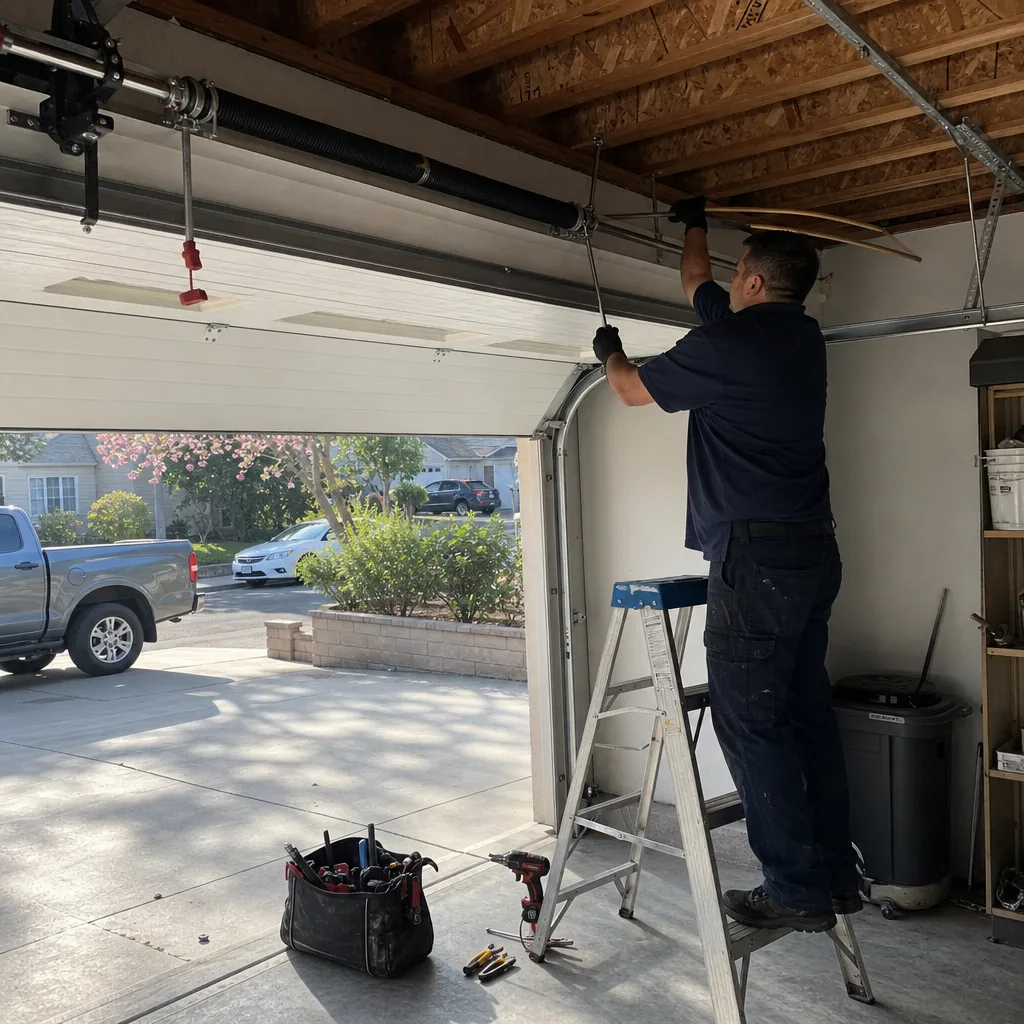
Replacing a bottom seal is one of the few garage door jobs an owner can handle without real risk. No spring tension, no cables under load. The honest hurdles are profile matching and retainer condition. If you buy the wrong channel width, the seal either won’t slide in or it’ll fall out within weeks. We’ve also seen retainer screws strip out on older Raynor doors where the bottom panel has started to corrode from river moisture and sprinkler overspray.
What you can do safely: slide the seal out a foot at one end and take a photo. We can usually identify the profile from a clear picture, and if it’s a stock Raynor seal, we’ll tell you that before we drive out. If you’d rather not touch it, call (951) 482-7637 and we’ll send a tech with the right seal on the truck. Name the part, quote the number, do the work. Marcus Deller runs our crew with exactly that discipline, and it’s why our written price doesn’t move after we arrive.
FAQs
A Raynor bottom seal in Corona typically lasts 3 to 6 years. Exposure to the inland sun, dry air, and occasional standing water along the slab shortens it. West-facing doors in our area often need replacement closer to the 3-year mark. If your seal is cracking, it’s already done most of its useful life. Get a written quote before committing to anything: call (951) 482-7637.
No. Once the rubber splits, hardens, or tears from the retainer, it can’t be reattached reliably. Patch glues and caulks hold for weeks at best. The right fix is a new seal cut to your door width and seated into the existing retainer. Call (951) 482-7637 for an exact installed price; estimates are free and always in writing.
Most Raynor weather seal replacements take 30 to 45 minutes from start to finish, including removing the old seal, cleaning the retainer channel, installing the new profile, and cycling the door to confirm it seats properly. We also photograph the finished work and include it in your documented record. If you’re in Corona, call (951) 482-7637 to schedule a time that same day.
Yes. We keep the common Raynor T-style bulb seals and a few older narrow-channel profiles on the truck, so most Corona jobs are done in one visit. If your door needs a profile we don’t have on hand, we’ll tell you before dispatching and get the right one ordered.
Written by Marcus Deller, Owner, Servo Garage Doors Corona at Servo Garage Doors Corona, serving Corona and nearby areas.