
Full 25-point door and opener safety check with every visit - springs, cables, rollers, tracks, and your LiftMaster or Chamberlain opener included
You get a price before we start. It does not change when the truck arrives.
 Before
 After
After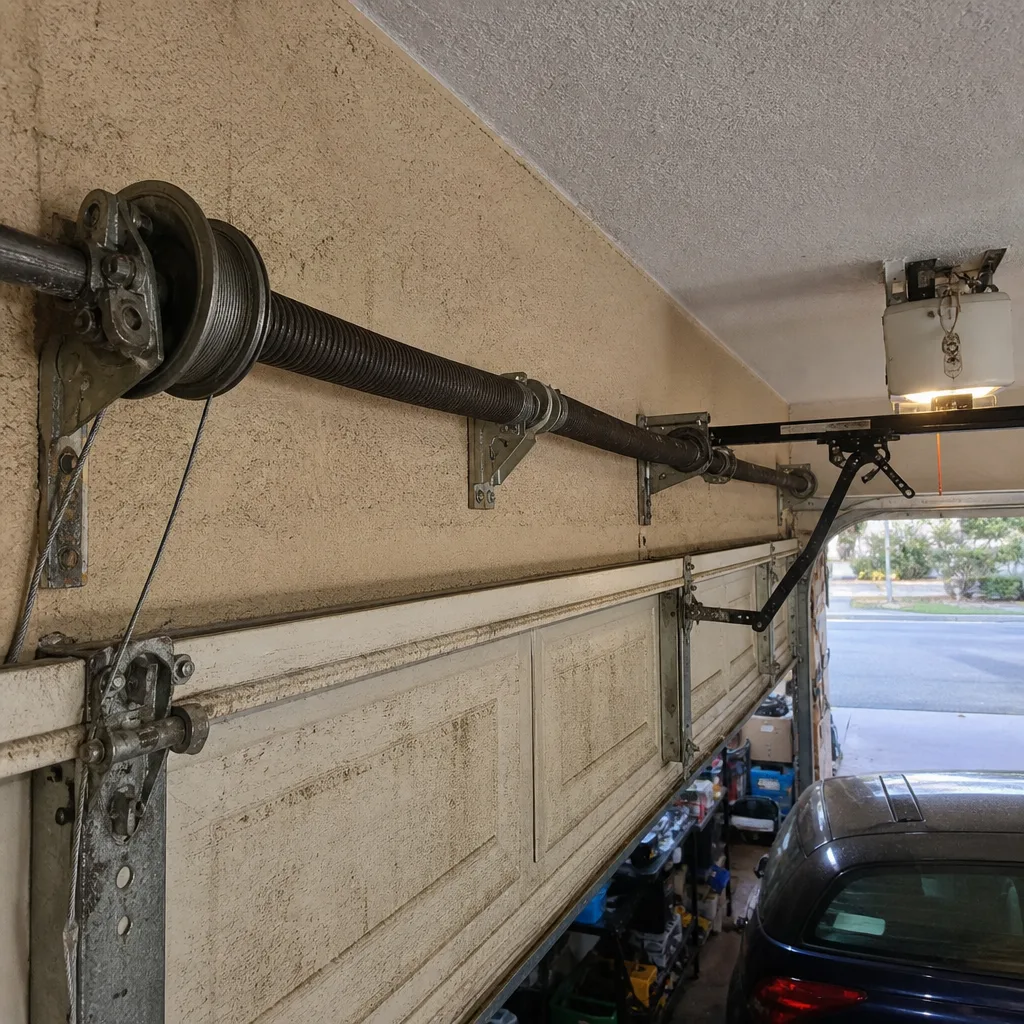 Before
 After
After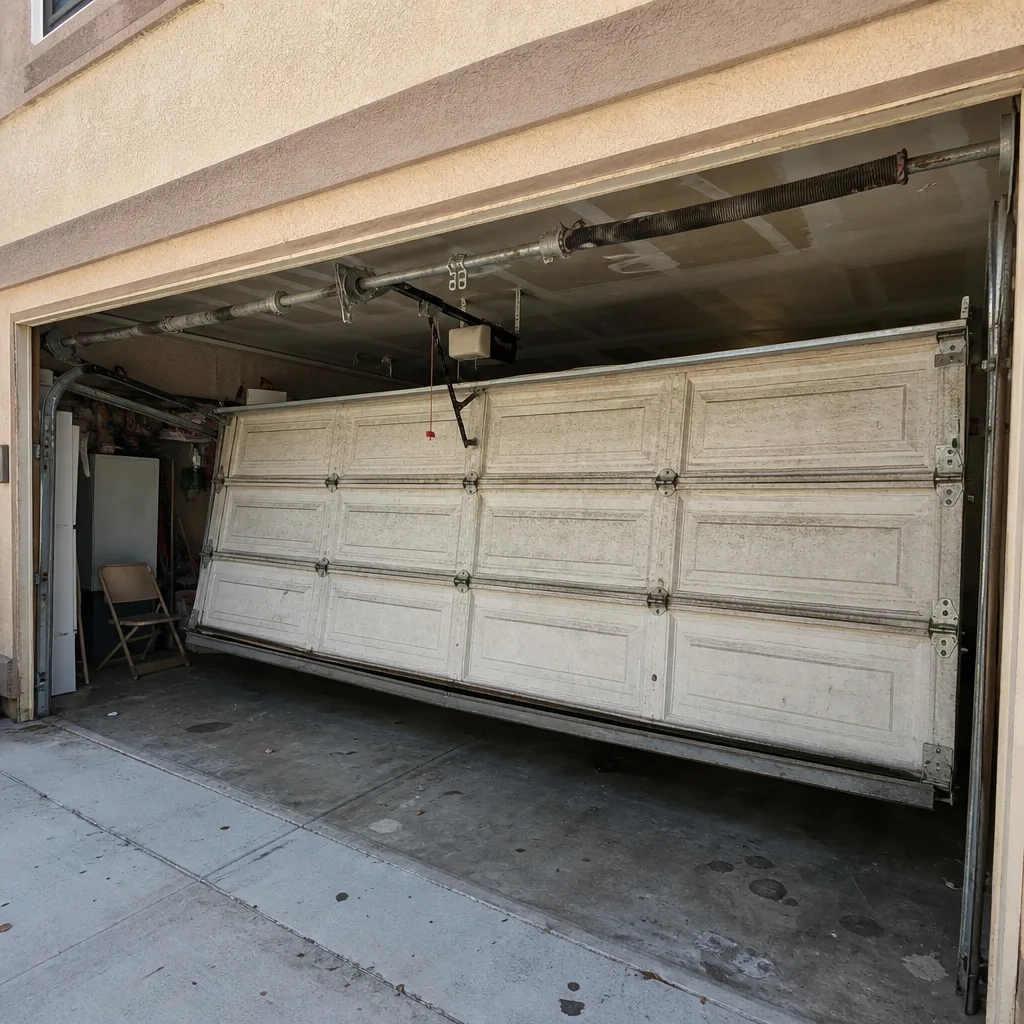 Before
 After
AfterLiftMaster Torsion Spring Replacement: The Corona Owner’s Guide
A LiftMaster torsion spring replacement in Corona typically costs $180-$340 installed, depending on spring gauge, wire diameter, and whether we’re replacing one spring or the pair. We stock LiftMaster-compatible torsion springs on our trucks, so most replacements happen the same day you call. The part usually announces itself with a bang: the spring snaps under tension, the door suddenly weighs its full 160-220 pounds, and the opener either refuses to move it or grinds trying.
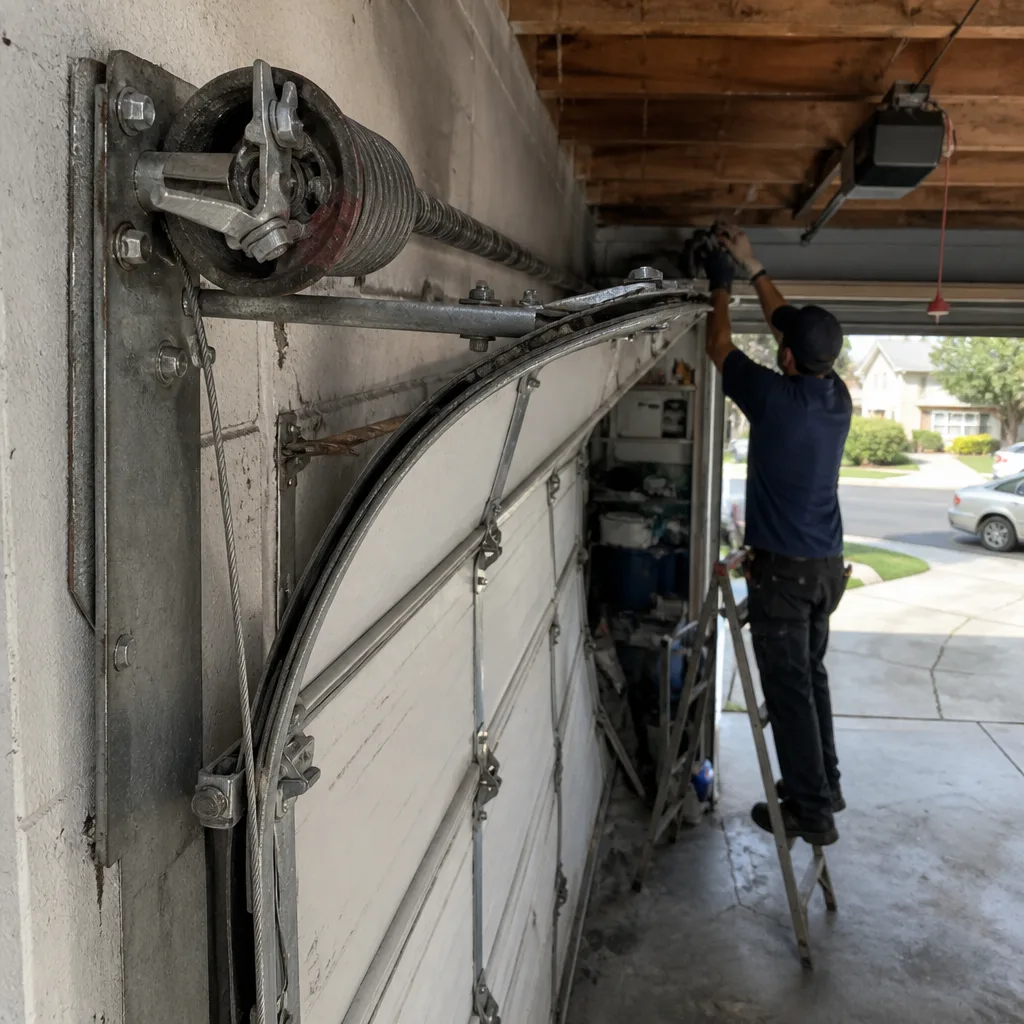
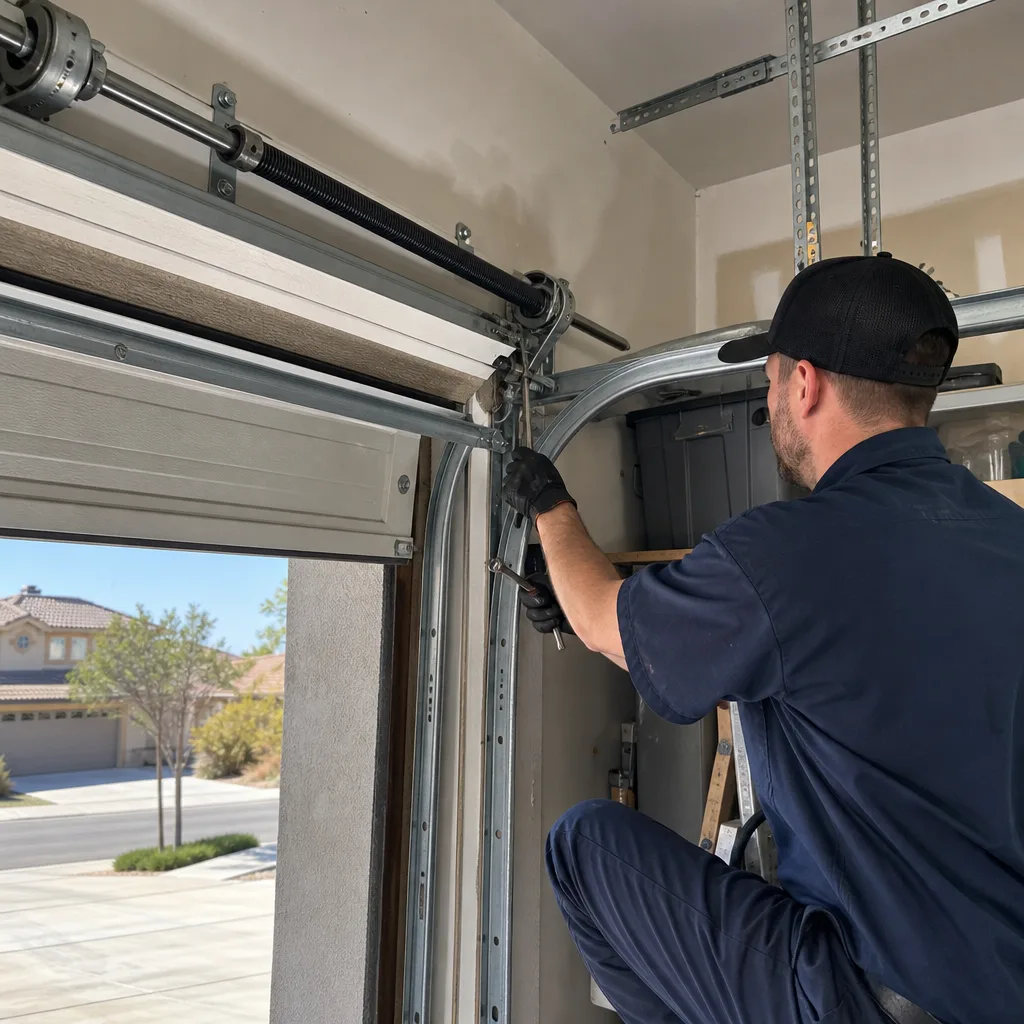
You’ll hear it before you see it. The spring sits on a metal shaft above the closed door, coiled tight, doing the actual lifting. When it lets go, the door doesn’t open because the opener was never designed to carry that weight alone. In Corona’s dry heat, springs lose their temper faster than coastal climates because the metal fatigue curve accelerates without humidity to slow oxidation.
Which LiftMaster Models This Applies To
LiftMaster doesn’t make its own springs. The torsion springs on your door came from the door manufacturer, and LiftMaster’s openers are designed to work with whichever spring system that company specified. What matters for replacement is the door’s weight, height, and cable drum geometry, not the opener model on the ceiling. That said, we see this repair most often on doors paired with LiftMaster’s 8500W and 98022 jackshaft openers, because those units bolt to the torsion tube itself and read spring torque directly through the logic board.
Here’s the compatibility gotcha most owners miss: a spring matched to the wrong door weight won’t just wear out early, it’ll burn out the LiftMaster opener’s travel module. The opener expects a balanced door. If the new spring is too weak or too stiff, the opener’s RPM sensor detects the imbalance and either throws error code 1-5 or strips the coupler between the motor and the gear. We identify the right spring by measuring the old one’s wire diameter, inside diameter, and coil count, then cross-check against the door’s actual weight, not its label. OEM-equivalent springs run the same steel spec as what the door company installed. Quality aftermarket equivalents from the same wire mills work fine when sized correctly. The difference isn’t metallurgy, it’s measurement.
On the old tract homes along Green River Road, we commonly see .225-inch and .250-inch wire gauges on 7-foot doors, with the occasional .283 on extended-height garages near Eagle Glen. If you can read the painted number on the old spring’s cone, that tells us the wire size and coil count. If you can’t, we measure on-site before quoting anything.
Signs Your LiftMaster Torsion Spring Replacement Is Failing
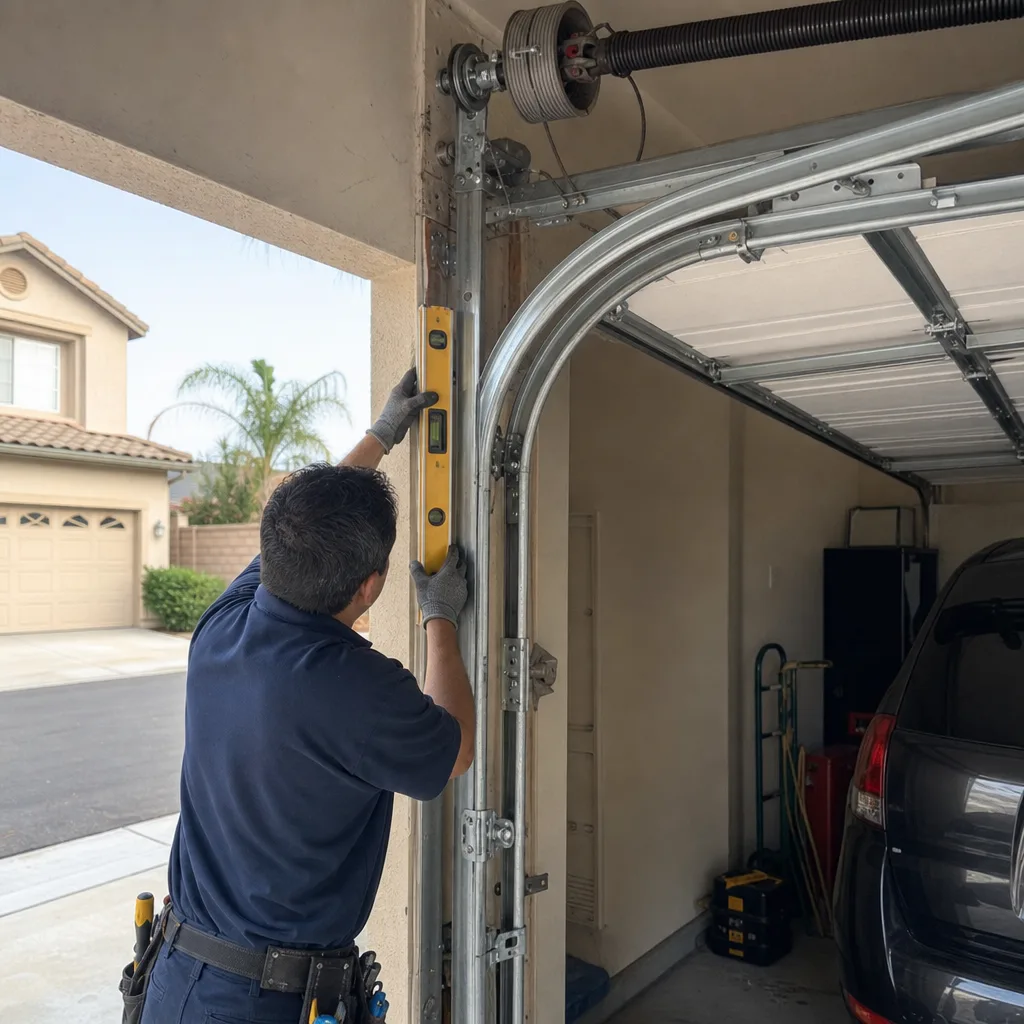
- A loud bang from the garage that sounds like a firework. The spring snapped. It’s not subtle and it doesn’t happen gradually. The door will typically drop a few inches and stop because the safety cable or the open position catches it.
- The opener strains or reverses mid-lift. A spring that’s lost its temper (the heat treatment that makes the steel twist-resistant) still looks intact but can no longer counterbalance the door. The opener’s force sensor trips and reverses the door back down.
- The door opens a foot, then drops. One of two springs has failed, and the remaining spring can’t hold the full weight. You’ll see a visible gap between the two coils where the broken one has separated. If you’re close enough to look, do it with the door closed.
- Cable slack or cable off the drum. When the spring loses tension, the lift cables on either side loosen. A cable that’s jumped the drum and wound around the shaft will show as uneven door travel or scraping.
- The door feels heavier to lift manually. Pull the red release cord on the LiftMaster when the door is closed. If you can’t lift it with one hand, the spring is doing nothing. Weigh that moment carefully; a functioning door should feel like it weighs 8-12 pounds.
BeforeAfterReplacement Cost & What’s Included
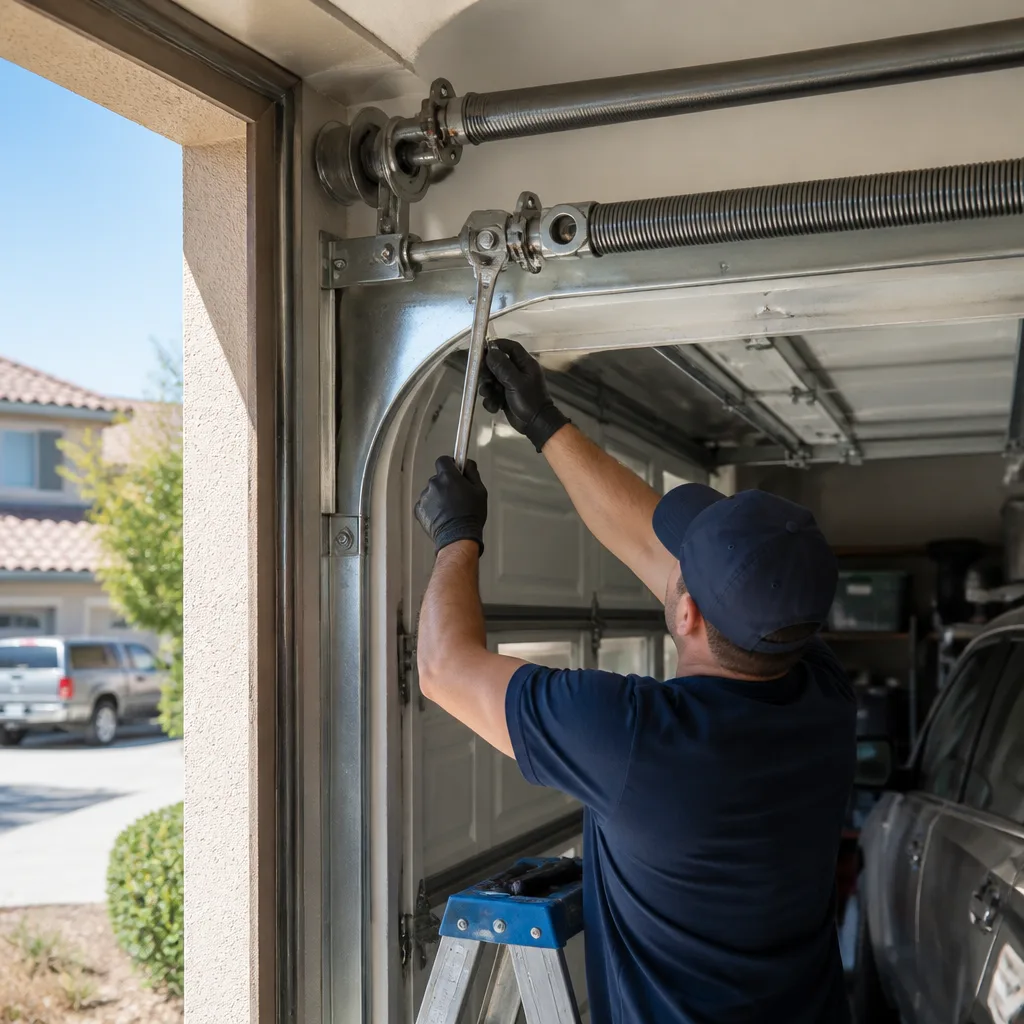
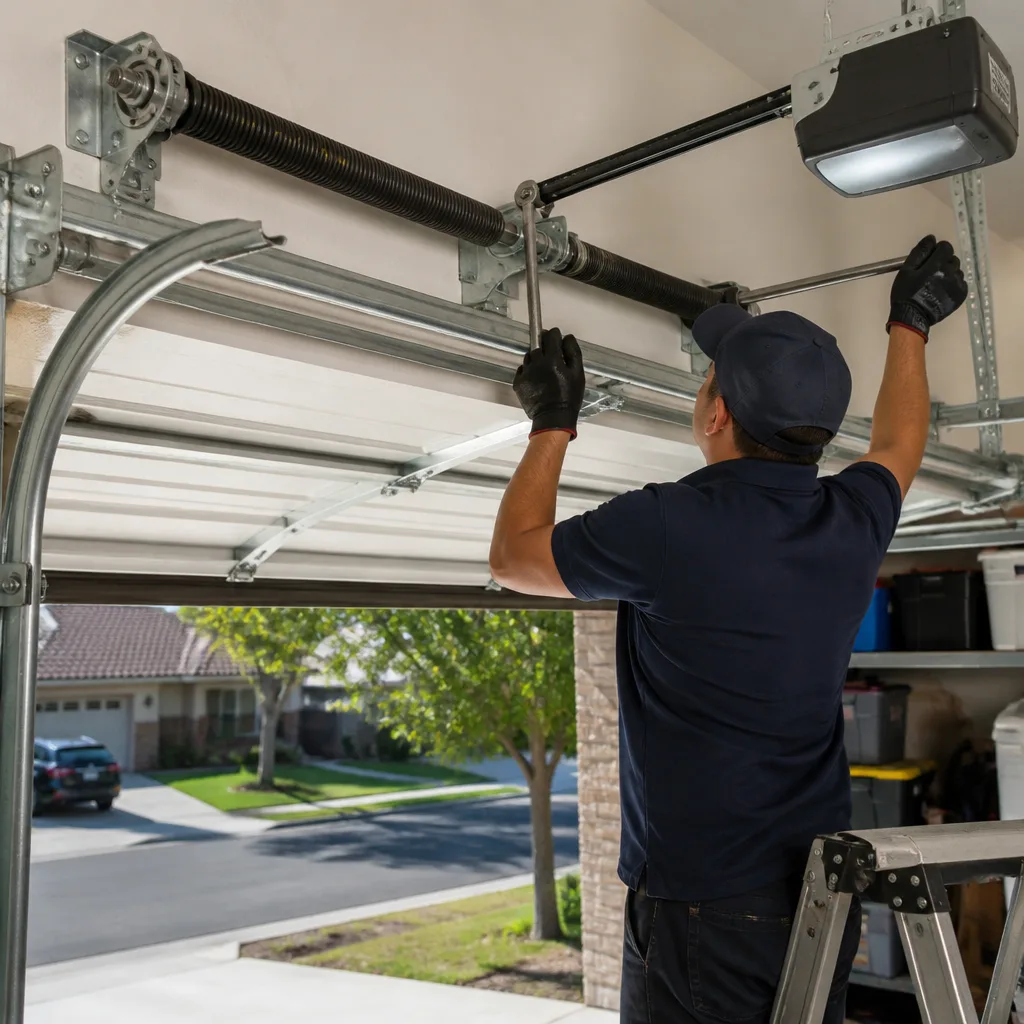
In Corona, a single torsion spring replacement runs $180-$340 installed. Where you land in that range depends on three things: the spring’s wire diameter and coil count (heavier doors need more steel, which costs more), whether the spring pair is being replaced together, and whether the job requires a full door rebalance after the swap. We always recommend replacing both springs on a two-spring door, even when only one snapped. The surviving spring has the same cycle count. It’s already fatigued.
Every quote follows Clause 1 of The Haven Standard: a flat, written price and written scope before any work starts. The price includes the spring, the labor, a full door balance check, lubricating the bearings and rollers, and a documented photo record of what we found and what we installed. The spring itself carries the manufacturer’s cycle rating, usually 10,000-20,000 cycles depending on the wire spec, and our 365-Day Done Right Promise covers the labor: if it’s not right, we make it right, backed by terms you can pull up and read, not a handshake.
DIY or Call Us?
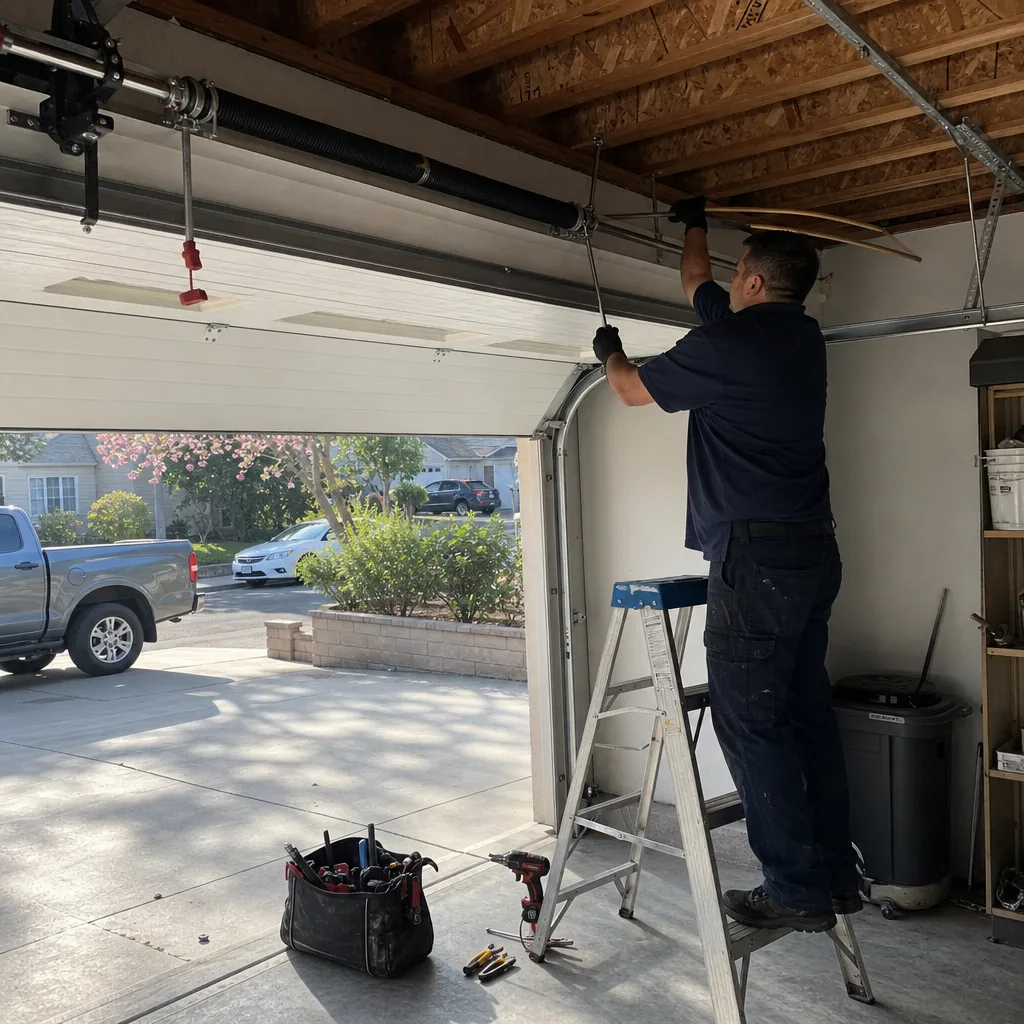
Full stop: torsion springs are the most dangerous component on a garage door. They hold hundreds of pounds of stored mechanical energy, and the winding bars required to install them can shatter bone if the tension releases wrong. We don’t give step-by-step guidance on this one. Name the part, quote the number, do the work; that’s the trade motto and it exists because we’ve seen what happens when the alternative goes sideways.
What you can safely do is check the cycle number: count how many times the door has opened and closed since install if you know it, and compare that to the spring’s rated life. Most residential springs last 7-10 years in Corona’s climate, longer if you bought a 20,000-cycle spring. If the door is past that, you’re not waiting for a failure, you’re scheduling against one. If you already heard the bang, call (951) 482-7637 and we’ll walk you through what to do before we arrive: leave the door closed, don’t pull the release cord, and don’t try to open it with the opener.
FAQs
Most torsion springs last 10,000-20,000 cycles, which in a typical Corona household translates to 7-12 years of use. Dry inland heat accelerates metal fatigue compared to coastal climates, so springs here often fail closer to the 7-year mark. Call (951) 482-7637 for an exact measurement of what’s on your door today; estimates are free.
No. Torsion springs cannot be welded or patched; the heat treatment that gives the steel its twist resistance is destroyed at the break point and any repair would fail immediately and unpredictably. Replacement is the only safe option. We’ll quote the part number and the dollar range before any work starts.
A single-spring replacement takes 45-90 minutes on-site, including the door balance check and lubrication. A pair takes 60-120 minutes depending on door weight and access. Most jobs are done same day if you call (951) 482-7637; we carry the common wire gauges on the truck and measure on-site before quoting anything.
We stock torsion springs in the common Corona gauges (.207, .225, .250, .283) and we carry the cables, drums, and bearings that typically need replacement at the same time. For non-standard sizes, we verify the spec and install within 1-2 business days. Call (951) 482-7637 with your spring’s painted number if it’s visible, and we’ll tell you over the phone whether we have it on the truck.
Written by Marcus Deller, Owner, Servo Garage Doors Corona at Servo Garage Doors Corona, serving Corona and nearby areas.